THE (UNIVERSAL) CORPOREAL LANGUAGE OF PAIN
Alongside their new laws protectionists introduced narratives of human guilt and innocence complete with a new vocabulary of animal suffering that sought to reinscribe familiar practices with new meanings By and large, anticruelty legislation did not prohibit specific actions but instead defined cruelty as the infliction of unnecessary pain and suffering a highly ambiguous definition at best Parsing the necessity of suffering was not an easy thing and the extent and acceptableness of animal suffering was a contested issue both inside and outside the 19th century courtroom In the new crime of cruelty human guilt was established through two criteria: by proving criminal intent, or mens rea, and by proving that the defendant’s actions had produced excess or unnecessary pain It is this latter aspect of the crime proving the existence of animal pain which absorbed the energies and attention of many animal protectionists For in addition to bringing animal suffering before the eyes of the law the crime of cruelty necessitated bringing animal bodies within the juridical gaze Human guilt was in other words established through the evidence offered by animal bodies - what evidences of distress did an animal offer? How should these be interpreted and weighed against human rights and prerogatives?
As often and as forcefully as they could animal protectionists taught their fellow citizens to recognize and sympathize with animal suffering and they situated the animal body as a crucial source of evidence in their newly scripted narratives of human guilt To insert the crime of cruelty to animals in public discourse animal protectionists employed a number of strategies First they conducted public education campaigns that aimed to teach men women and children to recognize the signs of animal suffering and to understand this agony as avoidable and to see its presence as clear evidence of wrongdoing Second SPCA officials pioneered new criminal procedures, seizing animals and bringing them directly before magistrates while the signs of cruelty were fresh and introducing veterinarians as expert witnesses in the courtroom Underlying these efforts was the goal of transforming animals’ pain from a human prerogative to evidence of human guilt, and at the center of this strategy lay a new form of evidence - the wounded animal body
In their efforts 19th century animal protection activists had to combat not just a legal system that had historically viewed animals as not more sentient than agricultural instruments (the cow the same as the plow) but also a philosophical heritage that similarly saw them as little more than selfanimating machines According to the reigning Cartesian dualism mind and body were separate substances that led separate lives and while animals certainly had bodies they did not have minds or souls and thus could not really suffer Suffering Cartesians believed was a function of consciousness, and consciousness along with reason was God’s gift to man alone.
According to Descartes animals’ lack of consciousness and hence of suffering was demonstrated by their lack of language In this circular logic the inability of animals to express pain seemed a sure sign that they did not experience any pain Animals Descartes notably declared are like machines that are operated by sensory stimuli. ‘‘It is nature that acts in them" Descartes argued ‘‘according to the disposition of their organs." Against the notion that animals’ often flawless functioning might indicate a conscious inner mechanic Descartes (1993) explained that mere mechanical acumen was no guarantor of consciousness for animals are not unlike ‘‘a clock made only of wheels and springs [that] can count the hours and measure time more accurately than we can with all our powers of reflective deliberation” (pp. 32-33).6 In this logic which continued to frustrate 19th century animal protectionists animals like clocks were convenient if insentient tools designed for and at the disposal of humankind Despite earlier challenges by late-18th and early-19th century Romantics (Perkins 2003) Descartes’ theories still dogged animal protectionists even in the latter half of the nineteenth century As one frustrated protectionist complained ‘‘The notion of Des Cartes [sic) that animals are mere machines has done much, doubtless to reconcile philosophers and theologians to the heartless tyranny of man over dumb animals’’ (What Epes Sergeant Says 1868, p. 14).Against this set of assumptions 19th century animal protectionists launched a considerable public relations campaign in which they argued that animal and human suffering were essentially identical Pain they asserted crosses the species line For protectionists the project of proving human guilt for cruelty to animals was inextricably linked to the display of suffering While many freely admitted that animals could not articulate in human language SPCA activists argued that animal bodies bespoke a corporeal language of suffering one that could be learned like any other foreign tongue Among the many tactics they used to establish the identity of human and animal pain 19th century protectionists repeatedly returned to two noteworthy genres: the role-reversal scenario and the first-person animal narration
Depicting a topsy-turvy world in which humans suffered at the hands of animals and designed to equate human and animal suffering role-reversal scenes appeared in both pictorial and textual form throughout 19th century anticruelty publications Fig 1, from an 1871 issue of the Massachusetts SPCA’s magazine Our Dumb Animals, is one example Entitled ‘‘Is Turn About Fair Play?” the picture shows two men chained in harness straining against the bits in their mouth as they struggle to pull a loaded cart while being whipped by their drives an ox in human clothing Well-dressed oxen and mules stand and watch while the cart’s human cargo presumably on their way to the stockyards lie helplessly tied and piled one on top of the other showing signs of discomfort on their faces Beneath the illustration a caption asks ‘‘How do you like this?’’ If it doesn’t look comfortable or fair to you the accompanying text instructed then your animal friends would probably tell you that ‘‘if you don’t like it for yourselves don’t do it to us!’’ (How do you like this? 1871 ₽· 110) By placing humans in animals’ shoes, SPCAs suggested that the capacity for pain and agony crossed the species line without modification and that to determine if an animal was suffering, one need only ask ‘‘how would I feel in the same situation?’’ In addition by pairing the words ‘‘comfortable and fair’’ as a set of standards protectionists suggested that what was comfortable was also what was fair and that justice could be measured by reference to suffering.
Taking the subjectivity-swapping logic of the role-reversals one step further animal protectionists also employed the empathetic structures of fiction to establish a bond of sentience between humans and animals littering their humane propaganda with animal characters and narrators Although Englishwoman Anna Sewell’s Black Beauty (1877) is the most famous example of a first-person animal narration it was not the first Nearly 10 years earlier a ‘‘good and faithful’’ horse had told his life story to the readers of Our Dumb Animals. Like its famous successor this story too followed the declension plotline of the wildly successful Uncle Tom's Cabin, detailing the horse’s life as he moved from his peaceful colt-hood home though a series of progressively more demanding and degraded stations By
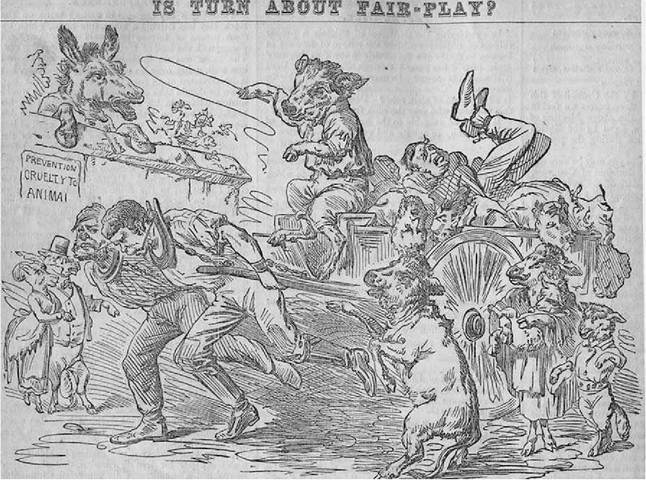
Fig. 1 The Topsy-turvy World of the Role-reversal.
speaking in his own voice and telling his own story the ‘‘good and faithful” horse served to inform his audience not just that animals and humans generally shared a common set of feelings but specifically that they shared the capacity for suffering Describing his first initiation into life as a full-grown working horse the equine narrator recalls two particularly traumatic events one emotional and the other physical First the young horse was separated from his mother and he reported ‘‘it seemed as if my heart would break” To add insult to injury this separation was followed by the docking of his tail· The men breaking him in ‘‘tied me up and brought a great knife, something like a pair of huge scissors and cut through flesh and bone and all and as if this pain was not enough they brought a red hot iron and seared the bleeding stump and put me in such agony as I cannot describe Oh how I suffered for weeks and how indignant I felt that I had been so tormented” (Story of a good and faithful horsy 1868, p. 35) Speaking from within the experience of tail-docking the ‘‘good and faithful” horse not only asserted his ability to feel but also transformed a commonplace practice into an example of torture Further suggesting that experiencing this pain
made him “indignant,” the horse implied that bodily violation for horses as much as for humans infringed on the integrity of the self as well as that of the flesh7 In the years following the publication of this equine autobiography protectionist publications featured the voices of horses birds dogs cats, and other animals telling their tales of woe to readers As another equine narrator put the matter these direct appeals were meant to show humans that animals ‘‘have rights as well as people and feelings as well as people” (Turner 1871 p· 119).
In role-reversals and animal narrations protectionists gave voice to animal subjectivity sentience and suffering in order to position them as deserving legal protections but these were not their only tools Anticruelty reformers also marshaled material evidence of human guilt metonymically representing animal suffering by collecting and displaying what SPCA publications frequently called ‘‘instruments of torture” If you entered the headquarters of the Massachusetts New York Illinois New Jersey Cleveland or Pennsylvania SPCA to name a few you would encounter an exhibit of whips prods clubs knives guns axes chains and other devices used to harm animals SPCAs also traveled these exhibits bringing them to major nineteenth-century expositions and World’s Fairs in Philadelphia Chicago, New Orleans and Atlanta Culled these from the actual cases they prosecuted anticruelty societies hung such weapons on the walls to show what they termed ‘‘evidences of man’s inhumanity’’ (The Society’s Museum 1892).8 The display of instruments of torture had of course a long icon- ographic and political history one most recently deployed by British and American abolitionists who had used artifacts of the slave trade and the plantation punishment system to symbolize both slave pain and human barbarity (Wood 2000) Although the animal body remained absent in the SPCA versions of such displays the instruments themselves were densely packed with information symbolizing both the infliction of pain and its cessation The whips and chains hung on the wall called forth a sequence of relationships beginning with that between animal and cruelist and ending with that between cruelist and protectionist Each instrument symbolized the pained animal body the guilty human hand and the vigorous humanity of the SPCA officer that had stilled the guilty hand taken its too) and brandished it as proof of human cruelty 9 While the arrayed instruments of torture were meant to stand in for and represent the agony they could produce in actual animals some of these exhibits went so far as to display taxidermied animals In the headquarters of the New York SPCA for instance Henry Bergh stuffed animals that had been used in cock and dogfights a pigeon wounded in a hunt an overdriven horse and even a vivisected animal· ‘‘Even in dumb show” remarked one observer of such an exhibit, the wounds of these animals were ‘‘painful to contemplate” (North, 1882, P. 238).
It was not enough however to claim that animals could feel pain for as the Cartesian formula held the capacity for suffering was inextricably tied to the capacity for language - the latter a means of verifying the former SPCAs, moreover faced the specific problem of legal prosecution: how in a court of law was one to prove that a specific human action caused a particular animal to suffer when the chief witness - the victim - lacked the ability to give testimony? Since animals were in 19th century parlance ‘‘dumb” and were as one SPCA activist put it ‘‘doomed to suffer in silence unless some such pitying heart...looked for the signs of suffering that could not make themselves heard in forms of speech” (PSPCA, 1871 ₽· 10), it was the task of SPCAs to detect and translate such corporeal signs And just as they equated the human and animal experience of pain they also equated the non-verbal expression of pain insisting that bodily signs were as unambiguous as speech. As Henry Bergh put it animals ‘‘give forth the very indications of agony that we do” and he went on ‘‘theirs is the unequivocal physiognomy of pain” (Extracts from Address of President Bergh 1868, ₽· 6) In addition to claiming that animals suffered pain anticruelty activists tried to create a visual vocabulary of pain that stood in for animal’s own articulation of their suffering In doing so they also taught people to resignify seemingly ordinary practices transforming the acceptable into what the law would regard as a source of ‘‘unnecessary’’ pain Armed with the proper visual vocabulary of pain anticruelty activists and citizens alike could practice their arts of detection to uncover cruelty wherever it might lurk
A good example of the effort to create this nonlinguistic vocabulary can be found in the widespread campaign against the check-rein a device used to force a horse’s head to remain upright by preventing it from lowering its head SPCA publications pointed out that most people preferred to use the check-rein for aesthetic reasons: they liked to see a horse with its head held high To such people the high head signified a lively gamey horse the very picture of a noble steed Protectionists insisted that those trained in the detection of animal suffering would begin to interpret the same scene entirely differently Humane men and women could see the expressions of pain emitted by the horse in check what one SPCA publication called ‘‘the most unequivocal evidences of distress and agony’’ Anticruelty publications showed adjacent pictures of horses in and out of check-rein (Fig 2) and instructed viewers to note that while in check ‘‘the corners of [the horse’s] mouth become raw, inflame, fester, and eventually the mouth becomes enlarged on each side, in some cases to the extent of two inches” And as if to answer the Cartesian charge that animals had no consciousness and no language the anti-check-rein publication went on to assert that ‘‘Could these speechless sufferers answer the inquiries - Why do you continually toss your heads while standing in harness? Why do you stretch open your mouths shake your heads and gnash your teeth? Why do you turn your heads back towards your sides, as if you were looking at the carriage? they would answer: All this is done to get relief from the agony we are enduring by having our heads kept erect and our necks bent by tight check-reins” (The Check-Rein, 1868, P- 10) Here the SPCAs posed evidence of suffering straight from not just the horse’s mouth but also from the horse’s body In the face of animal silence anticruelty activists’ efforts to train the public in the arts of detection insured that animal bodies if not their voices still spoke Moreover in focusing on equine suffering protectionists not only attempted to redefine the ‘‘necessity’’ of the check-rein, but in doing so they also reinforced the lessons of anticruelty legislation: that as more than mere property animals were also more than mere instruments of human will and desire
By creating role reversals animal narrators and a visual lexicon of pain protectionists strategically established and translated animal pain before a broad public These tactics however did not stand alone for they both paralleled and were supplemented by SPCA legal efforts To win convictions for cruelty in court SPCAs had to establish the existence of pain in specific cases and circumstances As I mentioned earlier anticruelty laws were less likely to prohibit certain actions than to sanction their effects The question in a cruelty trial was whether there was animal suffering and whether that suffering was unnecessary By trying to establish a public consensus that
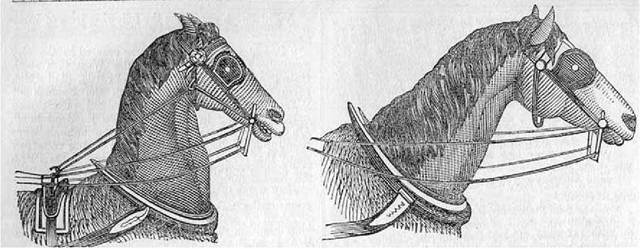
Fig.
2. Learning to See Suffering.certain actions inevitably produced pain protectionists hoped to make the causal relationship between action and effect easier to establish and to establish certain kinds of actions as prima facie unnecessary.
Since animals could not take the stand to testify against their tormentors inside the courtroom animal protectionists had to interpret the suffering of the animal body for judges and juries and they did this in a few different ways all of which overlapped with the extralegal public education strategies discussed above First they relied on witnesses who had been trained to see suffering The ASPCA for instance instructed its agents supporters and members on how to collect evidence of agony and distress noting that ‘‘if the offense was that of driving a horse or other animal with galled neck or shoulders or other wounds note the size and location of such wounds - especially if raw discharging or in contact with the harness If the offense was flogging or beating, note the instrument, the number of blows on what part of the body inflicted, and the effect, if any on the skin of the animal; if overloaded carefully observe the symptoms of distress such as the trembling falling unusual perspiration or exhaustion In every instance observe minutely and note down in writing the facts and details and also the language of the offender at the time” (ASPCA, 1895, PP· 89-90) The public trained in the arts of corporeal detection could then usefully enter the courtroom on behalf of the SPCAs.
Since the 19th century humanitarian narratives had relied on accumulating and relating the details of the suffering body in order to both establish the universality of pain (and hence a common humanity) and to demonstrate the causes and remedies of suffering (Lacquer 1989) Gathering the corporeal details of suffering in the manner suggested by SPCAs had been long linked to modes of humanitarian inquiry from the novel and the expose to investigation and prosecution When 19th century animal protectionists investigated cruelty cases and brought them to court their emphasis on collecting corporeal detail as crucial evidence of guilt linked humanitarian to legal modes of inquiry on the surface of the animal body Protectionists regarded the extralegal ‘‘evidence” offered by the role-reversal, the animal narration and the corporeal language of animal pain as congruent with the structure and elements of the legal definition and proof of cruelty
Beyond using lay witnesses to translate moral into legal guilt for cruelty, SPCAs also relied on animal experts employing veterinarians on staff in some locations and using veterinarians as witnesses in trials In New York City when the driver of a horse was arrested his horse was immediately taken from him and kept in a stable maintained by the SPCA. If the accused driver chose to plead not guilty the society would send a veterinarian over to inspect the animal and collect evidence for the pending trial (Hubbard, 1915) In one case for instance a man was prosecuted for using a horse with large open sores on its shoulders to pull a load of stone up a hill. In lieu of viewing the horse’s sore body the society’s veterinarian described the sores to the presiding judge and insisted that ‘‘The sores which measure five by four inches cause the animal great pain” (Arrests and Prosecutions 1899, p. 229) Veterinarians as experts in animal physiology could be unmatched decoders of animal pain and hence critical to the establishment of human guilt in the crime of cruelty
Besides using veterinary testimony as a stand-in for the animal body SPCAs also sometimes brought the wounded animals themselves into the courtroom placing what they considered unimpeachable evidence directly before the eyes of the judge and jury After photography became more widely available SPCAs also used photographs of wounded animals as courtroom evidence allowing the presentation of ‘‘fresh wounds” even if a considerable amount of time had elapsed between arrest and trial (Hubbard, 1915) Believing that animal suffering was both real and avoidable protectionists assumed as did many other reformers that evidence of pain was evidence of culpability and that the mere sight of suffering would elicit both sympathy and justice (Lacquer 1989; Sontag, 2003)10 Similarly using photographs to establish guilt intersected not just with the reformist documentary tradition but also with a new emphasis on photography as a criminological tool Similar to the detailed report of suffering that might serve both humanitarian and legal goals the photograph of pain was lodged at the point where reform intersected with law enforcement
Underlying all these efforts from public education to the presentation of animal pain in the courtroom was a common goal not only to make animal suffering visible and legible as a reality but also to situate it as evidence of cruelty and so also of human guilt Overturning the notion that animals were instruments of human will just like any other form of moveable property animal protectionists attempted to rescript the human-animal relationship introducing cruelty as a mediating concept that would insure some minimal barrier between human violence and animal lives As Henry Bergh used to say their goal was that ‘‘the blood-red hand of cruelty shall no longer torture with impunity” (ASPCA, 1866, p. 12).
More on the topic THE (UNIVERSAL) CORPOREAL LANGUAGE OF PAIN:
- LANGUAGE
- Language and the importance of context
- NATION-STATES AND UNIVERSAL RIGHTS AFTER INDEPENDENCE
- 8.2 THE UNITED NATIONS, THE UNIVERSAL DECLARATION OF HUMAN RIGHTS AND SOVEREIGNTY
- Gender-neutral language
- The language of public debate on international issues is filled with appeals to and invocations of the international community.1
- CENTRALISATION, INTEGRATION, DISINTEGRATION
- REMORSE AND RETRIBUTION
- Universalism: the merits
- BACKGROUND: THE THEORIES OF PUNISHMENT AND THE REMORSE DISCOUNT
- WHAT IS CRUELTY? THE LAW’S AMBIGUITY
- Mythos and Logos
- The transformation of community
- Deciphering Development: The Productive Power of Myths
- 10.1 LAW AND THE INTERNATIONAL ORGANISATION
- Introduction
- Non-verbal communication
- 12.2 THREE PERSPECTIVES ON CONCEPTUAL CHANGE