How to Identify Relevant Indicators
As already described in Sect. 2, relevant indicators can only be identified if and when the LD's missions and responsibilities are properly pre-defined. These can be defined in different ways, yet they must be linked to how the LD understands its fundamental purpose: why does Legal exist and what is the scope of its responsibilities in order to achieve this vision? To the question “What is our mission statement?”, Legal may answer, for example: “We exist to turn our knowledge into value for the benefit of the company”, or “We partner with our internal clients to successfully navigate through important business challenges and to protect the company”.
Based on this understanding of their fundamental purpose, LDs can better define the missions they need to fulfill. Regardless of the type of company or industry concerned, we believe that the different missions of an LD can be described in terms of two essential elements:
1. the avoidance of value destruction—and thus of reduced performance—by (legally) managing risks (whether such risks are legal or not);
2. the promotion of value creation—and thus of increased performance—by (legally) managing opportunities (whether such opportunities are legal or not).
Such missions will be executed through the responsibilities incumbent upon the LD. These responsibilities can roughly be summarized as follows:
1. draft legal assessments of the external framework and the company's internal matters;
2. identify, analyze and manage legal and business risks through the adjusted implementation of “legal tools”;
3. create legal solutions best suited to the company's needs and targets;
4. influence the external legal framework;
5. and promote legal awareness within the company.
Based on the defined missions and responsibilities, it is possible to identify the individual objectives and targets to be achieved by the LD—in alignment with the strategic company objectives—and the extent to which such objectives and targets are being achieved, i.e.
the performance of the department. The data collected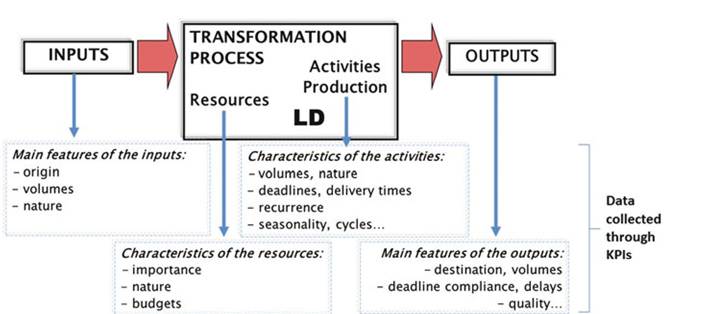
Fig.1 LD's performance measurement: what kind of indicators?
through KPIs will actually provide transparency regarding the LD's performance (actions taken, outcomes achieved, extent of achievements), as described in Fig. 1 below.
For example, regarding one possible responsibility/mission defined for the LD— “provide clear, constructive and reliable answers/solutions according to internal clients' expectations”—the associated objectives can be defined as follows: (i) “provide an answer within the agreed deadlines”, (ii) “improve informationsharing by using the Legal intranet”, etc. Compliance with the agreed timeframe is obviously an indicator that makes it possible to monitor the achievement of objective (i). It can easily be calculated using the right metrics.
It is generally accepted (and certainly useful to keep in mind) that indicators can only be relevant if they are “defined, objective and measurable”.
According to Andrew Likierman (“The Five Traps of Performance Measurement”, Harvard Business Review, 2009, 10), best practices in terms of performance measurement are as follows:
• Measuring performance by comparing it with the past can be useful. Yet a performance measurement system above all should support the assessment of whether decisions made today can be useful for the future;
• It is not appropriate to use financial metrics to measure what belongs to non-financial activities. It is critical to identify the most relevant metrics and resist the temptation of reducing everything to a figure of Return on Investment;
• The unit which implements metrics needs (i) to use measures which are accurate regarding what is assessed, (ii) to be explicit on the metrics themselves, and (iii) to be certain that all concerned parties are perfectly aligned with the first two elements under (i) and (ii).
• Benchmarks are relevant when they are set against competitors or external stakeholders. Membership in professional associations can help LDs to define the benchmark criteria.
Following the method and practices described above, it is possible to properly identify relevant indicators to be measured by LDs.
3.2