Conclusion
In-house legal professionals are at a crossroads. Do they adopt emerging technology and come forth as leaders and innovators as they more closely align themselves with true business needs, or do they practice business as usual and assume their competition is doing the same?
Organizations are realizing they can apply technology to improve the basic processes they perform today, essentially paving the cow paths, but there are new technologies now available that change the processes themselves, creating innovations, not just deploying automation, in the way they work.
The truth is that robots and artificial intelligence are here to support the practice of law, and the former innovators are finding it hard to adopt to modern practices. Good legal training, judgement and counsel will always be critical for every organization, but robots and artificial intelligence can be used to automate laborious and costly tasks such as contract reviews and data analysis. It is the innovators, the individuals that are willing to adopt new technology and put in the effort to make it successful, that will take the legal profession to the next level and ultimately survive.
Liquid Legal Context
By Dr. Dierk Schindler, Dr. Roger Strathausen, Kai Jacob
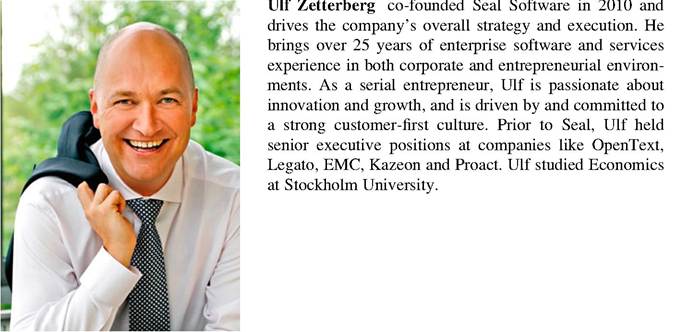
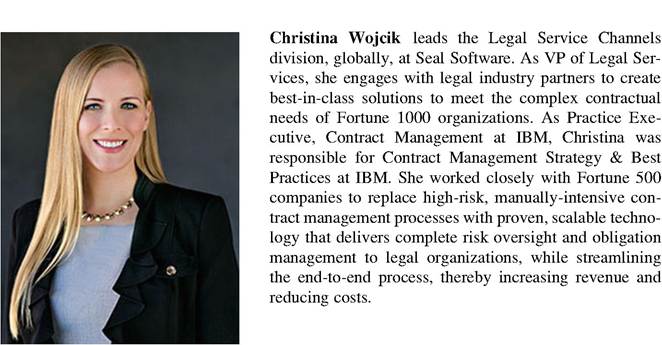
Wojcik and Zetterberg start with calling out an important tension point that exists in the transformation of Legal: Lawyers tend to be laggards in embracing technology. What are the implications? The first thing that comes to mind is that this will slow down the gains in efficiency and cost effectiveness that can be produced from legal tech. Yet, the authors also point us to a second, equally important consequence: technology is the precondition to obtain the metrics on the operational work of lawyers which are required to embark into a KPI-driven and performance-managed future.
So in today's transforming industry, we actually face a double-hurdle—the use of technology itself and the cultural aspect of embracing a metrics- oriented and performance-defined world as positive, rather than a threat. Pauleau, Roquilly and Collard, as well as Timmer provide specific ideas on how to build define KPI's, develop metrics and dashboards that immediately create value also for the operational lawyers themselves, thereby lowering the barrier of accepting them as part of the job.
In terms of embracing a digitized world with legal tech being the basis of it all, rather than the isolated fix for a specific task, Wojcik and Zetterberg keep it simple and straight: rigorous focus on usability is key!But the authors take us one important step further: Introducing tech that is usable and generating the data via reports from it is one thing. However, carefully considering and putting a lot of brainpower into determining what it actually tells us, is crucial. Beyond that, finding ways to not only explain the past, but being able to leverage technology to derive trends and to predict future developments would be creating true and unique value as a legal business partner. As we follow Wojcik and Zetterberg on the journey through the opportunities provided by legal tech, their bold statement is that mere outsourcing and offshoring of legal work to low-cost locations is not innovative anymore—if it has ever been. Don't fight the cost battle, when value is at stake.
(continued)
It is the innovator, the individual that is willing to adopt new technology and put in the effort to make it successful, that will take the legal profession to the next level and ultimately survive, the authors conclude, and connect our minds back to the need of an entrepreneurial mindset that Tumasjan and Welpe have explained and that Chomicka and Roux-Chenu/de Rocca-Serra have made vivid when describing their journeys. It is now time to learn from Timmer what a dashboard for the legal function can look like and how to get there.
More on the topic Conclusion:
- Conclusion
- Frison Christine. Redesigning the Global Seed Commons: Law and Policy for Agrobiodiversity and Food Security. Routledge,2019. — 294 p., 2019
- Conclusions
- CHAPTER 12 Concluding Remarks
- Ni Kuei-Jung, Lin Ching-Fu (eds.). Food Safety and Technology Governance. Routledge,2022. — 252 p., 2022
- 14 Gender and the Lost Private Side of International Law
- An Expansive Protection of the Law
- PART III Reflection
- Conventional sequestration
- Emptio rei speratae and emptio spei