2 Strategy: Determining Where You Are and Where You Want to Go
“Failure to plan is a plan to fail.” This maxim applies to the legal department as much as it does to any business. Successful legal departments don't just plan quarter by quarter or initiative by initiative, they look further ahead, developing multi-year strategy roadmaps linked to company strategy, stakeholder input, and objective assessment data including benchmarking.
Well-developed strategy roadmaps do several things:
• Articulate a realistic picture of the department's current state
• Lay out a purpose and vision that aligns with the strategy of the company overall
• Set specific goals that align with and support the overall goals of the company
• Identify and prioritize initiatives and measures of success for achieving those goals
One of the best strategic roadmaps we've ever seen (see Fig. 1) was created by the NetApp Legal senior leadership team, under the guidance of Matthew Fawcett, GC, who literally held 100 meetings in 100 days to take stock of the legal department's current state when he first stepped into his role.
The most effective strategy plans are designed to enable the business, manage risk and cost, and clearly communicate to all members of the legal department what the priorities are—and are not—and what is expected of them. The strategy plan should connect the overall goals of the company and other departments to the goals of the legal department, cascading to the departmental priorities, then down to team and individual goals, linked to metrics that will be used to measure performance.
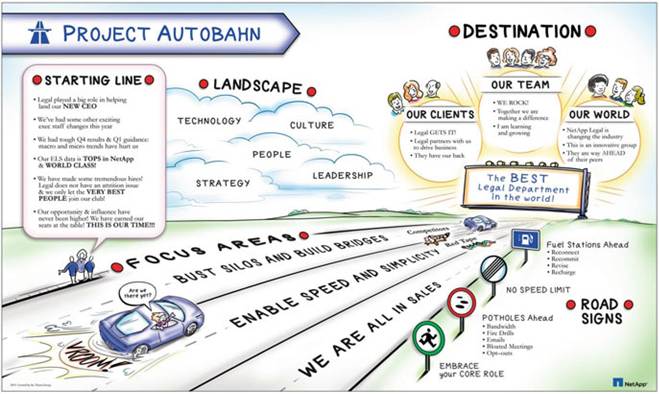
Fig. 1 Illustrated summary of NetApp's strategy roadmap, dubbed “Project Autobahn” (Source: NetApp Legal)
In our experience, determining which initiatives to prioritize and deciding on their sequence is complex because many factors must be considered.
There is no “one size fits all” decision framework, but key areas of consideration include:• Understanding and supporting the strategic activities of the business
• Identifying areas of risk to manage, and to what extent to manage them
• Carefully planning the sequence of initiatives, which may reveal that some activities need to happen in the right order to prepare the way for others in terms of technology, processes, staffing, and even change management
• Analyzing costs and effort involved, identifying relatively “easy wins” that can fund costlier subsequent initiatives.
• Being realistic about what can be achieved over what time-frame, effective change management and pacing, to foster buy-in, build momentum and avoid burning out in-house staff
A strategy is only as good as what you do with it, and successful legal departments are characterized by a distinctive ability to put their plans into action. Not only do the GCs of these companies achieve real operational improvements in their legal department, but they also gain the respect of the rest of the company C-suite, who understand and respect the value of this business discipline.
Developing a strategy requires starting out by understanding the department’s current state, then developing a shared point of view about an improved future state, and finally, creating a multi-year roadmap to get there.
A clear understanding of the department’s current state requires subjective input from relevant stakeholders, objective measures, and peer benchmarking (Fig. 2). The best legal departments measure key performance indicators (i.e., metrics) that provide objective information about how the department is performing. We will discuss metrics in more detail in Sect. 8.
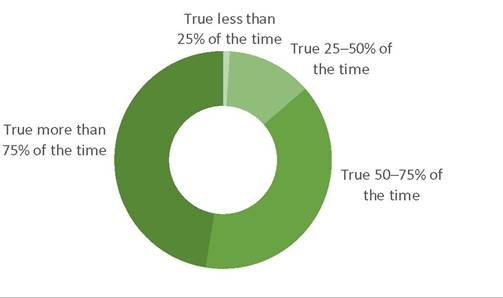
Gathering subjective input can be difficult, but it is essential to do so in a structured manner in order to develop a true picture of the performance and effectiveness of the department, without bias or relying on anecdote. Subjective or qualitative information should be gathered using online surveys (see Fig.
3, an example from the legal department of BlueScope Steel, a multinational steel company) or through interviews with the in-house legal team, colleagues in Sales, Finance, Procurement, HR and other key groups, customers, and the company’s legal service providers (law firms and non-law firms).[CCX]Fig. 2 Strategic planning process (Source: Elevate)
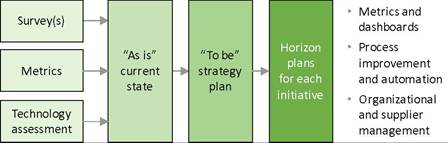
Fig. 3 Example results of online survey question (Source: Elevate)
QIC The legal team members working with my business unit(s) are comfortable taking on risk in exchange for an appropriate return - in other words, they are “commercially minded.”
| Early Stage | Maturing | Mature | Best Practice | |
| Business Alignment | • No team specialism • Reactive services coverage model based on business demand • No assessment of legal risks | • Business aligned structure • Service provided based on subjective analysis of key legal risks for the business • More proactive legal involvement in all steps of business lifecycle | • Business aligned relationship teams, with shared teams providing consistent delivery by practice area • Formal risk assessment sets parameters of legal service coverage • Some formal embedding of legal management into business boards | • Framework service agreements with business incorporating SLAs • Legal work guided by clear understanding of commercial benefits / legal risk to business • Presence of legal in all key business function boards enabling advice ‘at source' |
| Resource Management | • Limited in-house team, ‘passthrough' service to external counsel • Law firms provide both overflow resourcing and capability coverage | • In-house capability grown to match BAU demand, large projects still cause significant disruption • Firms still used heavily regardless of value / complexity • Formal role definitions for in-house teams, but inconsistent | • Internal and external resourcing decisions increasingly based on work value / complexity and understanding of volumes • Some understanding and use of alternative legal service providers (ALSPs) • Simple demand planning • Consistent role definition / work allocation across inhouse teams | • All internal and external resourcing choices aligned with assessments of value / complexity of work • ALSPs fully embedded in ecosystem • No use of law firms for capacity; ability to flex resourcing quickly • MI and proactive demand planning supports resourcing decisions |
| Spend Management | • Uncontrolled external spend • Spend tracking relies entirely on Firm MI • No matter scoping • Engagements on rack-rate fees using Firm Ts&Cs | • Rudimentary efforts to consolidate spend with Firms • One-off spotlights on global spend for budgeting • Scoping, AFAs and bespoke Ts&Cs used for major matters • Ad-hoc invoice review | • Major spend areas designated to tender or consolidate with Firms • Regular spend data updates and analytics at practice area level • Scoping and AFAs extended to lower value matters • In-house Ts&Cs and billing guidelines, consistent approach to invoice review | • Formalized strategy to consolidate or tender at matter-level for all work • Real-time data analytics and scorecards • Automated, widespread usage of scoping and AFAs at all levels of matters • Automated straight-through bill review (third party or in-house), approvals and spend recovery embedded in invoice payments process |
| Operations, Processes, and Metrics | • No Legal Ops roles and responsibilities, ad-hoc ops issues supported by inhouse lawyers and personal assistants • No documented processes | • Appointed Legal Ops roles and responsibilities, focused on back office processes e.g. invoice payments / IT delivery • Isolated efforts to improve processes and streamline spend mapping • KM processes are ad hoc | • Well defined legal processes and guidelines supported by legal project management • Dedication to continuous process improvement • KPIs defined in some areas • KM strategy defined | • Partnership with Firms and ALSPs extends to back office functions • Dedicated strategy and roadmap for improvements in front-to-back office technology and processes • Responsive management by KPIs • Proactive KM approaches adopted consistently |
| Technology | • Ad-hoc data collation via spreadsheets • Knowledge stored on individual work stations • Fully paper invoices • Hard-copy signatures | • Formalized data and document management on shared drives • Some adoption of e-billing • Contract management and knowhow systems in place, but not updated and used • IP docketing system in place • Formal relationships with e-Discovery providers • E-signature for NDAs / basic agreements | • Enterprise search across all data sources • Centralized contract management and knowhow systems widely used • IP prosecution /patent lifecycle system in place • TAR used occasionally in e-Discovery process • Integrated matter management / e-billing • Formal technology strategy • Fully integrated e-signatures and workflow with contract management system | • Centralized real-time dashboard and analytics capability • Paper based filing eliminated • TAR consistently used for all e-Discovery • Consistent and inter-operable systems architecture • Digital approvals for all legal and non-legal transactions |
Fig.
4 Legal department maturity model (Source: Elevate)In helping legal departments with strategic planning, we often use an operational maturity model (see Fig. 4, an example assessment framework we used with British Telecom's legal department) to: (a) develop a rich picture of the department's current state; (b) provide a framework for discussion of what the future state should be, and then (c) identify what the gaps are. At a summary level, the discussion addresses questions such as:
• How do the current activities of the legal department support the needs and goals of the company overall?
• What needs to be added, changed or discontinued?
• What is the most effective combination of resources, systems and tools to support the company's needs and goals?
• What are feasible next steps that can be taken now to achieve long-term goals?
In support of this assessment process, we typically gather and analyze data on work volumes and cycle times by task and complexity, legal spend and matter type, in order to identify performance trends and perform benchmarking, e.g., an analysis of a client's own portfolio of legal spend data against industry spend data for similar matters supported by similar firms, which can bring objectivity and actionable insights to an area that has historically been opaque and difficult to assess. However, different legal departments must manage different risks and other variables that impact spend, so not all industry-wide benchmarking is relevant. While benchmarking can be conducted as a one-off exercise, it is most impactful when conducted regularly, as shown in Fig. 5, where several months of data are included.
With the benefit of analytics, benchmarking, maturity assessment, and surveys from stakeholders, the legal department will have developed a clear picture of the “As Is” state. It can now start to brainstorm a mental picture of what it wants to look like in the “Future” state. During this facilitated workshop, the legal department will debate what it wants to start doing, what it wants to stop doing, what it wants to do more of or less of, in order to get to that future.
The goal is to identify the key initiatives that the legal department wants to prioritize, and to create a one-page strategy plan that can be used to communicate to the whole legal team—see example in Fig. 6 that we helped IMS Health to produce. The framework illustrated here is based on the widely-used Balanced Scorecard approach.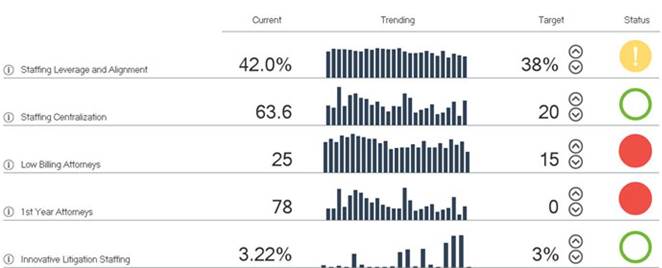
Fig. 5 Example spend benchmarking report (Summary Level), produced using our proprietary spend analytics tool Cael Vision. Similar reports can also be compiled manually, but technology can significantly streamline the administrative burden. (Source: Elevate)
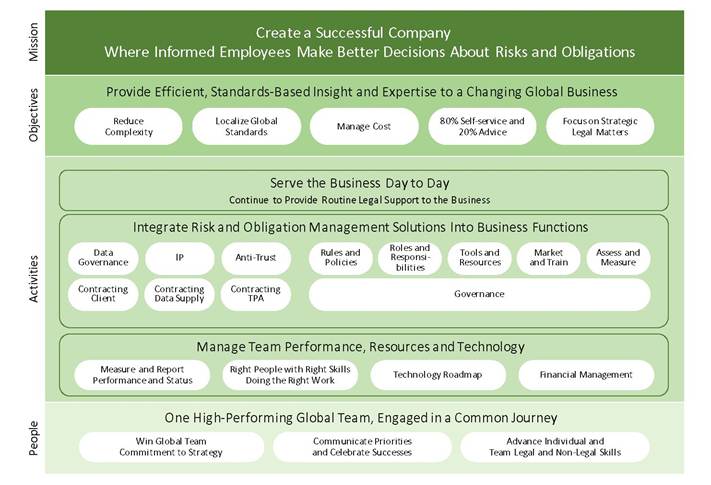
Fig. 6 Legal department strategy plan (Source: IMS Health and Elevate)
3