How Legal Departments Turn Disputes into Business Cases
4.1 Dispute Avoidance
Except for rare cases, avoiding conflicts and disputes makes commercial sense. In order to effectively avoid conflicts, the main causes of disputes need to be known.
Disputes are often caused by miscommunication. Parties communicate (1) on the wrong subjects, (2) in the wrong way and (3) at the wrong time.4.1.1 Wrong Subject: Positions Instead of Interests
In order to achieve good and sustainable results, whether in contract negotiations or conflict negotiations, it is essential that the parties express their interests rather than their positions. When entering into mutual contractual obligations, the parties expect a certain return. Those expectations are based on the parties interests. In order to achieve a sustainable business relationship, the interests need to be satisfied. However, during contract negotiations, the parties usually argue on positions rather than openly communicating their interests. This in turn leads to unsatisfied expectations and finally to frustration. Conflicts are the inevitable consequence. This can be avoided by an interest-based negotiation.17 As it often is difficult for the parties to determine their interests, it might be helpful to involve a neutral person to structure the negotiation and help the parties to identify their interests in order to create solutions for mutual gain (“Deal-Mediation”).18
4.1.2 WrongWaytClarityIsKey
Communication
Communication implies the risk of misunderstandings. Besides the issue of losing information on the way from the sender to the receiver,19 the usage of different “frequencies” is a major source for misunderstandings.
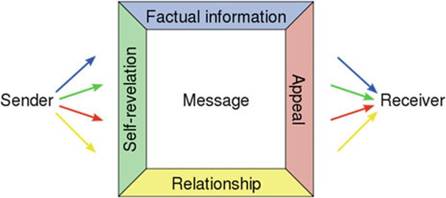
According to Friedemann Schulz von Thun's “four-ear-model” (Fig. 4), each statement contains four messages:
1. Factual information
2. a self statement,
3. a relationship indicator,
4.
an appealEach of the four messages is sent on a different frequency. In order to have a flawless communication, sender and receiver must tune to the same frequency. Unfortunately, each statement contains all four messages at the same time and is thus sent on four different frequencies. Often, sender and receiver are using different frequencies. The sender for example just wanted to send factual information (“The light is green”) while the receiver heard an appeal (“you better drive
Fig. 4 Communication square by Schulz von Thun
171Tocus on interests, not positions” is the second principle of the Harvard concept on principled negotiations: FisherlUryIPcitton Getting to Yes (1991).
18More details on Deal-Mediation: Peppet (2004), pp. 283 et seq.; Berkel (2015), p. 4; Hagel (2014a), § 1 Rn 18; Hagel (2016), § 151 Rn 1.
19Not all of the information that the sender intends to send is actually received on the other side. Losses occur at any transformation point of the transmission process. For oral communication, the first transformation takes place from the brain to the mouth of the sender. The sender only says a portion of what he intended to say. From what he said, only a portion is received by the ear of the receiver of which only a portion is used by the receiver’s brain in order to understand.
now”). Awareness of the available frequencies and clarity on the message helps to reduce the risk of misunderstandings and disputes in consequence. It is the task of the Legal Department to advise the Business on the different frequencies of communication and (1) to draft clear contracts and letters and (2) to interpret received messages in accordance with the four frequencies and get clarity from the sender on the intended message.
Contract Drafting
Drafting contracts is an art. Especially lawyers usually see the goal in drafting contracts to hold in court (“the water-proof contract”) and protect the client by focusing on passive clauses.[121] The addressee of the lawyers is the judge to rule the case if anything goes wrong.[122] From a business perspective however, the purpose of contracts is to guide the contracting parties in achieving the underlying business objectives and minimizing the risk of failure.
Business people would expect the contract to be addressed to them to ensure that nothing goes wrong. Due to this mismatch of expectations with respect to the purpose of a contract, it is not surprising that contract interpretation is still one of the major sources of contract litigation[123] and that the failure to understand the contractual obligations remains under the top five root-causes for disputes.[124] In order to prevent misunderstandings, contracts need to be user-friendly and clear. It is the role of the Legal Department to ensure that contracts are drafted in a manner that enables the parties to perform their contractual scope and minimize the risk of non-performance. The better the parties understand the contract, the more they act accordingly and the less they enter into conflicts. A better contract understanding can be achieved by (1) plain language, (2) user-friendly layout and (3) visualization.[125]4.1.3 WrongTimerAlwaysTooLate
Communication in dispute situations usually takes place when the problems cannot be hidden any longer. This behaviour is due to the conflict adverseness and the corresponding desire for harmony, the inability to admit failures and the hope that issues might disappear over time. In consequence, issues and potential risks are not addressed early on, and the parties are not able to commonly mitigate the risks. When the issue gets obvious, the parties start blaming each other and the spiral of escalation is triggered. To avoid such situations, it is, besides other functions, the task of the Legal Department to create a business relationship between the contracting parties based on trust and transparency rather than mistrust and confidentiality. The contribution of the Legal Department in building a trustful relationship starts by drafting contracts in a collaborative way.[126] In dispute situations, the Legal Department can brake the spiral of “naming, blaming and claiming”[127] by encouraging the business to admit responsibility where necessary.
4.2 Contract Management
In most cases, the people involved in negotiating the contract are no longer involved in the contract execution, and the responsibility is transferred from the Sales Department (respective Purchasing Department) to the Project Management Department. From a Contract Management point of view, it is essential that the knowledge gained during the negotiation process is being transferred to the team executing the contract. The Legal Department plays a core role in the transition phase,[128] helping to fully understand the obligations entered into under the contract by summarizing the major rights and obligations of the parties, the stories behind the clauses and the expressed intent of the parties. Usually this is done at the Project Kick-off-Meeting. At the beginning of the execution phase, the Project Team allocates the roles and responsibilities of functions and individuals with respect to all contractual obligations.[129] During the further execution of the contract, it might be helpful to organize regular Contract Awareness Workshops to explain to the team which contractual clauses are important for the upcoming milestone/phase, what the pitfalls are and also to remind the team what the parties originally intended when signing the contract.
4.3 Dispute Resolution
Even with perfect Contract Management, conflicts cannot be avoided. “Resolve claims when they’re big enough to see and small enough to solve,”[130] is the guiding principle on Dispute Resolution. It starts with an early identification, continues with a risk evaluation, the selection and application of the appropriate dispute resolution mechanism, and ends up with a settlement or decision by a third party.
4.3.1 Early Identification of Disputes
Contractual disputes usually arise when the parties to a contract have conflicting views on the responsibilities for non-performances, contract breaches or contract changes. The described sources for conflicts have in common that the “as is” deviates from the “to be”, at least in one parties' view.
In order to identify contractual deviations, a permanent monitoring of the contractual performance is essential. The root cause of deviations and the responsible party must be identified. If the analysis shows that the deviation is caused by the other contracting party, the communication process should be started in accordance with the contractual requirements.[131] In case the contracting party does not assume responsibility, the dispute needs to be resolved in accordance with the following steps.4.3.2 Risk Evaluation (Getting Close to the Crystal Ball)
When the (potential) dispute has been identified, the risk (or opportunity) needs to be evaluated in order to “translate” the Dispute into commercial terms, usually financial figures for Management to decide on how to proceed.
When approaching disputes, many outside counsels, as well as still some in-house counsel, focus on legal issues, litigation strategy and winning. Most in-house counsel and management, however, approach Disputes from the viewpoint of costs, probability of success, and the potential value of the Dispute either in terms of potential benefit or potential loss. They also consider whether, when and at what costs settlement is feasible and makes commercial sense.
In the following, building up the Risk Analysis is described step by step.
Case Example
A consortium consisting of company “A” and company “B” has entered into a contract for the delivery of 25 oil platforms to Customer “C”. A is responsible to manufacture and deliver 15 platforms and B is responsible to manufacture and deliver 10 platforms. The scope split between A and B is that both are responsible for designing different parts of the platform (e.g. A being responsible for the accommodation container, the drilling equipment, etc.). However when the platforms are designed, both companies manufacture complete platforms. The contract with C foresees a joint and several liability of the consortium members A and B towards C.
Under the partnership agreement between A and B, the parties have agreed that each party is responsible and liable for its scope. The party who has delivered the respective platform will rectify defects; the costs of rectification, however, shall be borne by the party being responsible for the defect (= having caused the defect). Liability for damages between the consortium partners is limited to 1 M€ per
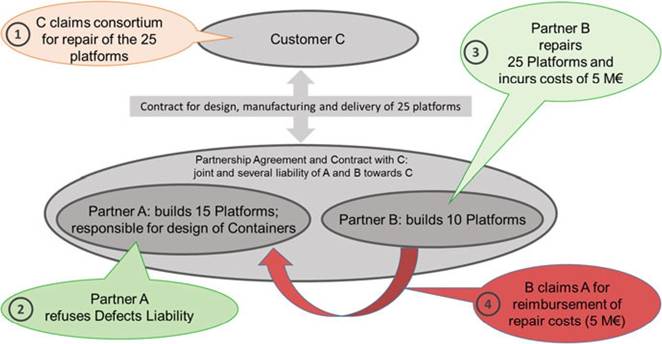
Fig. 5 Illustration of case example (author's own material)
event. Three arbitrators shall finally settle all disputes arising out of, or in connection with, the partnership agreement under the Rules of Arbitration of the International Chamber of Commerce.
The customer notified the consortium of a defect of the accommodation containers. According to the customer, the wooden floor of the container is rotten due to water which got into the container. A, being responsible for the design of the container, refuses to repair its 15 platforms. B repairs all 25 platforms and incurs repair costs of 5 M€. As B holds A responsible for the design of the containers and thus the defect, B claims A for reimbursement of the 5 M€ (Fig. 5).
In the claim negotiations, A argues that the floor was damaged because C floods the containers when cleaning them. Even if there is a defect, it would just be a manufacturing defect, not a design defect, and thus, even in the worst case, A assumes that it only has to pay for 15 out of the 25 repaired platforms. A further argues that any liability between the consortium partners is limited to 1 M€. Finally, A argues that any warranty claims of C were time-barred and that B repaired without being obliged to do so. B replies that in fact A’s design caused the defect, that the limitation of liability does not apply for recourse claims under the joint and several liability, and that C’s defect liability claim was not time-barred as negotiations took place. At the end of long claim negotiations A made a last and final offer to settle the case for 1.2 M€.
Management of B is asking the Legal Department whether to accept the settlement offer or what an arbitration would result in. Management of A want to know from it’s Legal Department if a risk provision needs to be booked, and if yes, for which amount.
In order to answer their respective management, both Legal Departments need to perform a litigation risk analysis.
Step 1: Building Up the Tree
In a first step, the dispute needs to be transformed into the decision tree. In order to do so, the issues relevant to the outcome need to be determined. Such issues are the decision-“nodes”. All nodes need to be brought into a logical order. This order is not necessarily the sequence of a legal subsumption, but ensures that all relevant aspects are considered before the end of a branch. Each node is marked either with a “+” for the potential answer “yes” or a “—” for the potential answer “no”.[132]
Usually, the decision follows a certain logic from left to right. Starting with the central fact based issue (e.g. Defect, Delay, Infringement), followed by some legal pre-conditions, and ending with the quantum. In order to simplify the decision tree, it is recommended to use all issues leading to a direct result (usually a dismissal of a claim) as early as possible. In our example, the claim will fully be dismissed if either there is no defect or the claim is time-barred, thus the nodes “defect” and “time-barred” are used at the beginning. Only in case there is a defect, the question whether it is a design defect is relevant, and only in case there is a liability, the question of a limitation of liability needs to be answered. In consequence, the decision tree for the case at hand looks as shown in Fig. 6.
Scenario 1 reflects the claim scenario where there is a defect but the claim is time-barred. In this case, a judge would dismiss the case, and the outcome for the claimant (“scenario value”) would be 0 €.
In scenario 2, there is a defect, the claim is not time-barred, the defect is a design defect and the limitation of liability kicks in. In such a case the scenario value (=potential award) is 1 M€.
Scenario 3 shows the best case for the claimant, where there is a defect, which is a design defect, no time-barrage and no limitation of liability, leading to a scenario value of 5 M€.
In scenarios 4 and 5, there is a defect which is not a design defect, and the claim is not time-barred. In scenario 4, the limitation kicks in, whereas in scenario 5, it does not. This leads to a scenario value for scenario 4 of 1 M€ and for scenario 5 of 4 M€.
Fig. 6 Decision tree without probabilities (author's own material)
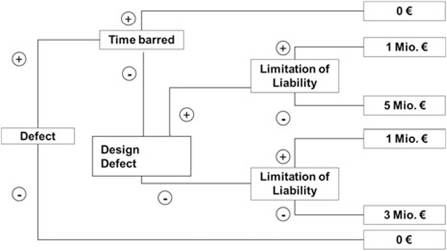
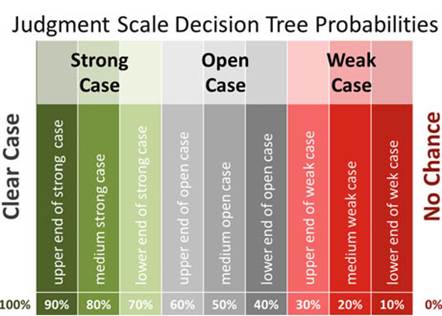
Fig. 7 Judgment scale for decision tree probabilities (author's own material)
Scenario 6 is the worst case for the claimant, as there is not even a defect. The scenario value is 0 €.
This first, quite simple step of building the Decision Tree, allows the Legal Department to provide its management with an easy-to-digest comprehensive overview which provides a basis for a focussed discussion. It shows the potential results as well as the respective pre-conditions.
Step 2: Adding Probabilities
In a second step, percentages are attached to the branches of the scenarios, representing the probability that a court or arbitration tribunal will follow the respective argument.
Attaching probabilities is the most difficult part, especially for lawyers. In order to get a sufficient approximation of the probabilities, the in-house counsel may ask themselves or the external lawyer two simple questions. The first one is: “Do we have a strong case, an open case, or a weak case with respect to the respective issue (node)?” The second question is; “Is our strong/open/weak case at the upper or lower limit, or about in the middle?” Based on the answer to the two questions, percentages from 10 % (lower end of a weak case) to 90 % (upper end of a strong case) can be allocated. A clear case will be valued at 100 % and a “no case” will be valued at 0 % (Fig. 7):
Party B evaluates the case as follows:
The probability that a defect can be proven is 80 %, and with a probability of another 80 % it can be proven that the defect is a design defect. The argument that the claim is time-barred has a likelihood to succeed of 30 %. The argument that the limitation of liability is not applicable on the rectification costs has a slightly better chance to be heard and is thus evaluated at 60 %. Inserting the respective probabilities into the decision tree would lead to the decision tree shown in Fig. 8.
The probabilities for each node needs to add up to 100 %[133] (Node 1 “Defect” yes (“+”) 80 % + no (“-”) 20 % = 100 %).
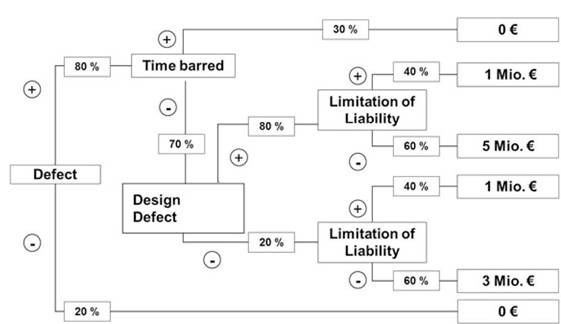
Fig. 8 Decision tree with probabilities (author's own material)
Step 3: Running the Calculation
The next step is pure mathematics. Two ways of calculating the expected value are available, the Compound Probability Method[134] and the Roll-Back Method.[135]
The Compound Probability Method calculates the probability of each claim scenario by multiplying the individual probabilities comprising that claim scenario. In the example, for claim scenario 1 (Defect yes but claim time-barred), the compound probability equals 24 % because the first outcome (Defect) was assessed with 80 % and the second outcome (time-barred) with 30 % (80 % x 30 % = 24 %). In other words, there is a 24 % chance of claim scenario 1 occurring.
Similarly, the compound probability of claim scenario 2 is:
80% x 70% x 80% x 40% = 17.92%.
All compound probabilities of the possible claim scenarios (in our example 6 scenarios) need to add up to 100 %.[136] This counter-check shows that all potential cases have been considered.
With the compound probabilities of the claim scenarios, the expected values of the scenarios can be calculated by multiplying the compound probability with the scenario value. In the example (see Fig. 8), the likelihood that a court awards 5 M€ (scenario 3) is 26.88%, thus the expected value of such scenario is 1.344 M€ (26.88 % x 5 M€). In order to get the expected value of the claim in total, the expected values of all claim scenarios need to be added up. In the example, the expected value of the claim is 1.769 M€ (see Fig. 9). The expected value will not be awarded by any court as only 0 €,1 M€, 3 M€ or 5 M€ can be awarded, but it is
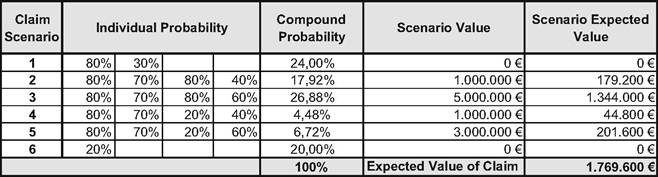
Fig. 9 Overview on claim scenarios and calculation of the expected value (author's own material)
an average value of a simulation of 100 awards on the specific case. It considers the uncertainties and the different probabilities.
Besides the Compound Probability Method, the calculation can also be run by the Roll-Back Method[137] (see Fig. 10), by which an expected value is calculated on each node, beginning at the right side of the tree and rolling-back towards the left, resulting in the expected value of the claim. The most far right node is calculated first. In the example, the two nodes dealing with the question on whether the limitation of liability is applicable are at the same level. Taking the upper pair first: When the limitation of liability applies, 1 M€ would be the result. The probability is 40 %. In case the limitation does not apply, the result is 5 M€ with a probability of 60 %. Both branches added (0.4 x 1 M€ + 0.6 x 5 m€) result in
3.4 M€ as shown at the respective decision node in Fig. 10. The same is true for the question on the limitation of liability in case there is a defect other than a design defect. In this case, limitation results in 1 M€ with a probability of 40 %, and no limitation of liability results in 3 M€ (only 15 platforms of A need to be reimbursed by A = > 15/25 x 5 M€ = 3 M€) with a probability of 40 %. The branches added up results in 0.4 x 1 M€ + 0.6 x 3 M€ = 2.2 M€. The same way of calculation is now used for the next node to the left. 0.8 x 3.4 M€ + 0.2 x 2.2 M€ = 3.16 M€. At the end, the total expected value of 1.769.600 € is shown at the very left. As can be seen, the Roll-Back Method and the Compound Probability Method lead to the same result.
Step 4: Considering the Investment Costs
The Legal Department has to provide Management with a clear advise whether to pursue a claim in any formal dispute resolution process, or whether to enter into a negotiated settlement. For such advise, the expected outcome of the claim itself is not sufficient. To get the full financial picture, the invested claim costs, and a potential reimbursement of such costs by the opponent, need to be considered as well as the cash-flow of all such costs. In order to get an award, B needs to sue A which will cause costs on both sides. A and B will be represented/supported by external lawyers, the court/arbitration fees need to be paid and the parties will incur own costs (transactional costs as well as opportunity costs). In the example, ICC
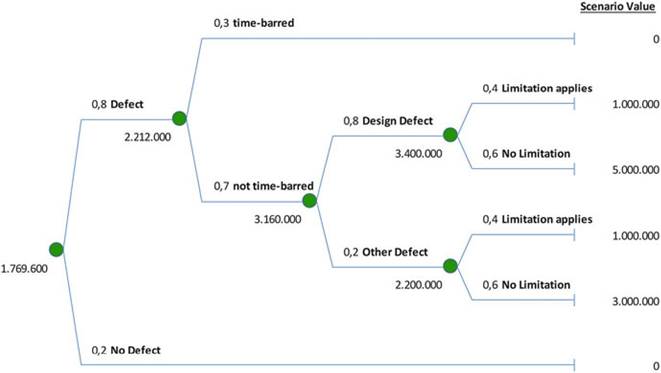
Fig. 10 Decision tree using the Roll-Back Method (author's own material)
arbitration had been chosen. With an amount in dispute of 5 M€ and 3 arbitrators, the administration fee is 45,015 €,[138] the fees for arbitrators are in a range of 98-425 K€,[139] which would lead to a worst case scenario of 470 K€ (45 K€ + 425 K€). In addition, lawyer fees of 41 K€[140] and internal costs of 264 K€ need to be considered. The internal costs are calculated based on the assumption that the claim team, consisting of members of different functions, will spend 200 h/month for 11 (not consecutive) months[141] at an hourly rate of 120 €.[142] According to Art. 37 (4) ICC Rules, “the final award shall fix the costs of the arbitration and decide which of the parties shall bear them or in what proportion they shall be borne by the parties”. Art. 37 (5) ICC Rules states: “In making decisions as to costs, the arbitral tribunal may take into account such circumstances as it considers relevant, including the extent to which each party has conducted the arbitration in an expeditious and cost-effective manner”. In the worst case this means that all costs (administration, arbitrators and external lawyers[143]) are to be borne by the losing party (Fig. 11).
| Type of Costs | Amount based on a claim amount of 5.000.000 € | Advances | Reimbursable | Worst-Case |
| Administration Costs | ICC: 45.015 US$ Arbitrator Min. 98.301 US$ Arbitrator Max. 425.700 US$ | A and B share 370 KUSS | yes | 470.715 € |
| Lawyers | 41.260 € | Aand B | yes | 82.520 € |
| Transactional Costs | 264.000 € | Aand B | no | 264.000 € |
| Total | 817,235 € |
Fig. 11 Overview on investment costs and cash-flow for arbitration (author's own material)
Further investment costs may need to be considered, depending on the specific circumstances. They may include opportunity costs, interests, further transactional costs and costs of taking evidence. As these investment costs vary significantly, they are not included in the calculated example.
Considering the investment costs for the arbitration minus the reimbursable costs in each claim scenario will lead to different expected arbitration values. In case the plaintiff wins the full claim amount of 5 M€ as well as the cost award, the internal costs of 264 K€ are still not reimbursable and need to be deducted from the scenario value reflecting the net result of the award. In the calculation (Fig. 12), the cost allocation follows the ratio of win/loose. The decision tree considering the investment costs is shown in Fig. 12.
By taking the investment costs into consideration, the expected value decreases by 0.63 M€, resulting in 1.13 M€ (see Fig. 13).
Besides the expected value of the claim, the probability distribution is also of importance for taking an informed decision. Such probability distribution shows the magnitude and likelihood of each risk/opportunity.[144] The graph perfectly demonstrates that, even though in average a positive outcome of 1.13 M€ is to be expected, the likelihood of incurring a loss of 0.81 M€ is pretty high with 44 %. The likelihood of getting more than the expected value is only 33.6 %, whereas the likelihood to get less is 66.4 %. However, in the event the award is above the expected value, it will either be 1.25 M€ or even 3.59 M€ more than expected. In case the award is below the expected value, it will either deviate by 0.89 M€ with a still positive outcome (0.24 M€) or by 1.94 M€ and a negative result (0.81 M€) (Fig 14).
With any settlement above 1.32 M€,[145] B is on average better off settling the dispute, rather than fighting it through in arbitration. Any € above the expected value
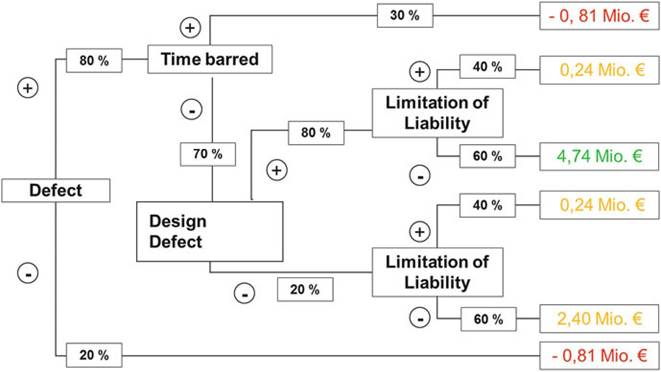
Fig. 12 Decision tree with probabilities including investment costs (author's own material)
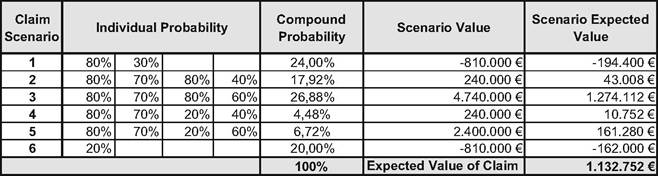
Fig. 13 Overview on claim scenarios and calculation of the expected value including investment costs (author's own material)
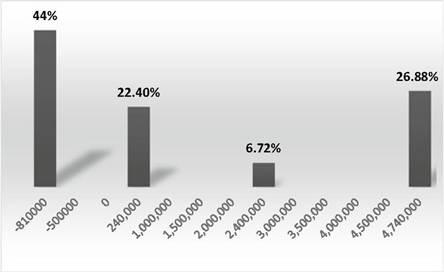
Fig. 14 Risk distribution (author's own material)
is increasing the bottom-line profit. However, with respect to risk minimization, the risk distribution cannot be ignored. There is a higher likelihood to get less than the expected value and a high risk of even incurring a (further) loss of 0.81 M€.
As a negotiated settlement requires the agreement of the other party (A), B needs to change perspective in order to identify whether there is a “Zone of a Potential Agreement” (ZOPA). In principle, A needs to perform the same calculation in order to determine the risk and a respective risk provision. However, the outcomes would be different as the cost burden is different. In case A wins, A would still face a loss of the investment costs of 0.264 M € and, in the worst case, A would have to payout the claim-amount, reimburse the costs of B (except for B's transaction costs) and bear the own transaction costs, resulting in a loss of 5.81 M€. Applying the decision tree and the respective calculation, the risk value for A is approximately
2.2 M€ (Figs. 15 and 16).
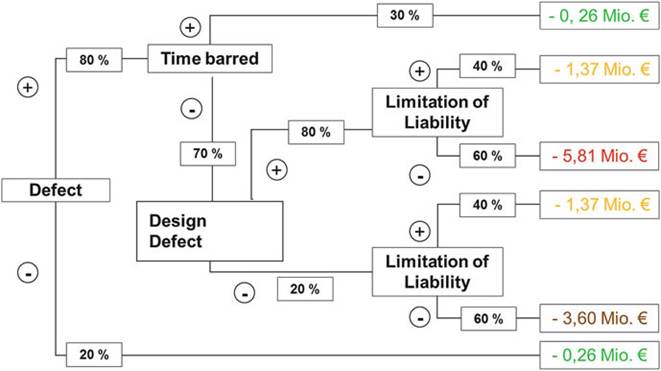
Fig. 15 Decision tree with probabilities and investment costs from A’s perspective (author's own material)
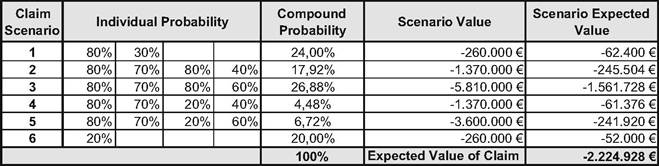
Fig. 16 Overview on claim scenarios and calculation of the expected value from A’s perspective (author’s own material)
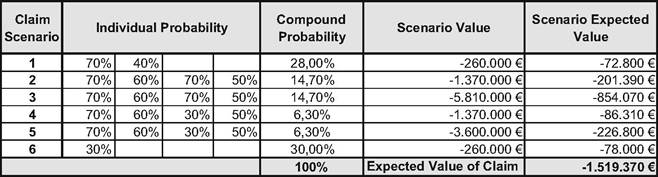
Fig. 17 Overview on claim scenarios and calculation of the expected value from A's perspective with different probabilities (author's own material)
Based on these evaluations, the ZOPA would be from 1.13 M€ (expected claim value for B) to 2.2 M€ (expected claim value for A), as any settlement amount in-between would be a “win” for both parties. Most likely, A's evaluation would look different as each party usually is more confident, or even over-optimistic, with respect to its own arguments. The decision nodes remain the same, and applying probabilities of 10 % more favorable for A at each node would result in an expected risk for A of 1.52 M€ (Fig. 16). This would still result in a “win-win” scenario as the ZOPA would be from 1.13 to 1.52 M€ (Fig. 17).
Running a risk analysis with a decision tree has the following benefits, not only for the Legal Department:
1. It provides a framework to identify the key legal and factual issues and uncertainties of a claim;
2. It provides a framework to identify the probabilities of the identified issues;
3. It forces Legal Counsel to assess the probabilities;
4. It provides a model to identify the possible outcomes of claims;
5. It improves the quality of the claim evaluation by making the process transparent and standardised;
6. it visualizes the lines of argumentation;
7. it helps to stay focused during negotiations;
8. it helps to identify the issues having the highest impact on the claim result[146]
9. It enables the Expected Value of the claim to be calculated;
10. it helps to calculate risk provisions and to provide transparency for the auditors; and
11. It provides a model to determine the value of the claim or Best Alternative to a Negotiated Agreement (BATNA) and the ZOPA
4.3.3 Frontloading: Selection of the Appropriate Dispute Resolution Mechanism
When the parties cannot settle disputes, an independent third party needs to be involved, unless the demanding party does not want to pursue the demand any further, which is often seen as the “Worst Alternative to a Negotiated Agreement” (WATNA).[147]
Overview on Dispute Resolution Processes
There are various possibilities available to get a third party involved in the resolution of a dispute (Fig. 18):
In Delegated Processes, the parties refer the outcome of the dispute to a third party. The result of such process is a (preliminary) binding decision of the third party:
Court Litigation is a process for handling disputes in the state court system. Litigation can be initiated by a party without the consent of the opponent(s), and it is the fallback procedure when the parties do not agree on any other dispute resolution process.
Arbitration is a proceeding in which an impartial arbitrator (or a panel of several arbitrators) resolves a dispute by a final and binding decision (award).
Expert Determination is a procedure in which a dispute between the parties is submitted to one or more experts who make a determination on the matter referred to them by the parties. The determination is binding, unless the parties have agreed otherwise.
Adjudication is a process by which the parties to a dispute submit their differences to the decision of an impartial person (adjudicator) or group appointed by mutual consent or statutory provision. The adjudicator’s decision is binding unless or
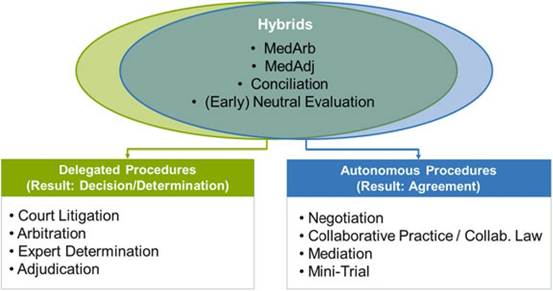
Fig. 18 Overview on dispute resolution processes (Hagel 2016, § 149 Rn 1)
until the dispute is finally determined by court proceedings, arbitration or by agreement of the parties via negotiation or mediation. If a party chooses to pursue subsequent proceedings, the dispute will be heard afresh—not as “appeal” of the adjudicator’s findings.
In a Consensual Process, the parties remain in control of the outcome of the dispute, as the result is a settlement agreement of the parties.
Negotiation is a voluntary and usually informal process in which parties discuss the issues with the aim to reach a mutually acceptable agreement to resolve the issues raised.
Mediation is a structured, interest-based process, whereby two or more parties to a dispute attempt by themselves, on a voluntary basis, to reach an agreement on the settlement of their dispute with the assistance of a mediator who is not empowered to decide the case.[148]
Collaborative Practice/Law is an out-of-court settlement process where parties and their external consultants[149] try to reach an agreement satisfying the needs of all parties involved. If the parties cannot settle the case and engage in contested litigation, their consultants (in Collaborative Law their external lawyers) cannot represent them in court.
Mini-Trial is a private process where each party makes a brief presentation of the case as if they were at a trial. Representatives (usually high-level business executives) from each side with the authority to settle the dispute observe the presentations.[150] At the end of the presentations, the representatives attempt to settle the dispute in negotiation. A neutral person, usually a mediator who assists the executives in the negotiation, can lead the mini-trial.
Hybrid processes are a combination of delegated and consensual processes. The combination is either sequential,[151] or the delegation is limited to render a recommendation. This recommendation then needs the consensus of the parties to get binding.
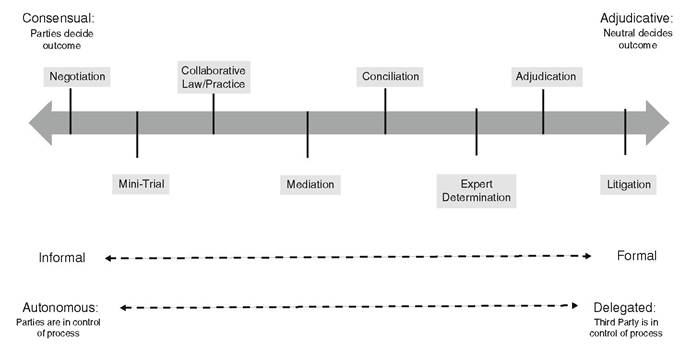
Fig. 19 The spectrum of dispute resolution processes (author's own material)
MedArb is a combination of Mediation and Arbitration. The process involves the same person who first acts as a mediator, and, if the parties cannot reach a settlement, then acts as an arbitrator, rendering a final and binding award.
MedAdj is a combination of Mediation and Adjudication. The process involves the same person who first acts as a mediator, and, if the parties cannot reach a settlement then acts as an adjudicator, rendering a preliminary binding award.[152] Conciliation is a negotiation process led by a third party (conciliator). In case no settlement can be reached, the conciliator makes a non-binding settlement proposal.
(Early) Neutral Evaluation provides the parties with a preliminary assessment of facts, evidence or legal merits to serve as a basis for further negotiation.
Dispute resolution processes cannot only be differentiated by the result of the process (decision or consensus) (Fig. 19), but also by numerous other criteria, such as[153]:
• time,
• cost,
• confidentiality of the proceeding,
• neutrality of the forum,
• enforceability of the result (decision or agreement),
• usability/feasibility for non-justiciable disputes,
• possibility to appeal,
• flexibility of the proceedings,
• formality of the process,
• involvement of the parties in the process.
Systematic Selection of the Appropriate Dispute Resolution Process
Since processes differ, none of them is suited for all disputes. However, for each dispute (and the interests of the disputants with respect to the resolution process), there is a most suitable process available.[154]
Proposing the right process to resolve the dispute at hand is the task of the Legal Department. This requires detailed knowledge of all available processes[155] as well as a structured approach to select the appropriate process. Traditionally, when negotiations on solving contractual disputes fail, the dispute resolution process foreseen under the respective contract is applied. Contractual dispute resolution clauses should, however, be regarded as a recommendation as well as a fallback solution when the parties cannot agree on a more suitable dispute resolution process to be applied in the specific case, if there is such a process. Clauses are usually drafted for all potential contractual disputes, and they might not perfectly fit to the specific dispute. The task of the Legal Department is thus to check the best suitable dispute resolution process first and then to check whether it is in line with the one foreseen under the contract, or whether a specific agreement on a deviating dispute resolution process is needed. In order to identify the most appropriate dispute resolution process for the individual dispute and the interests of the party with respect to its resolution, Legal Departments as well as providers/institutions have developed several tools.
Checklist
A simple tool to identify the most appropriate dispute resolution process is a checklist. The checklist covers the criteria that differentiate the dispute resolution processes. It might address the interests of one's own company, or even the (potential) interests of all involved parties. The ADR Case Evaluation Worksheet of Motorola can demonstrate both, the listing of the differentiation criteria, as well as the possibility to enter both (all) parties interests.[156] One question asks whether a speedy resolution is important to Motorola,[157] another whether the advantages of delay run heavily in favor of one side.[158] The International Institute for Conflict Prevention & Resolution (“CPR”) has also issued such a checklist.[159] In this
CPR ADR Suitability Guide
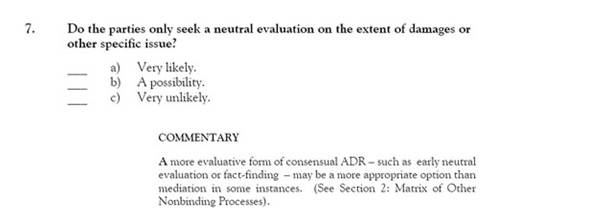
Fig. 20 Excerpt from the CPR ADR suitability guide
checklist, commentaries are added to explain the purpose of the question and to lead the user to the most appropriate process, depending on the answer (Fig. 20).
Flow-Chart
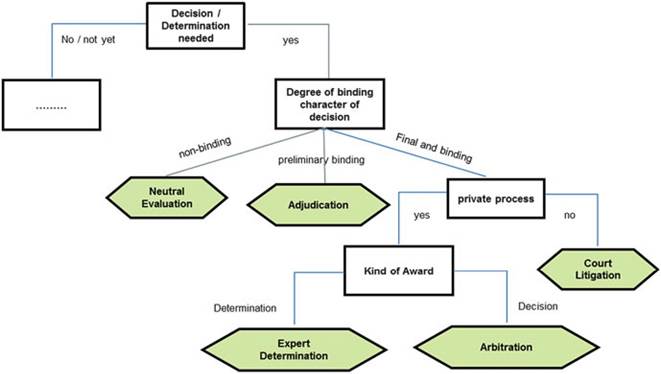
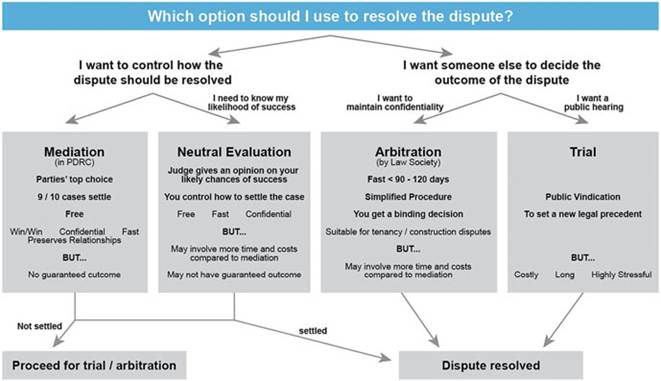
Another possibility to identify the right dispute resolution process is by flow-chart with decision nodes that guide to a specific process dependent on the decisions taken at the differentiation nodes (Figs. 21 and 22). The disadvantage of such flowchart is the single-criterion structure. The flow-chart sorts out certain processes based on one criterion, even though one of the processes singled out might overall be the most appropriate. In addition, parties often do not know what they really need as they are basing the answer to the question raised in the decision nodes of the flow chart on their position rather than their interest. The outcome of a process is one differentiation criterion (settlement agreement, decision or determination). When asked, whether a decision is needed/wanted, parties tend to agree as prior settlement negotiations have failed. However, asking the parties why a decision is important for them, the parties express their interest to settle the dispute, which can also be achieved by consensual processes.
Overview Matrix
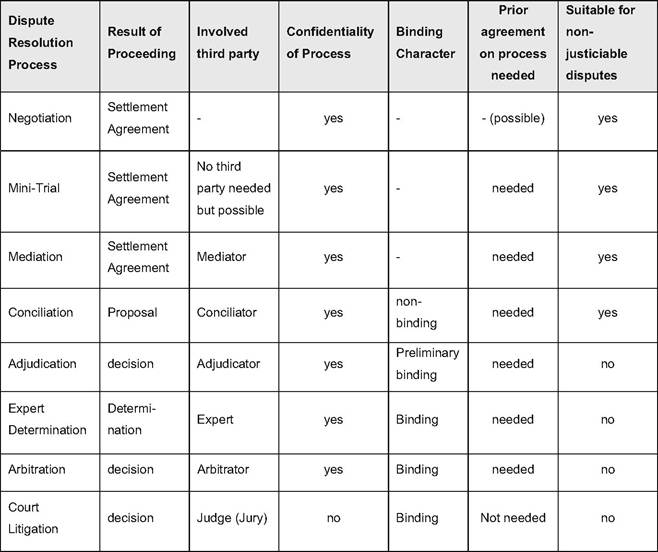
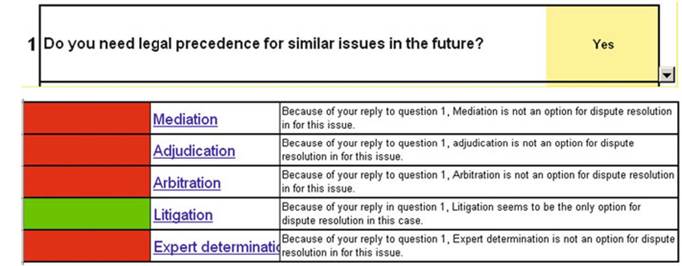
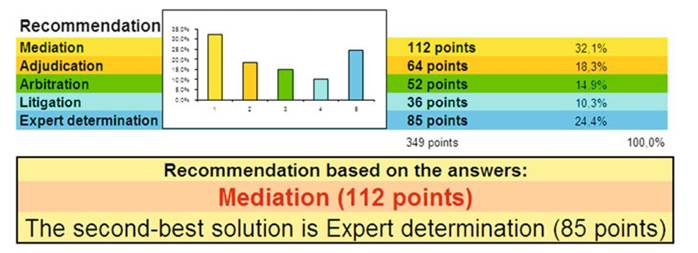
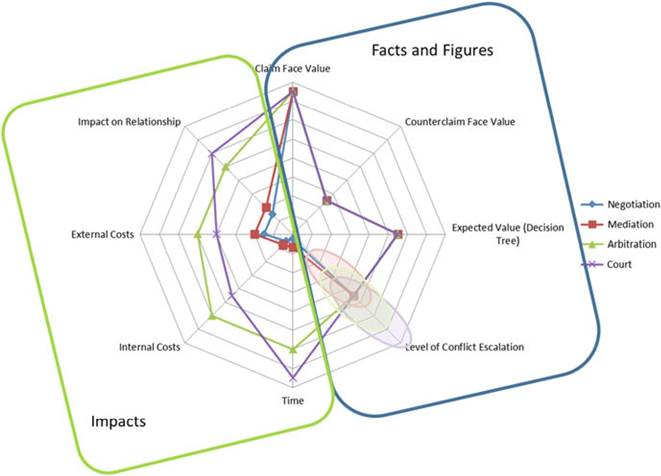
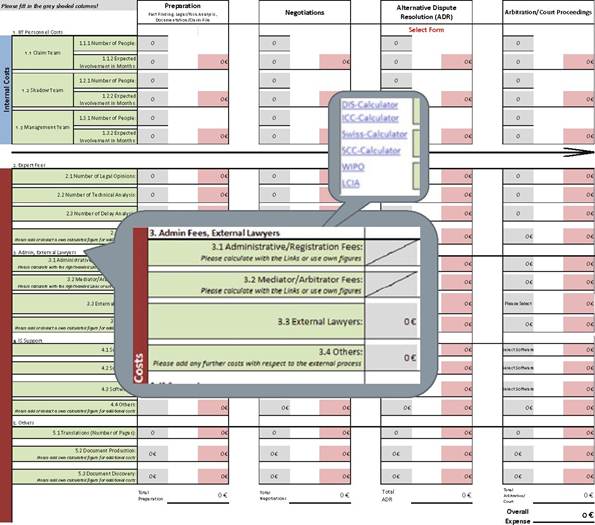
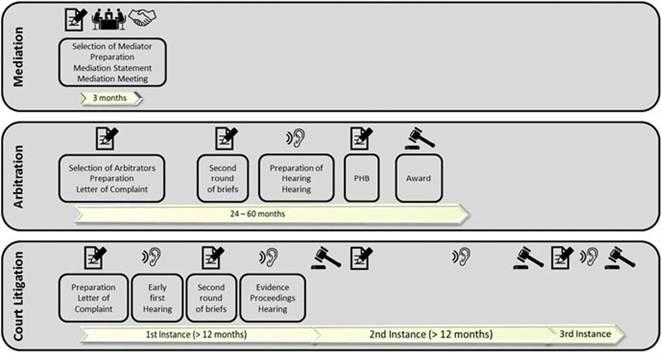
An overview on the different processes with respect to the differentiation criteria in an overview matrix has the advantage that all processes can easily be benchmarked based on the selected criteria.[160] [161] Based on this overview, the party can make an informed decision (Fig. 23).60 Software Based Tools More sophisticated than the previously described tools are software tools such as the “Dispute Resolution Recommendation Matrix (DRRM)” of Bombardier Trans- portation[162] which automatically provide recommendations for dispute resolution Fig. 21 Flow-chart for identification of dispute resolution process (author's own material) Fig. 22 Alternative flow-chart on selection of dispute resolution process (Quek and Choo 2012). Quek and Choo, Lawgazette 2012-09: Mediation Advocacy for Civil Disputes in the Subordinate Courts: Perspectives from the Bench, retrieved from internet on March 28, 2016, http://www. lawgazette.com.sg/2012-09/files/images/20120918145347895.jpg Fig. 23 Overview matrix on dispute resolution processes (based on Hagel 2011, p. 129) processes to be applied on the specific case. The recommendation matrix facilitates rationale decision making in multiple ways. 1. The tool filters out the procedural options not fitting to the individual dispute. 2. The tool enables the user to compare the procedural options in light of the claim at issue. 3. The tool makes a rational recommendation on the selection of one or more processes. 4. The tool advises on actions to be taken or issues to be considered, based on the answers given in the specific case. The tool is divided in three parts: Part 1: Filter Function Part 2: Evaluation and recommendation of the most appropriate resolution process(es) Part 3: Further recommendations based on the answers given in combination with the recommended process Fig. 24 Example for a recommendation rendered in part 1 of the DRRM (Hagel and Steinbrecher 2014, p. 62) Part 1 filters out such cases where alternative dispute resolution processes are not appropriate, either due to the applicable law or due to the specific requirements of the respective claim. Dependent on the answers, one or more dispute resolution procedures will be filtered out by marking such procedure “red” and giving the explanation for the exclusion. The filtering is based on several questions, touching various issues. If, for example, the answer to the question whether legal precedence is needed is “yes”, the tool refers to court litigation as the only suitable dispute resolution process (Fig. 24). In Part 2, the dispute resolution processes are compared with respect to answers given in a questionnaire. The questions address facts (e.g. cross-border dispute; number of parties involved) as well as interests (e.g. confidentiality). After having answered all questions by clicking on the boxes, the tool will provide an overview on the scoring of the different dispute resolution processes and based thereon it will automatically make two recommendations (Fig. 25). The application of the recommendation made by the tool is not mandatory but a counter-check. In Part 3, the tool automatically addresses the needs expressed in answering the questionnaire in part 2. Example: If question number 9 (“Is confidentiality important in your dispute”) is answered with yes, and mediation has been recommended by the tool, a further recommendation is made, stating: “In order to achieve confidentiality as desired according to question 9, a Confidentiality Agreement needs to be signed!”. Such further recommendation is needed as under most jurisdictions, mediation is not automatically or by law confidential.[163] Fig. 25 Example for recommendation rendered in part 2 of the DRRM (Hagel and Steinbrecher 2014, pp. 63 and 64) Dispute Resolution Spider The Dispute Resolution Spider provides a further visualization of the different processes available to the dispute at hand.[164] All relevant aspects can be shown in a spider chart. This allows comparing different potential scenarios. In the example (Fig. 26), the following categories are shown: 1. Financial aspects All financial aspects are listed separately in the respective currency using the same scale. For the Claim Value, Counterclaim Value and Expected Value, the amounts will be the same for all different dispute resolution mechanisms, unless parts of the claim/counterclaim will only be claimed under certain procedures (e.g. consequential damages will be claimed as maximum plausible position in negotiation and mediation but, due to limited success expectations under the applicable law, not in court or arbitration). a. face value of the claim in dispute: shows the face value of the claim as submitted to the counterpart or filed at court b. face value of the counterclaim: shows the face value of the counterclaim as submitted to the counterpart or filed at court c. expected value: shows the result of the Decision Tree. It can either be shown for the claim and counterclaim separately or consolidated d. internal costs to resolve the Dispute: shows the sum of the internal costs to resolve the dispute, including transactional costs and opportunity costs e. external costs to resolve the Dispute: shows the sum of the external costs to resolve the dispute, including external advisors and consultants and administration fees (Fig. 27) 2. Escalation Level of the Dispute: shows the level of escalation according to Glasl's escalation model: Hardening (1), Polarization and debate (2), Deeds, not words (3), Concern for image and coalition (4), Loss of face (5), threats (6), Fig. 26 The Dispute Resolution Spider (author's own material) Limited destruction (7), Fragmentation (8), Together into the abyss (9). The Circles show the span where a certain dispute resolution mechanism can be applied in order to identify the mechanisms available for the individual dispute. 3. Expected time to resolve the Dispute: On this axle, the average time to resolve similar disputes in the respective processes is shown. B2B Mediations usually take up to 3 months for preparation, including the selection of the mediator and 2 days of mediation. Arbitrations last at least 2 years, not seldom up to 5 years. Average times for the different instances of Court Litigation can be found in official statistics. From a business perspective, the (potential) length of a process is important for several reasons: • it shows when a cash-in or cash-out with respect to the amount in dispute is to be expected • it can be used as a basis to calculate interests on the claim amount • it will form part of the cost calculation for the internal and external costs. In such a case however, a further analysis is needed to show the net time of involvement, as the parties usually are not involved fulltime during the whole proceeding. The chart (Fig. 28) gives an indication on how to perform such an analysis. In the example (Fig. 28), Mediation, Arbitration and Court Litigation are compared with respect to the net time of involvement of a party to the dispute. Mediation usually requires a 3 months preparation, including the selection of the mediator, the preparation of the mediation statement and the Fig. 27 Cost calculator considering internal and external costs at different stages of the dispute resolution (author's own material) Fig. 28 Overview on duration of Mediation, Arbitration and Court Litigation (adapted from Hagel 2014b, p. 236) mediation session(s). Arbitration requires at least 3 months of preparation for the claimant, including selection of the own party appointed arbitrator and drafting the letter of complaint. During the constitution of the tribunal, the parties' involvement is less intensive. At the second round of briefs, the parties are heavily involved with the full claim team. During the evidence proceedings (e.g. witness statements and expert opinions), only the relevant functions of the parties are involved. Party representatives attend the arbitration hearing(s) and the preparation of the post hearing brief (“PHB”) The analysis of the award requires at least the involvement of the party's Legal Department. In Court proceedings, the parties' involvement is less intensive compared to arbitrations, as the judge(s) are not appointed by the parties, the expert is appointed by the court and the witnesses have to give oral testimonies in a witness hearing led by the judge(s). 4. The expected Impact on the Business Relationship When choosing the appropriate dispute resolution process, the (potential or expected) impact on the business relationship needs to be considered. Further aspects can be added to the spider, such as, but not limited to, “Impact on Cash-Flow”, “Availability of Resources (e.g. key people, tools)”. The spider diagram provides a “helicopter view”, showing the differences of the several dispute resolution processes with respect to the differentiation criteria. At the same time, the spider shows relevant measurable facts (e.g. amount in dispute). In doing so, it provides within one chart all relevant information to make an informed decision on which process to apply. Consultation of a Neutral Conflict Manager In a dispute situation, the disputants need to agree on the dispute resolution process to be applied on the individual dispute, unless the contractually agreed resolution process remains the preferred choice of all parties to the conflict. In order to achieve such an agreement, it might be helpful to get a neutral advice of a Conflict Manager. The German Arbitration Institute (“DIS”) has developed a conflict clarification procedure,[165] where a conflict manager nominated by the DIS together with the parties clarifies the issue of how and with the help of which neutral third party a dispute should be resolved. 4.3.4 Running the Dispute Resolution Process When the process is chosen, it needs to be executed by the parties. A good preparation with respect to the case but also the process is mandatory. The Legal Department selects the external legal advisors,[166] supports the business in finding the third parties needed for the process,[167] and further consultants.[168] Preparation of briefs and statements but also of witnesses and experts falls under the responsibility of the Legal Department. The Legal Department also accompanies the internal client during the Dispute Resolution process. 4.3.5 Settling the Dispute It is in the best interest of all parties to attempt to settle their differences through negotiation rather than resorting to more expensive and longer lasting forms of dispute resolution such as arbitration or litigation. As a negotiation draws to a close, pressure builds to finalize or conclude the settlement. However, what appeared to be a fair deal in the heat of negotiation, may later, with the wisdom of hindsight, prove to be insufficient. It is the task of the Legal Department to coach the negotiation team in comparing the settlement proposal with the BATNA.[169] As long as the settlement proposal is commercially more beneficial to the party, the negotiated settlement should be preferred. The commercial view should, however, not be limited to the settlement amount but should include the right timing for a settlement as well as a value-optimization.[170] When the dispute comes to a settlement, the Legal Department takes over the drafting of the settlement agreement, considering the recommendations on Contract Drafting under the section “Contract Drafting”. 5