Conclusion
With respect to Dispute Management, the role of the Legal Department has dramatically changed. While providing pure legal advise was sufficient in the past, the Legal Department has become the key driver in adding value to the business in the context of disputes.
This is true for dispute avoidance as well as dispute resolution.Beyond the traditional tasks of the Legal Department, it nowadays needs to
• ensure that the parties focus on interests rather than positions when negotiating a contract;
• ensure that contracts are drafted in a way that everybody involved in the execution of the contract clearly understands the rights and obligations;
• evaluate risks and opportunities of disputes by a thorough risk analysis;
• know the spectrum of dispute resolution processes;
• select the appropriate dispute resolution process;
• drive the resolution process;
• work out the BATNA and WATNA and
• advise with regards to a commercial beneficial settlement.
In order to do so, in-house counsel need to see the bigger picture. This requires education beyond legal studies. No wonder, in-house counsel are more often not only qualified lawyers but hold an MBA degree at the same time. Business Acumen is essential to put disputes in a commercial rather than emotional or legal perspective. Reducing costs by e.g. selecting the most appropriate dispute resolution process and maximizing the return by e.g. increasing the BATNA are assets, the in-house counsel can contribute. Focusing on the specific interests of the parties rather than just looking for legal justice generates sustainable profitability.
The new role of the in-house counsel with respect to disputes can be described as being the:
• Active Listener, identifying the interests of the parties rather than their positions when negotiating a contract;
• Designer, drafting contracts with a clear structure, plein language, fresh layout and visualizations;
• Translator, helping the business to understand legal terms and legal concepts in the different law systems;
• Coach, supporting the negotiation teams to avoid misunderstandings in communication and falling into the traps of psychological biases;
• Manager, orchestrating the claim team to achieve the best result possible;
• Consultant, providing clear and concise legal advise
or simply the Legal Expert with a business focus.
Legal Departments approaching Disputes in the manner described above will add value to the business and support a sustainable bottom line of the corporation by minimizing risks and maximizing profits.
Liquid Legal Context
By Dr. Dierk Schindler, Dr. Roger Strathausen, Kai Jacob
Legal inhouse departments are typically focused on supporting top-line growth by adding value to transactions. Hagel rightfully emphasizes that any Euro spent or saved on disputes has an even larger impact, as it directly impacts the bottom line. A dispute clearly is a prime example of the importance for a lawyer to be a proficient risk manager whose job it is to evaluate the risk of a dispute and to translate it into a realistic resolution strategy that minimizes risk and maximizes profit.
In several articles we learn about the need to look at contracts differently, to move away from a pseudo adversarial tool to a sound basis constructed to support a mutual business outcome. Haapio and Barton make a very strong and substantive case for that. Typically, this goes along with the criticism that most contracts are drafted “for the judge”, for litigation. Hagel calls out another myth which is talked about much less: the fact that due to passive
(continued) clauses and the lack of focus on the business purpose and clarity around it, contracts that are seemingly drafted for litigation actually cause litigation. Contract interpretation is still one of the major sources of contract litigation and the failure to understand the contractual obligations remains to be under the top five root-causes for disputes.
Hagel's approach is instructive, as he also calls out the various means of avoiding conflict and litigation in the first place. When he refers to the principle of talking about interests rather than positions, when he points out the risks of gaps in communication and also the timing around bringing up a conflict, we again see an image of lawyers acting as holistic business advisors with a big picture in mind, rather than experts that know the law.
Reading the article and letting the very logical and mathematical approach sink in, one inadvertently bridges back to Bues and Matthaei who show the significant capabilities of legal tech, already today. Why not taking the human factor and the emotion out of the dispute and rely on artificial intelligence and contract data to determine the “ZOPA”—the “Zone Of Potential Agreement”?
References
Berkel, G. (2015). Deal mediation. Zeitschrift fUr Konfliktmanagement (ZKM), 4-7.
Blake, S., Browne, J., & Sime, S. (2014). A practical approach to alternative dispute resolution (3rd ed.). Oxford, UK: Oxford University Press.
Buhring-Uhle, C., Eidenmuller, H., & Nelle, A. (2009). Verhandlungsmanagement. Munchen, Germany: Beck.
Calihan, R., Dent, J. & Victor, M. (2004). The role of risk analysis in dispute and litigation management. In 27th Annual Forum on Franchising. http://www.litigationrisk.com/Paper% 20on%20Risk%20Analysis%20for%20ABA%20Forum%20on%20Franchising.pdf. Accessed 25 Sept 2016.
Cummins, T., David, M., & Kawamoto, K. (2011). Contract and commercial management—The operational guide. Zaltbommel, NL: Van Haren.
Desjardins, D. (2016). A perspective of value: Forging new connections between Legal Departments and Law Firms (pp. 77-82). ACC Docket.
Felstiner, W., Abel, R. & Sarat, A. The emergence of disputes: Naming, blaming, claiming. The Law & Society Review, 15(3/4), 631-654. http://media.leidenuniv.nl/legacy/Felstiner_Abel_ Sarat%20(1981)_Naming.pdf. Accessed 25 Sept 2016.
Freyer, D. & Sayler, R. (2000). Commercial disputes. In N. Atlas, S. Huber & W. Trachte-Huber (Eds.), Alternative dispute resolution—The litigator’s handbook. American Bar Association.
Haapio, H. (2013). Next generation contracts: A paradigm shift. Helsinki, Finland: Lexpert Ltd.
Haapio, H., & Siedel, G. (2013). A short guide to contract risk. Farnham, England: Gower.
Hagel, U. (2011). Der Unternehmensjurist als Risikomanager.
German Arbitration Journal (SchiedsVZ), 65-75.Hagel, U. (2012). Es geht auch anders. Jahrbuch Deutscher AnwaltSpiegel 2011/2012. Stuttgart, Germany: German Law Publishers.
Hagel, U. (2013). Kosten und Nutzen der Mediation bei Konflikten zwischen Unternehmen. In T. Trenczek, D. Berning, & C. Lenz (Eds.), Mediation und Konfliktmanagement. Baden-Baden, Germany: Nomos.
Hagel, U. (2014a). Commentary on § 1 MediationsG. In J. Klowait, & U. GUfler (Eds.), Mediationsgesetz - Handkommentar. Baden-Baden, Germany: Nomos.
Hagel, U. (2014b). Effizienzgewinnung durch rationale Auswahl des Slreilbeilegungsverlahrens. Zeitschrift fur Konfliktmanagement (ZKM), 108-113.
Hagel, U. (2016). Mediation bei gesellschaftsrechtlichen Streitigkeiten. In M. Born, N. Ghassemi- Tabar, & B. Gehle (Eds.), Munchener Handbuch des Gesellschaftsrechts, Band 7, Corporate Litigation (5th ed.). Beck: Munchen, Germany.
Hagel, U., & Steinbrecher, A. (2014). Systematik der Verfahrenswahl—die toolgesfiitzte Wahl des geeigneten Konfliktbeilegungsverfahrens. In U. Ghifler. L. Kirchhoff, & F. Wendenburg (Eds.), Konfliktmanagement in der Wirtschaft. Baden-Baden, Germany: Nomos.
Hillson, D. A., & Simon, P. W. (2012). Practical project risk management: The ATOM Methodology (2nd ed.). Vienna: Management Concepts.
Lembcke, M. (2009). MedAdj — Mediation in Baustreitigkeiten durch Adjudikation? Zeitschrift fur Konfliktmanagement (ZKM), 122-125.
Mamula, T. & Hagel, U. (2015). The design of commercial conditions—Layout, visualization, language. In E. Schweighofer, F. Kummer & W. Hotzendorfer (Eds.), Co-operation. Wien, Austria:OCG.
Maytonera, E. (2013). Perspectives on managing risk and uncertainty. In D. Lowe (Ed.), Commercial management: Theory and practice. Wiley-Blackwell: Chichester, UK.
Moore, C. (2014). The mediation process: Practical strategies for resolving conflict (4th ed.). San Francisco: Jossey-Bass.
Passera, S. (2012). Enhancing contract usability and user experience through visualization - An experimental evaluation.
In E. Banissi, et al. (Eds.), 16th International Conference on Information Visualisation, IV2012, 11-13 July 2012, Montpellier, France (pp. 376-382). Los Alamitos, CA: IEEE Computer Society.Peppet, S. (2004). Contract formation in imperfect markets: Should we use mediators in deals? Ohio State Journal on Dispute Resolution, 19(2), 283-367. https://kb.osu.edu/dspace/ bitstream/handle/1811/77174/OSJDR_V19N2_0283.pdf?sequence=1. Accessed 25 Sept 2016.
PWC. (2014). Resolving capital project disputes: Adopting a business case approach. https://www. pwc.com/gx/en/capital-projects-infrastructure/publications/assets/pdfs/pwc-resolving-capital- project-disputes.pdf. Accessed 25 Sept 2016.
Reid, T. (2004). How to construct a contract compliance matrix. In Contract management (pp. 4044). http://fundassist.flinders.edu.au/uploads/docs/Sample_Compliance_Matrix.pdf. Accessed 25 Sept 2016.
Reilly, T., & MacKenzie, D. (1999). ADR in the corporate environment: A practical guide for designing alternative dispute resolution systems. North York, Canada: CCH Canadian.
Risse, J. (2009). Procedural risk analysis: An ADR-tool in arbitration proceedings. In G. Zeiler, I. Welser, et al. (Eds.), Austrian Arbitration Yearbook 2009 (pp. 461-470). Vienna: Manz'sche Verlags- und Universitatsbuchhandlung.
Sander, F., & Goldberg, S. (1994). Fitting the forum to the fuss: A user-friendly guide to selecting an ADR-procedure. Negotiation Journal, 10(1), 49-68.
Schreuer, C. (2008). What is a legal dispute. In I. Buffard, J. Crawford, A. Pellet, & S. Wittich (Eds.), International law between universalism and fragmentation. Festschrift in Hone>ur of Gerhard Hafner (pp. 959-980). Leiden, NL: Martinus Nijhoff Publishers.
Shenoy, P. (1993). Information sets in decision theory. In M. Clarke, R. Kruse, & S. Moral (Eds.), Symbolic and quantitative approaches to reasoning and uncertainty (pp. 318-325). Berlin, Germany: Springer-Verlag.
Stark, D., & Choplin, J. (2012).
Dysfunctional contracts and the laws and practices that enable them: An empirical analysis. http://www.works.bepress.com/debra_stark/6/. Accessed 28 Mar 2016.Victor, M. (1990). Litigation risk analysis and ADR. In J. Wilkinson (Ed.), Donovan Leisure Newton & Irvine ADR Practice Book. http://www.litigationrisk.com/Litigation%20Risk% 20Analysis(tm)%20and%20ADR.pdf. Accessed 25 Sept 2016.
Victor, M. (2014). Decision tree analysis: A means of reducing litigation uncertainty and facilitating good settlements. Georgia State University Law Review, 31(4), Article 3. http:// readingroom.law.gsu.edu/gsulr/vol31/iss4/3. Accessed 25 Sept 2016.
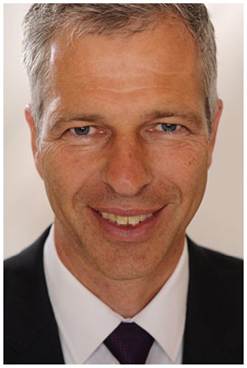
Dr. Ulrich Hagel In-house Counsel at Bombardier Transportation, Mediator and Attorney at Law at KonsensKanzlei Berlin. Dr. Hagel studied Law and Business Administration at the University of Bayreuth. After having worked as an Attorney at Law in Stuttgart, he joined Bombardier Transportation in 1998. As Head of Claim Governance, Litigations & Procurement Support, he is working conceptually on conflict management processes and tools, but is also operationally leading complex disputes in negotiations, ADR-processes, arbitrations and litigations.
Dr. Hagel is Academic Director at the Dresden International University (DIU) for the MBA Program “International Commercial & Contract Management” and lecturer at EBS Executive Education in Oestrich-Winkel. He has published several articles on Conflict Management, Contract Management and Compliance and is co-editor of the German Arbitration Journal (“SchiedsVZ”), founding member of the Round Table Mediation and Conflict Management of the German Industry (“RTMKM”) and a member of several advisory boards (German Arbitration Institute “DIS”, Bucerius Center on the Legal Profession “CLP” at Bucerius Law School Hamburg, the online magazines “Deutscher AnwaltSpiegel” and “Dispute Resolution”).