Foreword: Need a Lawyer? Use a Robot Instead!
The rule of law is fundamental to human society. Today, we see apparently endless growth in law and regulation. Surely this must mean the role of the lawyer is safe.
The answer to that is yes, but only if lawyers adjust and adapt.
Legal and regulatory complexity is challenging the ability of business and society to function. Traditional court systems, forms of contract, and methods of risk evaluation and dispute resolution are too slow and too expensive. A global economy demands new approaches.There will be many changes in the near future. Examples may include online courts, industry standard agreements, and digital contracts. But fundamental to social progress is the readiness and ability of the legal profession itself to lead the change agenda. Ultimately, human and social progress will not be held back by the reluctance of lawyers to adapt.
A Revolution in the Making
At a conference last year, someone posed the question “Should the general counsel of the future be a lawyer?” A lively debate followed, with about 50 % concluding that they should not. This might not be surprising—except that the audience consisted of general counsel and their immediate deputies.
So what is going on? Why would senior in-house lawyers suggest that the current top job should go to the non-lawyer?
The answer, in part, may rest in the term “non-lawyer.” As one speaker observed, “We are the only profession to see the world in such simple terms— you are either a lawyer or a non-lawyer.” And in this simple depiction, he perhaps highlighted the big challenge that the legal profession faces today and which threatens its future. Lawyers have a tendency to see themselves as “special,” as an elite with unique and valuable knowledge on which business and society depends.
Even if this belief could ever be justified (and I believe it could), technology is transforming the situation.
Knowledge is rapidly becoming an easily accessed commodity. It is the application of knowledge that increasingly has value, which differentiates the “trusted counselor” from the “mere specialist.” Here we have the explanation for that question about the general counsel; should he or she be the most senior specialist, or perhaps the intermediary who links legal opinion with business context?Responding to the Needs of Our Clients
A fundamental principle in the digital age is that society increasingly expects “ease of use.” The technology in our hands is simplifying so much that used to be complex, including instant access to advice or information. It is fundamentally different from the formality and discipline associated with the typical “legal consultation.”
Several years ago, I was preparing a conference presentation and wanted to offer the audience a sense of the changes that technology introduces. I focused on a previous age, the shift from medieval to early modern, when the world was being stirred by the printing press and the earliest automation. While undertaking research, I came across the origins of the word “mystery.” It was apparently used in the Middle Ages in its plural form, to describe the craft unions. “The mysteries” were the ways that they retained their stranglehold on the craft professions—jobs that had survived for centuries, yet rapidly disappeared as new technologies changed what was needed and how work was performed.
For the majority of the world's population (those vast numbers of “nonlawyers”), the legal profession remains a mystery, shrouded in complexity of tradition, wording, and procedure. This may make us necessary, but do we really believe it makes us popular? Instead, the common view is that we slow things down and we are expensive. Too often, we thrive on fear—the fear of an expensive mistake.
The clients for our services want to avoid problems, but legal work is typically more about containing or controlling them. In other words, we fight to limit the consequences if things go wrong.
As one business executive recently observed: “My legal team is very good at explaining and managing consequences, but if I ask them to assess the probabilities (of something going wrong), they are reluctant to comment.”And in this digital age, that comment summarizes the problem. Business and society is focused on how we achieve favorable results or outcomes, not just about protecting against events that may never occur. Technology is changing the environment due to its increasing ability to capture and analyze data, to provide predictions.
The Challenge for Lawyers
The legal profession is perhaps more challenged than many because of its past reluctance to adopt and use technology to streamline operations and to increase the value of its contribution. To illustrate this point, I was speaking recently with the general counsel of a major corporation who observed that top management today has limited respect for opinions—they want facts. And in many cases, lawyers lack facts, which explains their reluctance to offer clear advice. In the world of contracts, a lawyer will be confident when talking about potential consequences of a particular action or inaction. They are knowledgeable about precedent and the precise wording that should be used in a contract or a letter. But when it comes to probabilities, they are reluctant to be drawn. And as for the impact that their contracts (and wordings) may have on behavior or acceptability, that is often outside their realm of expertise or training.
Yet these are the functions that are increasingly demanded in a world where success is judged on outcomes. Business—and society at large—is wanting more than simply to be protected if things go wrong. As the many contributors to this book explain, today's technologies are enabling new capabilities, such as predictive analytics and wide-ranging portfolio review that transcend the experience of any one individual, legal department, or law firm.
Lawyers have been trained in a way that makes them risk averse, because their trade is essentially to protect their client's interests and assets.
As one law school dean observed: “We don't teach win-win.” They have flourished because they protect their clients from the uncertainty, unpredictability, and ambiguity of our world. But as with medicine, artificial intelligence will increasingly offer far more insight than any lawyer. Indeed, law firms are already starting to employ artificial intelligence to undertake document analysis and review on an unprecedented scale, offering transformations in speed and affordability.So what remains? Can lawyers still be “special”? Interpreting data, formulating new approaches, and creating alignment between the law and other disciplines or perspectives—these will remain as fundamental issues. For those who embrace technology, high-value service offerings are emerging. In many cases these are simply providing traditional services far more cheaply through combining technology with low-cost labor resources. Yet as this book describes, others are working on issues such as contract standards and automated data extraction—the sort of initiatives that make contracts and legal advice faster, more affordable, and of direct relevance to today's business challenges.
Case Study: Reduced Cycle Times and Increased Compliance
Some lawyers and legal teams are focused on the real business risks and are transforming their approach. Contract design is a good example. The in-house legal group at one global corporation was challenged to reduce the cycle time for on-boarding new suppliers. They discovered that it was taking on average more than 3 months to sign agreements—even after a traditional “simplification” exercise (e.g., shorter agreement and simpler language). In addition, the growth of regulation in their industry was resulting in increased business risk—and suppliers were showing poor compliance levels.
Hiring more staff to deal with these problems was not an acceptable option. The general counsel realized that the issue was one of understanding. The suppliers were mostly medium-sized companies, with staff who spoke limited English and where there was no in-house lawyer.
The main reason they did not sign or comply with the contract terms was because they could not understand them. She therefore commissioned a contract redesign project, including restructuring of the agreement (it actually became longer) and use of supporting guidance documents and videos. Time to signature reduced from 3 months to 3 weeks; compliance rates have risen by over 60 %.Case Study: Designing for Users in a Global Economy
In today's global economy, economic prosperity depends on the ability to offer reliable and high-quality services. For companies in Africa, new technologies have enabled them to compete internationally, especially in areas such as food supply. But it is challenging to find workers who meet the standards required and meet the demands of growing international regulation.
In southern Africa, farmers were struggling to manage the performance of their labor force. Punctuality, hygiene standards, and safety procedures—these were among the problems they needed to fix. Workers were asked to sign comprehensive employment agreements with all the rules and procedures spelt out, as well as the consequences of failure to perform. This made no difference.
A local lawyer decided to investigate. He quickly realized that many of the workers were semiliterate—it didn't matter how many words went into the contract; they could not read them. He drafted the employment terms as a comic strip. His colleagues were worried—what will the courts say? So he consulted leading barristers and asked for their review. The result? A comic-strip contract, gauged to be far more enforceable than the previous traditional contract. And of course, a much more productive workforce.
Conclusion
The digital age requires a readiness to adjust, to embrace the potential that technology offers, rather than to resist it. Of course there are risks—but not as great as the risks of failing to think and act differently. Lawyers survived the elimination of the craft guilds; now they must adapt again and embrace the concepts of “liquid legal.” Technology is transforming what lawyers do, how and where they do it, and how much they are paid.
In many cases, it is challenging whether a physical lawyer is needed at all or whether Robert the lawyer becomes Robot the lawyer.And that is why, for those who love their profession, fundamental change is not an option; it is a necessity.
President and CEO of IACCM (International Association for Contract and Commercial Management) Ridgefield, CT
Tim Cummins
USA
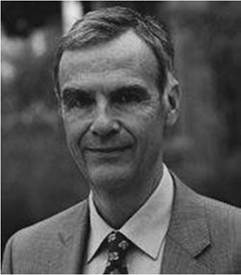
As CEO of IACCM, Tim Cummins leads global research on the future of contracts and trading relationships. He works with major corporations and advises the government on commercial trends and policies. His prior career included management and executive positions in technology, aerospace, automotive, and banking sectors. A native of the UK, Tim has worked in more than 60 countries and lived in France and the USA.