Foreword: Creating Your Path—Building Towards Liquid Legal
Finally—a book not only telling us that legal teams must change to be relevant in a data-driven digital world, but also offering us a blueprint on how to do it. The authors of Liquid Legal are all accomplished and innovative leaders who are making their clients more efficient, agile, and competitive.
This book challenges traditional views of the role and purpose of lawyers. It promises new levels of innovation, service, and efficiency to businesses willing to ignore historical biases and demand that their law departments stretch and grow.I believe deeply in this vision and have dedicated years to realizing it. Proving this simple but powerful concept—that “legal” can be just as effective and innovative as any other part of the company—has been a huge element of my life and career. I have taken on sacred cows and deeply held biases about lawyers and “legal” and seen our team go from barely tolerated to openly valued. This is not a quixotic journey; it is a chance to make a real contribution to the success of the enterprise.
I had a special opportunity to put my ideas into practice in 2010 and try them “at scale,” when I left my position of General Counsel at JDS Uniphase to take the same role at NetApp. I had many reasons for leaving after 11 years at JDSU, but a big motivation was the opportunity to take on the challenge of delivering a worldclass organization to a company that already had a strong corporate culture and, as such, was a hard place for outside executives to come and flourish.
I learned two key things in my first stint as a general counsel. First, I learned how important company culture was to me. As I looked for my next professional opportunity, I realized that would be an absolutely critical factor. I hoped to find a company where culture was viewed as fundamental to the company's success, not something that lazy people griped about because they wanted excuses for poor performance.
As the chief lawyer—and chief compliance officer—I also knew that companies with great cultures also tended to have fewer episodes of misconduct and violations, and I wanted to be part of one of those companies.Second, I discovered that I was no longer satisfied with the traditional limits and role of corporate legal teams. There was a certain way that legal teams were “supposed” to run, and that way seemed to be defined more by tradition than reason, by conservatism than creativity, and by the biases of others than the ambition and potential of the team itself. I wanted to break the traditional game plan and try to remake corporate legal in a fundamental new way.
When I joined NetApp, I became part of a company deeply focused on its people and values. I felt the difference in the conversations I had with the executive team during the interview process. Culture really seemed to matter; they talked about it, tracked it, guarded it, and considered it essential to the future of the company. It was fresh and exciting, and I heard “the click.”
Another thing I heard early on during my very first conversations with NetApp was that the legal team had lost its way. NetApp had grown from a Silicon Valley startup to a global enterprise quickly, powered by the two drive trains of sales and engineering, knitted together by an empowering culture. The company's legal function, however, had failed to keep up. Service had dropped off and the group had become internally dysfunctional and disconnected from the enterprise, which viewed it as an obstacle to doing business. I will never forget my last interview at NetApp. Taking a chance, I told my future boss, “NetApp deserves a world-class legal team. I do not think you have one today, but I think I could help create one.”
Once I joined the company, the work began in earnest. I inherited a large global team. Most of the organization was cynical and untrusting after years of working in a dysfunctional environment. The team was generally skeptical, and some people were openly hostile to my leadership and direction.
The first step was to move the legal department, which had reported into the CFO, to report directly to the CEO. I saw this as a critical change that would help ensure visibility and drive accountability. No more hiding behind a strong and highly respected CFO.
My next move was to get a clear picture of our effectiveness and impact. This involved “100 interviews in 100 days,” with clients in every geography of our business, designed to give us a real sense of how the team was performing. I flew around the world twice in the first few months, meeting with key customers. I asked simple questions. What are your expectations from this team? Your experiences? How big is the gap between those? And finally: are you willing to give us another chance?
This discovery period also included a survey of a broader client group as well as the legal team itself. Our clients rated us low across a few dozen metrics. I heard feedback like “you act like the ‘department of no,'” “you tell me what I can't do but never tell me what I can do,” and so on. Revealingly, the legal team also scored its own effectiveness and impact very low. There was virtually no spirit of partnership or service towards other groups, just a sense of “that's not my job.” The attitude of the team—in sharp contrast to the engaging, collaborative culture of NetApp overall—was to take the most limited interpretation of their role.
So everyone knew there was a problem but no one was taking ownership over it. How will we turn it around?
I have never worked as hard as my first 12 months at NetApp. Our change began in late 2010, and it started with a new mindset. “We will be lawyers who do windows,” I first told my team at one of those early all-hands meetings and then declared to all 13,000 employees at the corporate all-hands that introduced me to the company. What I meant was that we would do the hard, thankless work that needed to be done. We would change our mentality from that of experts in ivory towers to that of partners willing to do anything to support our business stakeholders in their success, just like the rest of the company.
Over the next several years, we restructured the global team, hired or promoted new leaders to my leadership team, and introduced technologies that automated manual processes and sped up the velocity of the business. It was not easy and it did not happen overnight. Institutional resistance remained strong in pockets of the department. By the end of the first year, a quarter of the team—including all of the 13 direct reports that I inherited—either left or were asked to leave.
As a renewed leadership team, we changed the culture of the group from what it had been—a loosely organized collection of lawyers—to a true team of business partners and counselors. We found new ways to work with outside counsel, getting better returns and accountability by using data in powerful new ways. We implemented a new “legal ecosystem” that integrated legal operations professionals alongside traditional legal experts into a single, coherent global team.
And the results came. Our restructured team quickly gained traction internally. People were bringing us to the table. We were actually being invited to strategic meetings and into key projects that we had to watch from the sidelines in the past. We improved our relationships, built trust, and scored some major wins leveraging new technology and processes.
I knew we were making progress when Tom Mendoza, a longtime leader and executive at NetApp, acknowledged our team onstage during a company all-hands. “Something good is happening over there,” he said. “In 20 years of being here, not once did I ever give a shout out to anyone in the legal department. And now I’ve done it for four quarters in a row.” That comment was pure gold.
When I look back nearly 6 years at all the hard work, I am so grateful to the NetApp legal senior team: Connie Brenton (Operations), Tim O’Leary (Field), Beth OCallahan (Corporate), Valerie Velasco (APAC), and Dr. Dierk Schindler (EMEA). They each brought intense personal commitment with the trust and vision that our team can achieve so much together.
Thank you!I also extend a big “thank you and congratulations” to Dierk, Kai Jacob, and Roger Strathausen, the driving forces behind this book and the inspiration for much of the content. Dierk challenges all of us to strive to be our best and has built a loyal team and grateful clients who value his energy, vision, and leadership.
I am grateful to the entire NetApp legal team for giving so much of themselves every day for the company and our clients. Even today, our journey continues. At NetApp, we like everything we have achieved, but still see plenty of areas to develop and improve. We are still in the beginning stages of defining what we can become as a legal team.
This book is about your journey and finding your path. It is about understanding and embracing the challenge of remaking our industry in a substantial way. I hope you embrace the journey, and I hope you will let me know how it goes.
Matt. Matthew.fawcett@netapp.com
General Counsel, Chief Compliance Officer, Matthew Fawcett
and Secretary for NetApp Sunnyvale, CA, USA
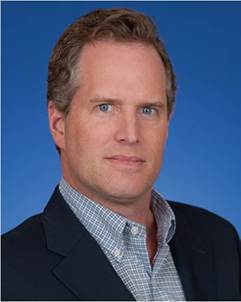
Matthew Fawcett is responsible for all legal affairs worldwide, including corporate governance and securities law compliance, intellectual property matters, contracts, and mergers and acquisitions. He has overseen the development of NetApp Legal into a global high-performance organization with a unique commitment to innovation and transformation.
One of the leading voices on the intersection of law, technology, and business, he was named “One of America's Top 50 General Counsels” by the National Law Journal and is widely recognized for redefining the role of legal counsel in the modern corporation. He speaks at international and national legal and technology trade conferences and writes regularly on innovation in the legal industry, managing data governance in the cloud era, and defending against patent trolls.
Before joining NetApp, Matthew was the senior vice president and general counsel of JDS Uniphase Corporation, where he built a worldwide legal organization, managed dozens of acquisitions and strategic transactions, and oversaw a patent program with thousands of issued and pending patents.