Ill THE LITERATURE OF THE AGE
We have already, in Chapter IV of the preceding Part III, dealt with a considerable part of the literature of our present period, namely the post-classical elaborations of classical works, which stand under the names of classical jurists.
All these editions, abridgements, and anthologies were produced, we repeat,[477] in the early post-classical period, at the end of the third and in the first half of the fourth century, mostly, it seems, in the western Empire, probably in the law school at Rome. The first idea of twentiethcentury scholars was to ascribe these lucubrations to Berytus, a preference which is explicable only by the history of our studies. At the beginning of the century interpolations were thought of as coming exclusively from Justinian.2 Then, as the multitude of the pre-Justinian interpolations gradually came to be recognized, these were ascribed without much consideration to ‘the Byzantines’, that is to the eastern jurists, and in the first place to the Berytean professors. Unclassical Latin occurring in the texts was summarily described as 'Byzantine Latin’, although eastern Latin was known only from Justinian’s codification, and although many of the linguistic peculiarities could be readily paralleled from western Latin of the fourth and fifth centuries. The truth is that there is rarely any evidence of an eastern origin of these interpolations.3 In its absence either a western or an eastern origin is conceivable, but the former is the more probable. It. is a priori improbable that the professors of Berytus, who spoke, taught, and wrote in Greek, should have recast classical Latin texts so drastically as early as the third and fourth centuries. The eastern jurists wrote independent commentaries or inserted in the margins of the classical manuscripts glosses which, being in Greek, penetrated but seldom into the Latin texts. In any case, research must in the future look much more carefully than hitherto for such indications as there may be of eastern or western origin. In the absence of evidence one must either presume a western origin or be content with a non liquet. The verdict ‘thoroughly Byzantine Latin’ must be pronounced with far greater caution and never without a previous comparison of the western Latin of the period.1 We shall deal no further with this class of literature.(ii)
This period did not produce independent isagogic works, but continued to use the classical Institutiones, especially Gaius’. We proceed to assemble the post-classical works connected with the classical institutional literature.
1. The Autun commentary on the Institutes of Gaius.1 We possess a large fragment of this work in a manuscript which belonged to the school at Autun and is, for the greater part, still in that city.3 It is a palimpsest, the upper writing of which, giving the Instituta Cassiani, is of the sixth.or seventh century and the lower writing, giving our text, of the fifth or sixth. It was discovered by Chatelain in 1898. The first reports gave hopes of a second manuscript of the Institutiones of Gaius.4 When the truth was realized, the disillusion was so great5 that though the text, which unfortunately is badly preserved, was edited, no further attention was paid to it. Had it been discovered in an Egyptian papyrus it would undoubtedly have aroused greater interest. The commentary was written, probably in the fifth century, by an anonymus, who must have been a teacher at Autun (Augustodunum). It is true that there was no law school at Autun comparable to those of Rome and Berytus; but the city was an educational centre of ancient fame;6 the author doubtless imparted the elements of law in connexion with his lessons in grammar and rhetoric. His work affords us a picture of that adulterine teaching which Tribonian abolished in the East.7 It is a lemmatic commentary,8 the headings
1 e.g.
(to mention only easily accessible examples of a kindred literary genus) Macrobius’ commentary on the somnium Scipionis; Pseudo-Aggenius Urbicus, Corp, agrimensorum Rom. i (1939, ed. Thulin), pp. 51 ff.; Cassiod., Inst, divinarum et humanarum litteram (ed. Mynors, 1937); also Traube’s Index verborum to Mommsen’s edition of Cassiodorus’ Variae (MGH, Auctores antiquissimi, xii, 1894) should not be overlooked. It will be found that many supposed Byzantinisms are really fourth- and fifth-century western Latin. Zimmermann, Vocabulary (1944).2 Ed. princeps: Collect, libr. i, ed. 4,1899, by P. Kruger, and ultimately (improved) ed. 6, 1912; the edition by Scialoja and Ferrini, Bull, xiii (1901), 5 ff. (Ferrini, ii. 437 ff.) has independent value. Based on these: Seckel-Kfibler, ii. 2. 432; Girard- Senn, Textes, 354; FIRA ii (1940), 207.
3 Four leaves are now in the Bibl. Nat. at Paris; description by Delisle, Biblioth.
de V Ecole des Charles, 1898, 383. * Mommsen, Z xix (1898), 365.
5 See Mommsen’s savage ‘Epimetrum’ in Collect, libr. i: *Ut patres nostri laetati sunt recuperato Gaio, ita nobis quoque similis sors evenit, sed ita similis ut gemma carboni.’ He then describes the commentary as a monstrum.
6 Hirschfeld, SB Berlin, tgffj, 197. 7 Above, p. 273· 8 Above, p. 183. of which are provided by the opening words, written in capitals, of the sections of Gaius which are under discussion.1 The classicizing tendency of the work is obvious: thus Gaius’ fourth book, with its obsolete law of actions, is commented on at length. The style, too, bears the stamp of the school, recalling in many details that of Theophilus’ Paraphrase.2· The surviving text appears not to be unitary but to consist of layers.3 No complete study of it exists.
2. The Epitome Gait.* The Lex Romana Visigothorum of 506 (also called Breviarium Alarici or briefly Breviarium) has a part bearing the title Liber Gait.
Modem scholars refer to it as the ‘Epitome Gaii’ or the ‘Visigothic Gaius’. It is an abridgement of Gaius’ Institutes, which radically shortens and alters the classical text. Its tendency to set aside obsolete and to present only living law is obvious. Being primarily a monument of Visigothic jurisprudence it has no more place in a history of Roman jurisprudence than has the Visigothic Codex Euricianus.* Its composers used a post-classical version of Gaius originating, possibly, from Italy. We may consequently be content to give only a summary orientation. That the Epitome was derived from a post-classical epitome of the fifth century and not direct from Gaius has long been the prevailing opinion. Max Conrat’s attempt to refute it was unsuccessful. However, as Conrat showed, the arguments in favour of the dominant opinion are not all of equal force, and some of them are untenable. But there is one decisive argument, to which Conrat paid no attention.6 The title of the Epitome, as has been said, is Liber Gaii, and accordingly the Epitome itself ignores any division into several books. But it begins: ‘Gaii liber primus dicit....’ Then where Gaius book 2 begins we read: ‘Gaius superiore commentario de iure personaram aliqua disputavit; nunc in hoc commentario de rebus iteram tractat.’ At this point a fresh numeration, starting from number one, begins.7 But at the point1 See the Commentary, ss. 66,79,80,96, 97.
2 Ferrini, ii. 426; Albertario, Introduzione, i. 113.
3 ss. 47 and 48 are probably a later addition; s. 49 connects directly with s. 46.
* There is no satisfactory edition of the Epitome. One must use Boecking’s, in the so-called Bonn Corpus iuris rom. anteiust. i (1841), and Kübler’s in Seckel- Kübler, ii. 2. 395. Literature: Fitting, Z. /. Recktsgesch. xi (1873), 325 ff.; Hitzig, Z xiv (1893), 187 ff.; Max Conrat, Die Entstehung des westgothischen Gaius (1905), on which Kantorowicz, Z xxxiii (1912), 459 ff.; Krüger, 355; Kubier.
PW vii. 504; Gesch. s. 41, p. 394; Albertario, SuUa epitome Gai, AC 1,1933, Roma, i (1934), 497; Archi, VEpitome Gai (Milan, 1937)- FIRA ii (1940), 231..» Above, p. 291.
6 Even the latest writer, Archi, does not recognize its decisive importance.,
7 Kruger, 355·. where Gaius book 3 begins we find no similar notification: books 2 and 3 of Gaius are compressed into a single book. Now the intention of the Visigoths was, as the title Liber Gaii shows, to produce a work in one book. If then they had the authentic Institutes before them, what motive had they to compress books 2 and 3 into one—a senseless performance from their point of view? If at the beginning of the first and of the second books they noted the division of the original Gaius, why did they not do the same at the beginning of the third book ? There is only one plausible answer: the Visigoths were using not an authentic copy of Gaius, but an epitome which compressed books 2 and 3 into one. The existence of a post-classical epitome, which served as model for the Visigoths, is thus proved. It was in all probability a product of some law school, not of practice, since one would hardly choose Gaius’ Institutes to form the basis of a practitioner’s manual. But, as we have seen,1 academic jurisprudence in the fifth century was classicistic and had ceased to bring classical texts up to date, whereas our Visigothic Epitome, on the contrary, seeks in principle to state living law.1 This characteristic must therefore come from the Visigothic legislators; it is to them that the work of adaptation must throughout be ascribed.3 The simplest explanation of their having provided Paul’s Sentences but not the Liber Gaii with an adapting interpretatio is that the text of the latter had been adapted by the legislators themselves. Hence the text on which the Visigoths did their work of adaptation cannot be reconstructed. Even when statements of law in the Epitome agree with other legal sources, it does not follow that the Visigoths found them in their post-classical model.
It is likewise impossible to determine the date and place of the composition of this model. Attempts have been made to do so, but the passages adduced in evidence may have been introduced by the Visigoths and not before them. All that can be said is that the pre-Visigothic Epitome was probably produced in the fifth century in a law school of the western Empire or of the Visigothic dominions. That it did not displace the authentic Gaius is shown by the existence of the 1 Above, p. 281.* The point is correctly taken by Archi, p. 35.
3 Archi, p. 67, distinguishes the following layers of text: (1) Gaius’ authentic Institutes, (2) a post-classical paraphrase of the same, elaborated in the law school, (3) an adaptation of this paraphrase for practice, to which Archi gives the misleading name of interpretatio, (4) the Visigothic epitome, being an unsystematic production from (3). This development is not, indeed, impossible, but stage (3) is unprovable. Why should not the Visigoths themselves have been die authors of the adaptation for practice?
Veronese Gaius and the Autun commentary. That in the universities of Berytus and Constantinople it had ousted the Institutes1 is an improvable and quite improbable conjecture.2 On the view we have taken the Visigothic Gaius is of only very modest interest for the history of Roman legal science.3 In general it is only in combination with other sources that it can be used as evidence as to Roman law in the western Empire.
3. The Institutes of Justinian.* The Institutes are an official educational manual. They were published, as a statute, in November 533. Apparently the idea was first conceived after the Digest had been virtually completed ;5 at any rate work was begun only then, that is in the course of the year 533.6 The drafting commission consisted of Tribonian and two professors, Dorotheus and Theophilus.7 The work is not an original production, but a mere compilation. Its text combines into a continuous whole excerpts from classical writings, especially Gaius’ Institutes, and from imperial constitutions, especially Justinian’s; the excerpts have been adapted, but they are not headed by inscriptions as are the Digest fragments. The attempt is made to make a stylistic reality of the fiction enacted by Justinian in Const. Tania for the Digest,8 namely that the fragments were to be treated as having been written by himself. In the Institutes the teacher addressing the students is Justinian himself. Hence Justinian’s enactments are referred to as nostr ae constitutiones; again, where the classical original described a party to a case as ‘1’ the text is altered, because ‘T would mean Justinian, and the Emperor is outside private law.’ This idea is most pedantically applied. Two examples will suffice:10 Gaius 3.176 compared with Inst. (3. 29) 3, and Gaius 3.198 compared with Inst. (4. 1) 8.
The sources upon which the composers of the Institutes drew cannot be completely identified. The praefatio states” that all the classical institutional works, especially the Institutes and Res
1 So, e.g., Karlowa, RRG i. 980, and those he cites there.
2 On the interpretation of Const. Omnem, s. i, see above, p. 275.
3 It has great interest for the history of Romanistic jurisprudence in the Visigothic Empire. Roman and Romanistic jurisprudence must be kept distinct: above, p. 2.
* Standard edition by P. Krüger, in vol. i of the stereotype Carpus Iuris (ed. 1, 1868); quarto edition, latest (4th), 1921. Complete literature: Kotz-Dobrz, PW ix. 1566 ff., 1585 ff. Translation with comment: R. W. Lee, Elements of Roman Law, 1944.
5 In Const. Deo auctore, s. 11, the reference to the Institutes (pel si quid... scientiam) must be a later addition.
6 Const. Imperatoriam, s. 4. » Ibid., s. 3. 8 Above, p. 289.
9 D. (1. 3) 31: ‘ Princeps legibus solutus est.’ Nov. 105. 2. 4. Cf. Schulz, EHR lx. (1945), 158. 10 Further examples: Ferrini, Opere, i. 22 ff.
11 Const. Imperatoriam, s. 6.
cottidianae of Gaius,.have been made to contribute, and multi commentarii as well. Identification is possible only so far as the sources used have reached us through some other channel than the Institutes.1 Attempts to go farther and to trace the sources by stylistic evidence have led to no assured results? Naturally imperial constitutions were taken from the Codex lustinianus of 529 or, if later than the Codex, from the Quinquaginta Decisiones or from the statutory text as first published. Since we possess only the revised Codex of 534, the information given by the Institutes as to these constitutions is of special value to us: several of them were not received into the Codex of 534,3 while of some others the Institutes give the original terms, which the Codex of 534 has altered.4 No microscopic analysis of the Institutes exists.
4. The Paraphrase of Theophilus.3 We possess a Greek paraphrase of Justinian’s Institutes almost complete.6 In many of the manuscripts of the work and in two sixth-century scholia’ Theophilus is named as its author. On this evidence the prevailing modern opinion is that the Theophilus in question is the professor of law at Constantinople who collaborated in Justinian’s codification, especially in the Institutes themselves, and that he composed his paraphrase immediately after the completion of the Institutes
1 Thus, besides the works of Gaius mentioned, use was made of the Institutes of Florentinus, Ulpian, and Marcian, and possibly of the libri vii regularum of Ulpian.
2 On Ferrini’s attempt (Bull, xiii (1901), 101 ff. = Opere, ii. 307) see Kübler, Z xxiii (1902), 508 ff. Also against Ferrini: Zocco-Rosa, ‘ Justiniani Institutionum Palingenesia’ (Ann. ist. di storia del dir. rom., Catania, ix. 1 (1905/6), 180, continued in ix. 2 and x. 3 (1907/8); appendix in x; xi and xii (1911)). On this: Kübler, Z xxx (1909), 433. The title is misconceived: there is no question of a palingenesia of Justinian’s Institutes, since we possess the work; it is a misnomer for a study of the classical works used for the Institutes. On the question of those works see also Kotz, PW ix. 1578 ff., and Ebrard, Z xxxviii (1917), 327. See Addenda.
3 Inst. (2.10) 11; (3. 5) i; (3. 27) 7.
♦ Schulz, St. Bonfante, i. 339 ff.
s Standard edition: Ferrini, Institutionum graeca paraphrasis Theophilo antecessori vulgo tributa; pars prior, Berlin, 1884; pars posterior, Berlin, 1897. Its quite insufficient Prolegomena have to be supplemented by various articles of Ferrini’s, which can now be easily consulted in his Opere, i. 1 ff. The edition needs searching philological criticism; Zachariae v. Lingenthal’s, Z v (1884), 271, is insufficient. The critical apparatus seems to leave much to be desired. There are materials in A. F. Murison’s papers, at University College, London. See A. F. Murison, Memoirs of 88 years, ed. by A. L. Murison and Sir J. W. Murison (1935), 177 ff., 204. On the older editions: Kübler, PW v A. 2147; ACI Roma, i (1935), 21. Useful is Triantaphylides, Lexique des mots latins dans Thiophile et les Novelles de Justinien, Bibliotheque de 1’dcole des hautes itudes, xcii (1892), 159 ff. See Addenda.
6 The paraphrase of Inst. 1. 1 is missing; in Ferrini’s edition it is supplied from a scholium—a procedure rightly criticized by Riccobono, Bull, xlv (1938), 1 ff.
•7 Ferrini, i. 147. Later scholia·. Zachariae, Z v (1884), 272; Ferrini, i. 112 ff.
4497.1 x and before the publication, on 16 November 534, of the revised Codex lustinianus.1 However, neither the authorship of Theophilus nor the date of the work can be regarded as certain. But these questions do not affect us greatly. There is a more important point. The author used as the basis of his paraphrase of Justinian’s Institutes a Greek paraphrase of Gaius’ Institutes. This can be proved in a few words. We have seen[478] [479] that Justinian’s Institutes at times altered the Gaian text simply because in it one of the parties figured asNow Theophilus’ Paraphrase in many passages agrees in this matter with Gaius’ and not Justinian’s Institutes. If one supposes that Theophilus, when he was composing the; Paraphrase, had before him only Justinian’s Institutes and Gaius* in the original Latin, one cannot understand how it was that, in a matter of complete indifference substantially, he chose to adhere to Gaius instead of following the Institutes. His readers or hearers would have before them, for comparison with the Paraphrase, only Justinian’s Institutes·, the only possible effect of describing the parties to a case otherwise than in the Institutes would be to confuse them. But if one supposes that Theophilus merely adapted an existing Greek paraphrase of Gaius, his procedure at once becomes comprehensible. He kept as much as he could of his model and did not adopt the above-mentioned changes made by Justinian’s Institutes, because they made no material difference. That this model was in Greek is practically certain; it is a priori improbable that a Latin paraphrase should have been written at Constantinople and used in the law school. Our point is illustrated by the two cases cited above[480] (Inst. 3.29.3; 4.1.8): the Paraphrase keeps to the Gaian ‘I’.
Thus Theophilus’ Paraphrase provides us with fragments of an eastern paraphrase of Gaius’ Institutes* which gives us a picture of the manner in which Gaius’ work was handled in the Byzantine law schools till 533; they form a pendant to the Autun commentary, to which they are related stylistically.3 The similarity is, however, not close enough for us to infer that both are based on the same Latin paraphrase. No exact historical analysis of Theophilus’ Paraphrase exists.
(iü)
Not far removed from the isagogic class are the works of definitiones, differentiae, regulae, and sententiae. The post-classical demand for works of this kind was at first satisfied by adaptations of classical works of which we need speak no further at this point.1 But independent works of the same kind were not lacking; two such are known to us. ■
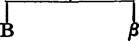
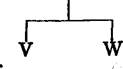
I. The elder Cyrillus,[481] [482] professor at Berytus, wrote a commentarius definitionum, which is mentioned once, by Thalelaeus in his commentary on the Codex lustinianus. What is there said tells us nothing as to the nature of the work, in particular not that Cyrillus appended classical excerpts to his definitions;[483] he may have done so, but this is not exactly probable in a work of this class. Schol. Thalelaei ad Bas. 40. 1. 67 (Heimbach, 1. 646 and 6. 9, no. 13). Ταύτην την διάταζιν ύπομνηματίζων ό ηρως Πατρίκιος τολμηρόν εφη είναι το έζαριθμησασθαι και καταλέξαι, ποΐά соті ті κόντρα λέγεμ ήτοι έναντιι νόμου γενόμενα πάκτα, ώς τον ηρώα кал κοινόν της οικουμένης διδάσκαλον Κύριλλον теХесшг και ανελλιπώς τα περί τούτων συναγαγόντα έν τώ ΰπομνη- ματι των δεφινιτων αύτοΰ. τόν γαρ δε πάκτις τίτλον ύπομνηματίζων, τελείως και ανελλιπώς και ώς αύτφ μόνω δυνατόν ήν, συνηγαγεν ті περί τούτων, νΰν δ« διέσπαρται έν πασι τοΐς διγ. όταν οδν βούλη μαθεΐν, ποια σύμφωνα κόντρα λέγες όντα κάμνει, δει σε ζητεΐν έν τοΐς διγ. Translation: ‘Patricius of blessed memory’ (above, p. 274) ‘commenting on this constitution’ (C 2. 3. 6, read by Patricius in C. Greg.) ‘said that it was hazardous to enumerate and catalogue the pacts that were contra legem, i.e. were infringements of statute, as in his commentarius definitionum Cyrillus of blessed memory, the common teacher of the world, had collected, perfectly and without omission, all that related to them. For Cyrillus, commenting on the title depactis' (the title in his work) ‘collected perfectly and without omission, as he alone could, what related to them. But now they are scattered all over the Digest, so that he who wishes to know what pacts are void as being contra legem must search in the Digest.' Not a word, therefore, to the effect that Cyrillus’ commentarius gave excerpts from the classical writings, which excerpts were scattered all over the Digest. 2. We possess some fragments of a sumptuously presented collection of regulae and definitiones. The text, though badly damaged, can be reconstructed in part.1 The definitions are numbered continuously; they begin with on (= item} and end with a precise citation of a classical work. The surviving fragments cite Papinian, Paul, Ulpian, and Modestinus. The disposition of topics cannot be made out. The work, for which we suggest the name CoUectio definitionum, originated in the eastern Empire in pre-Justinian times, probably in the fifth century. At present there is no satisfactory edition. 3. We also possess a small tract in Greek bearing the Latin title De actionibus.[484] [485] It contains brief elementary rules as to the individual actiones. Our version is of the post-Justinian period, but its kernel must have been written before Justinian, probably in the fifth century. In spite of its shortness this tract is interesting and important, but it still needs to be studied critically.[486] (iv) Most important for us is the group of works formed by the post-classical collections of imperial constitutions and of excerpt: from the classical writings. i. The Codices Gregorianus and Hermogenianus.[487] The Gre gorianus was the earliest comprehensive collection which arranged the constitutions systematically, but gave their actual words. The Hermogenianus was a supplement to it. What we know of them comes from intermediate sources; neither is independently preserved. Our knowledge is based on the following materials: i. The Lex Romana Visigothorum of 506 contains an epitome of the Gregorianus; also one of the Hermogenianus, but consisting of only two passages. Edition: P. Krüger, Colled, libr. iii. 224. FIRA, ii. 653. ii. The Appendix to the Lex Romana Visigothorum comes to us in three versions, two of which contain passages from the Gregorianus and Hermogenianus not included in the Lex Romana. Edition: P. Krüger, Collect, libr. iii. 249. FIRA, ii. 667. iii. A number of fragments from both Codices have reached us through juristic writings of the pre-Justinian period. Collected by P. Krüger, Collect, libr. iii. 236 ff. iv.Every constitution in the C. lustinianus, other than those taken from the C. Theodosianus and those published after that Codex, comes from the Gregorianus or the Hermogenianus. Of course such constitutions have been much altered by the compilers. v. Probably every constitution in the Fragm. Vat., the source of which is not acknowledged to be one of our two Codices, is nevertheless so derived.[488] The Gregorianus was a collection of constitutions beginning with Hadrian (inclusive) up to May 291, the year in which it was published. Subsequent additions seem to have differed in the western and eastern editions. The Hermogenianus originally contained only the constitutions of 293-4, having probably been published at the beginning of 295. To it also additions were later made. The constitutions of the Gregorianus were taken in the main from the imperial archives, and only exceptionally from classical juristic writings.2 The Codex was divided into books, the books into titles; the arrangement was that of the classical Digesta.3 Inside the titles the constitutions were in chronological order. The composer’s name was Gregorius, not Gregorianus, and Codex Gregorianus means ‘Gregory’s Code’.4 He must have belonged to the central bureaucracy, since his work, as shown above,® obeys the bureaucratic tendency to stabilize the law. There is no evidence in favour of his having been a professor of Berytus. The Hermogenianus was derived entirely from the archives of the eastern Empire. It was divided into titles only, not books, and doubtless followed the same arrangement as the Gregorianus. Inside the titles the constitutions were, as in the Gregorianus, in chronological order. The composer’s name was Hermogenianus, not Hermogenes, and his book is at times called Codex Hermo- geniani.b He too must have belonged to Diocletian’s central bureaucracy. He can hardly be the same man as the late classical jurist of the same name, from whose libri vi epitomarum extracts were taken for the Digest. The textual history of the two codices is (apart from the! abovementioned additions) still obscure, but it is a priori improbable that their text should have remained absolutely pure up to Justinian’s times.1 2. The collection of the Fragment» Vaticana.1 It was in 1821 that Cardinal Angelo Mai discovered in a Vatican manuscript (Cod. Vat. 5766) the fragments of a juristic collection which have for long been known as Fragment« Vaticana. Earlier the manuscript had belonged to the monastery of Bobbio (between Genoa and Piacenza). It is a palimpsest: the underlying text was written in the fourth or fifth century and the text written on top of it in the eighth. Author’s name and title are unknown. The work was divided not into books but only into titles; it contained excerpts from classical, or supposedly classical, juristic writings and from imperial constitutions. We have not yet succeeded in discovering its principle of arrangement. We do not even know the system of arrangement within the titles; that at any rate of the constitutions is not chronological. So far as the juristic writings are concerned, only those of Papinian, Paul, and Ulpian seem to be used.[489] [490] [491] Already Ulpian is in the foreground; the absence of Gaius is notable. Some of our fragments did not belong to the original work, but were added later.[492] [493] The fragments are inscribed with the name of the jurist, the title of the work, and number of the book; exceptionally the title inside the book is also given.3 The composer shortened the classical texts by the simple process of excision, but he made no other changes.[494] His editions of the classics, however, gave texts which had already been profoundly altered in post-classical times.[495] That he used earlier collections of excerpts[496] cannot be proved. As to the imperial constitutions, it is established that he did not use the Codex Theodosianus of 438; probably his sole sources were the Gregorianus and Hermogenianus1 as presented in western editions containing additions not to be found in eastern editions. The original collection seems to have been completed shortly after 318.2 The latest constitutions in the collection as we have it are of 312,313,315,316, 317, and 318? There are, indeed, two later constitutions, of 330 and 372,4 but these stand in such obvious isolation that Mommsen rightly pronounces them to be additions to the original collection. Another indication of the collection having been completed soon after 318s is that the ddmnaiio memoriae of Licinius, which was decreed on 16 May 324,6 is only partially taken into account in the collection as we have it. Evidently in the original publication the name of Licinius still stood, and it has been expunged only later, and that hastily.7·8 3. The CoUatio legum Mosaicarum et Romanarum.9 We have three manuscripts,10 none of which gives the entire work. i.The Codex Berolinensis I^ILommsea’s B) is of the ninth century. Its readings are fully given in Mommsen’s edition. Hyamson’s edition has a full photographic reproduction. ii. The Codex VerceUensis (Mommsen’s V) is of the tenth century. iii. The Codex Vindobonensis (Mommsen’s W) is of the tenth century. Mommsen’s edition gives the readings of V and W, as well as those of B, in full. The filiation of the three manuscripts, which till now has not been recognized, is shown by the following tree." I In the original collection the source from which the constitutions were derived was not noted, any more than it is in the Codex lust. But there are some later additions, recognizable as such in the MS. as it stands, which tell us occasionally that the constitution comes from this one or that of the Codices named. 3 In the western Empire: Felgentrager, op. cit., 31. 3 See F.V. 32,34,33,273,274,249,36,287. ♦ F.V. 248 and 37. 3 So also Felgentrager, op. cit., 30. • C. Th. (15.14) 1. 7 See F.V. 32-6, 249, 273, 274, 287. Cf. Mommsen’s smaller edition n and 12; Schr. vi. 312; Felgentrager, 30. 8 As F.V. 66 shows, the collector included Notae of Ulpian on Papinian’s Response, which had been deprived of validity by Constantine in 32г. But this proves nothing as to the date of the collection, since Constantine did not forbid future copying and reading of these Notae. One finds them still in the Egyptian fragments of the Response·, above, p. 221. » See Note LL, p. 344.. " For small pieces from two further MSS. see Mommsen, Praef. 113, 114; notice of a MS. in Hincmar of Rheims: Mommsen, 112. II I reserve my proof of this slemma. Meanwhile: P. Maas, Byz. Z. xxxvii (1937), 289 ff.; Rotondi, Scritti, i. 127 n. 1. See Addenda. 312 THE BUREAUCRATIC PERIOD In using the existing editions for critical purposes this stemma is indispensable. a This quite singular work, known shortly as the Collatio, is a collection of excerpts from classical juristic works and imperial constitutions, with a passage from the Mosaic law at the head of each title. None of our three manuscripts preserves more than a fragment of the work. The introduction, in which no doubt the author and his purpose were declared, is lacking. So is the conclusion, for the end of our most complete manuscript (B) cannot have been the end of the complete work.1 One manuscript (W) begins Incipit liber primus ;[497] [498] if that is trustworthy, the work must have been in several books, of which our manuscripts preserve only the first, or rather a fragment of it. The following are the sources used: (a) Th&Pentateuch. But it was not the Hebrew text that was used and translated into Latin, but rather the Septuagint, not, however, in the Greek text, but in Latin versions made in the period preceding St. Jerome’s Vulgate (end of fourth century).[499] (&) Fragments of classical, or supposedly classical, juristic works. Only the five great jurists of the Law of Citations, Gaius, Papinian, Paul, Ulpian, and Modestinus, are drawn on.[500] [501] The texts were not tampered with in the process of incorporation into the Collatio, nor was anything expunged from within the excerpts,3 but they were taken from works which had already undergone revision by post-classical hands.[502] (c) Imperial constitutions. In general the Codices Gregorianus and Hermogenianus are the sole sources. A single constitution, of 390, has been obtained from some other source.* No use is made of the Codex Theodosianus. ' Our text shows clear signs of stratification—an original text worked and built on in divers ways. The isolated constitution of 390 is a clear example of a later addition ·,* it comes at the end of a title, a favourite place for additions. The end of tit. 14 is another example; we find here, as nowhere else, a reference to later Novels, but without an exact citation. Further examples are the end of tit. 6 and the beginning of tit. 7? In tit. 4 a text from Papinian’s Response, has been added.4 The biblical passages exhibit numerous additions.5 But what is most notable is that the biblical passages are themselves not part of the original work. No special religious bias can be discovered, Semitic or anti-Semitic, Christian or anti-Christian.6 All that one finds is Mosaic law juxtaposed to and, to that extent, compared with Roman law. But the comparison is unconsidered and superficial, the biblical passages having been tacked on without the least reflection.7 This much is clear: no reasonable man could have made so considerable an array of juristic materials for the purpose of making so superficial a comparison of them with Mosaic law. A man who was so superficial in his comparison would have been equally superficial in his assemblage of the Roman materials: he would have been content to quote just one or two passages and would not have adduced long series. It follows therefore that the juristic collection existed before the biblical passages were tacked. on to it. Thus the question of the authorship and the date of the CoUatio may well be dropped. There was no single author and, equally, no single date. The wiser course is to distinguish the various stages of the evolution of our text, which were as follows. i. The original juristic collection. This resembled the Fragm. Vat. Its purpose lay purely in the legal sphere, whether the practical or the academic. The author’s name and the title of the work are unknown. Since the Theodosianus is not used, it must have 1 CoU. 5. 3. The text in C. Th. (9. 7) 6, being different, cannot be the source: cf. Mommsen, Praef. 127. 2 So, rightly, Volterra, CoUatio, yj. 3 Schulz, Die biblischen Texte (below, p. 344), 31,33. 4 CoU. 4. 5. The author makes no other use of Papinian’s Responsa. The passage cannot be part of the preceding passage of Paul, since Paul does not transcribe the responsa word for word. See Schulz, Anordnung nach Massen (below, p. 344), 13. 3 Schulz, Die biblischen Texte, l.c. 6 Moreover, CoU. 5. 3 and 7. 1 are, as we have just said, late additions. 7 This has been shown once again, briefly and decisively, by Solazzi, Per la data della CoUatio (below, p. 344), 3 ff.: ‘L’autore della CoUatio non dimostra nulla di serio? been written before 438. The constitution of 390, being a later addition, does not preclude a date before 390. In fact, since the latest of the constitutions originally included is of 292 or 302,1 a date about the beginning of the fourth century is probable ; the author, being a jurist, would not, if he had written later, have passed over later constitutions? ii. Next, additions may have been made, for example of the passage from Papinian’s Responso, in Coll. 4. 5, before the tacking on of the theological additions. This cannot be proved. iii. The collection was adapted by some theologian or someone interested in theology. He inserted biblical passages where he thought he saw parallels with Mosaic law, but since he would leave out the many titles to which he found no parallels, he incidentally produced an abridgement. He may also have reduced the series of excerpts. Of him personally there is little that can be said. The attempt to show that he was a Jewish theologian has not been successful. He was probably a Christian; although a Christian bias cannot be detected, the book was current later in Christian circles.3 St. Ambrose is excluded as the author because of the inferiority of the workmanship and because his authorship would have been known in Christian circles and its memory preserved at least by oral tradition.4 The theological adaptation may have been before or after 438^ since the adapter was no lawyer and would not have been capable of furnishing fresh legal information. The title of the adapted work is also unknown.5 iv. Then came further revision, whereby Coll. 6. 7 and 7.1 were added and the biblical passages interpolated. It is possible that at this stage the Roman materials were once more added to. This scheme of the evolution must be the basis of any future research. 4. The Constitutiones Sirmondianae.6 This little collection, 1 Coll. 15.3. » Cf. Krüger, 344. 3 Cited by Hincmar of Rheims (about 860) and in a CoUectio canonum of the tenth or eleventh century: Mommsen, Praef. 112-13; Volterra, Collatio, 23ff. ♦ Nor, for the same reason, St. Jerome, as Conrat, Mèi. Fitting, i. 299, believes, appealing, with unusual lack of critical insight, to Coll. 7. 1, which is obviously (above, p. 313) a later addition : the title cannot have begun with quodsi. 5 In our MSS. the title varies slightly (Mommsen, Praef. 118): B has ‘lex Dei quam Deus praecepit ad Moysen’; VW ‘lex Dei quod praecepit Dominus ad Moysen ’. But neither title corresponds in the least to the contents. The traditional title must come from someone who had read only the first words. Hincmar of Rheims (Mommsen, Praef. 112) writes : ' sicut in primo libro legis Romanae ’, but this too does not tell us the title. 6 Editto princeps : Appendix Codicis Theodosiani novis constitutionibus cumulatior, opera Jac. Sirmondi, Paris, 1631. Standard edition: Theodosiani libri XVI, ed. Mommsen, i. 2, pp. 907 ff. See the Proleg. i. 1, p. ccclxxix. Ritter’s edition of Gotho- fredus’ Theodosianus provides a commentary : see next note. which is named after its first editor, contains sixteen imperial constitutions dealing with ecclesiastical law, of which the earliest is 333 and th® latest of 425. The collection must therefore have been made between 425 and 438, the date of the Codex Theodosianus, of which it takes no account. It comes from the western Empire, probably from Gaul. It is a private collection; the constitutions are neither abridged nor interpolated. The fact that ten of them are also in the Codex Theodosianus, though there abridged and altered, gives the collection a high historical interest, as providing an ocular demonstration of the methods of treatment applied by the compilers of the Theodosianus to their selected constitutions. 5. The Codex Theodosianus.1 This was published on 15 February 438 by the eastern Emperor Theodosius II. More ambitious plans having come to naught,2 it had been reduced to a collection of the constitutions from Constantine (actually from 312) onwards. The Gregorianus served as model: the arrangement was that of the Digesta,3 and inside the titles the constitutions were ordered chronologically. But the Theodosianus had statutory force; it was not just a semi-official private collection like the Gregorianus and the Hermogenianus. The compilers had express orders to alter the constitutions by shortening and otherwise,4 which they obeyed very thoroughly. In many cases they broke up a constitution and distributed its parts between various titles of the Codex. A clear picture of the methods employed can be obtained by comparing the Constitutiones Sirmondianae with the corresponding versions of 1 The older editions have been put out of date by Mommsen, Theodosiani libri XVI, i. i (1905), Prolegomena, with numerous tables; i. 2 (1905), Text of the Codex Theod. On it: P. Krüger, Z xxvi (1905), 316; P. Maas, Goetting. Gelehrte Anzeigen, 1906. Only books i-S of Codex Theod., ed. P. Krüger (Fase, i, 1923; Fase. 2, 1926) appeared, Krüger dying ii May 1926. There was no need for another edition, and Krüger’s is marred by numerous oversights and misprints (Kübler, Philol. Wochenschr. 1924, 451 ff.); it can only be used along with Mommsen’s. Literature: Mommsen, Sehr. ii. 371,406,408,410,412, and his Prolegomena; P. Maas, l.c.; P. Krüger, * Beitr. z. Cod. Theod.’, Z xxxiv (1913), 1; xxxvii (1916), 88; xxxviii (1917), 20; xl (1919), 98; xli (1920), 1; xlii (1921), 58; Joh. Sundwall, ‘De constitutionibus Theodosiani imperatoris restituendis’, Acta Ac. Aboensis, Humaniora, iii (1922); Archi, ‘Contributo alia critica dei Codice Teodosiano ’,SD 1936, 44. A photograph of the Cod. Paris. 9643 (Mommsen, Praef., p. xlii) was published by Omont, Code ThZodosien livres Vl-Vlll (1909), see Girard, NRH xxxiii (1909), 493. On the Cod. Halber- stadiensis (Mommsen, Praef., p. Ivii) see Alban Dold, Zentralblatt für Bibliothekswesen, xliii (1926), 30t. The great commentary of Jac. Gothofredus (1665; with additions, ed. Ritter, Lips. 1736) is still indispensable. Gradenwitz’s Heidelberger Index zum Theodosianus (1925), with Supplement (1929), is valuable. 2See above, p. 288. 2 See Mommsen, i. 1, p. xiiif.; Scherillo, ‘Il sistema del Codice Teodosiano*, St. Albertoni, i (1935), 515 ff· 5 St. Ratti (1933), 249. ♦ C. Th. (1.1) 6. the Theodosianus. There was no express order to omit obsolete constitutions, but power to do so was implied in the authorization to abridge and interpolate.1 In the event the compilers did omit many constitutions of the period, but they also included some that were obsolete—a concession to the academic interest. All constitutions enacted after 312 that were not included ipso facto lost their validity[503] [504] from 1 January 439, the date on which the Codex came into force; thus the Gregorianus and Hermogenianus remained in force. In the West also the Theodosianus was published with statutory force before the end of 438? The Theodosianus was abrogated by the Codex lustinianus in the East in 529, and in Italy in 554, when Justinian after his conquest of that country introduced his codification into it.[505] In the Visigothic dominions it was superseded by the Lex Romana Visigotharum of 506, but an epitome of it was included in that compilation. The Theodosianus has not survived complete. Besides the Visigothic abridgement, to which additions were made, we possess fragments of copies of the complete work.[506] Full details as to the transmission of the text can be found in Mommsen’s extensive Prolegomena. The historical and legal study of the Theodosianus is as yet in its infancy; the question of interpolations presents a wide field for exploration,[507] nor is this the only problem. 6. Collections of post-Theodosian Constitutions. The constitutions enacted between 438 and the Codex lustinianus were never officially collected, but various private collections were made. We have information of the existence of eastern collections;[508] some western collections have reached us.[509] 7.Private collections of excerpts from the classical jurists. Such collections were made in the eastern law schools. No one to-day believes any longer in a comprehensive pre-Digest, but on a more limited scale, for definite subjects, florilegia of the same kind existed.[510] Such may have been the nature of the four mysterious libri singulares which were taken at Berytus and Constantinople in the student’s first year.1 But the question is still problematical; perhaps further papyrological discoveries will throw light on it. 8. The Codex lustinianus.1 On 13 February 528 Justinian appointed a commission to prepare a new collection of imperial constitutions.[511] The task was completed in a year, and the new Codex was published on 7 April 52g.[512] [513] [514] [515] A series of decisions issued by Justinian after the completion of the Codex were incorporated to begin with in a special collection known as the Quinquaginta Decisiones.3 This took place probably at the end of 530 or the beginning of 531, before the immensity of the task presented by the projected Digest had been grasped. During the preparation of the Digest it became clear that after its completion the Codex of 529 would have to be revised; in this revision it was possible to take account of all decisions arrived at and laws enacted by Justinian since the completion of the Codex of 529. The revision was completed in 534 and the new Codex was published on 16 November of that year under the title of Codex lustinianus* repetitae praelectionis.'’ The sources from which it was compiled were as follows: (a) The Codices Gregorianus and Hermogenianus, in eastern editions containing additions to the original Codices. (b) The Codex Theodosianus of 438. (c)Eastern collections of constitutions after 438[516] [517] [518] and individual constitutions from the imperial archives. The three above-mentioned Codices {a and b) were the sole sources used by the compilers for the period up to 438? The disposition of the C. lustinianus is a combination of those of the Gregorianus and the Theodosianus.’0 In each title the constitutions are in chronological order; frequently they are broken into parts, which are distributed between various titles. A difference from the three older Codices is that only constitutions in force were included. In accordance with Justinian’s directions’ the texts of the constitutions included were drastically revised, abridged, and interpolated ; in particular, the flowery rhetoric of the constitutions of the Theodosianus was severely pruned,[519] [520] in conformity with the bureaucratic tendency towards simplification.[521] A clear picture of what was done is afforded by a comparison of the versions in the Theodosianus and the lustinianus of the constitutions contained in both.[522] The Codex of 529 and the Quinquaginta Decisiones have not come down to us, nor have we the materials for their reconstruction. We possess only two fragments of the Codex of 529,[523] though further fragments may come to light. However, considerable information as to the older Codex can be gleaned from a minute analysis of the Codex of 534.[524] [525] [526] We can, in particular, establish the form in which many constitutions stood before the revision of 534 or before their incorporation in the Codex of 529? In this matter research has only begun. A book on the genesis of the Codex lustinianus is needed; G. Rotondi’s penetrating studies should be carried farther. 9. Justinian's Digest* The scheme for the Digest first ripened in the course of the year 530.1 On 15 December 530 the drafting commission was appointed and the necessary instructions were given.1 The title of the work, Digesta sive Pandectae, was settled at the same time,3 Digesta being clearly a tribute to the masterpiece of classical jurisprudence, Julian’s Digesta.* The work was completed in an astonishingly short time. It must have been ready in essentials as early as the summer of 533 ;s it was published on 16 December 533.6 The introductory statute has come down to us in both Latin and Greek.7 In it Justinian reports in general terms on the work done. Unfortunately he does not go into technical details, but he emphasizes8 the fact that by his direction a list of the writings used for the Digest is to be published. We possess, in a Greek version, a list of classical Works bearing the superscription: ‘From what ancient authors and from what books written by them is composed this present system of Digesta or Pandectae of our most pious Emperor Justinian.’ This list is known shortly as Index Florentinos or Index auctorum.9 The manner of the genesis of the Digest -was first revealed in 1818 by Bluhme, in a brilliant study.10 His results have been repeatedly and thoroughly checked, but though some details have been found to require correction,11 his position has proved to be in all essentials unassailable. This is how the compilers went to work: (i)They first drafted a schema, settling the arrangement of the work as a whole and its division into books and titles.12 This basic system weis that of the Digesta,13 though modified in many points. (ii)The works from which excerpts were to be made were divided into four groups, which we call the Sabinus, the Edict, the 3 Pringsheim, Die Entstehungszeit, &c. (above, p. 317, n. 5), 451 ff., 459. 2 Const. Deo auetore. 3 Ibid. s. 12. 4 This work was placed symbolically at the head of the Index Florentinus (below, P· us)· 5 The Institutes could only be taken in hand when the Digest was ready. 6 Const. Tanta, Const. diSaiKtv. I The two versions differ considerably, neither being simply a translation of the other. We cannot tell which was the earlier. Compare die Greek Edict of the Emperor Julian in Hertlein, Hennes, viii (1875), 172, and luliani Opera (ed. Hertlein), ii. 600, with the Latin version: C. Th. (9. 17) 5. Mommsen, Sehr. ii. 341. * Const. Tanta, s. 20. ’ See on the Index above, p. 144. 10 Z.f. gesehichtl. RW iv (1818), 256 ff. II Kruger’s final results are given in the last edition of the stereotype Digest, p. 927, and in the Italian edition ii. 1586 ff. See also Joers,l.c. 12 Const. Deo auetore, s. 5: ‘Cumque haec materia... collecta fuerit, oportet earn... in libros quinquaginta et certos titulos totum ius digerere, tarn secundum nostri constitutionum codicis quam edicti perpetui imitationem, prout hoc vobis commodius esse patuerit.’ Cf. W. H. Roscher (1917). 13 Above, p. 226, Papinian, and the Appendix groups. The Appendix group was no doubt composed of works which were discovered or brought forward only during the course of the work. In each group the writings were allotted a definite order.1 (iff) Next came the work of excerpting. Of course it was distributed between various members of the commission, and these no doubt employed a subordinate staff. The exact details of the distribution are not known, but we can see that the work of excerpting from all the groups took place concurrently, not successively,2 and from each group independently, the works of each group being dealt with in the settled order. The excerpts were certainly at once arranged under the various titles of the schema, and doubtless the work of adapting, shortening, and interpolating the texts was put in hand forthwith. Thus at the end of the process of excerpting there were four groups of excerpts arranged in the order of the books and titles of the schema. Inside the titles the excerpts stood in the order in which they had been made, that is in the order that had been allotted in each group to the works from which the excerpts had come. As it proceeded, the work was guided by imperial decisions, which naturally would be drafted by the head of the commission, Tribonian. In these ‘constitutiones ad commodum propositi operis pertinentes’3 we can watch the progress of the work of excerpting.4 But many of them appear not to have been included in the Codex of 534, and Tribonian may have settled many points by means of imperial instructions to the commission.3 (iv)Next, the composition of the titles came up. The first step was that the excerpts from the four groups which had been prepared for each title were put together, title by title: for example, for title 18. 1 De contrahenda emptione four heaps of excerpts were lying ready; the four heaps were now put together. In general the largest heap was placed at the beginning of the title. As a rule the groups were kept apart, but sometimes, for reasons that vary greatly, an excerpt belonging to one group was placed among the 1 This order appears also in the Index auct., as Rotondi, Scritti, i. 298 ff., first showed. 2 Decisively proved by De Francisci in the articles cited in the next note but one. » Const. Cordi, s. r. * See the brilliant studies by Longo, Bull, xix (1907), 145 ff., and De Francisci, Bull, xxii (1910), 155; xxiii (1911), 39, 186; xxvii (1914), 5; xxx (1921), 154; see also H. Kruger, HersteUung der Digesten, &c., 32; Bonfante, Storia, ii. 50, n. 2. 3 In Const. Tania, s. 6a, and Inst. 2. 23. 7, Justinian says that he has fused the SC. Pegasianum with the SC. Trebellianum; in his Codex there is no enactment on the subject. Cf. H. Kruger, op. cit. 18 ff. excerpts coming from another group. This, however, was somewhat exceptional; in principle the excerpts were left in the group to which they belonged and in the defined order of the works of that group. Duplicate excerpts were now dealt with; on this and other grounds excerpts were now diminated, and the work of adapting the texts was completed. This arrangement of the excerpts in groups may seem strange to us, but in antiquity it was a recognized method of assembling a compilation.1 Such is the well-grounded dominant view of the manner of the making of Justinian’s Digest. Two attacks have been made on it.* It has been maintained that the compilers could not in so short a time have accomplished the gigantic work of excerpting and adapting. Justinian’s report of the production of the Digest must be untruthful. The truth is said to be that the compilers availed themselves of various anthologies and collections, perhaps even of a veritable pre-Digest, which had been elaborated over long years in the law school of Berytus. All that the compilers did was to complete and re-edit these anticipatory works. These proposi- sitions require in the last resort no refutation. Consider what they involve: Justinian was announcing urbi et orbi that he had appointed a commission to assemble and edit the classical literature. He declared emphatically that the undertaking was one of the greatest difficulty, which he himself had at first judged to be impracticable.3 No one, he claimed, had as yet even projected such a work.4 In the law of promulgation he reported on the enormous work accomplished by Tribonian and his staff, and he published a list of the writings from which excerpts had been taken. But the whole story was a fraud. And it was a fraud which Justinian presented to the hundreds of more mature jurists, who had all studied at Berytus and Constantinople and consequently were bound to detect the imperial fraud at once. Why, they would exclaim, this is only our dear old pre-Digest I The mere statement of this absurdity suffices to refute the theory; accordingly it has been rejected by all prudent scholars. Let us hope that 1 Schulz, Die Anordnung nach Massen, &c., AC1,1933, Roma, ii. 11 ff. 1 (1) Franz Hofmann, Die Komposition der Digesten Justinians (1900); Ehrenzweig, Z. f. d. Priv.- u. äff. R., xxviii (1901), 313 ff. Strongly attacked by Mommsen, Z xxii (1901), 1 ff. (Sehr. ii. 97 ff.); P. Krüger, Z xxii (1901), 12 ff.; Joers, PW v. 497 ff.; Longo, Bull, xix (1907), 132 ff. (2) H. Peters, Die ostrom. Digesten-Kom- meniare u. d. Entstehung der Digesten, 1913, SB. Leipzig,' 65, Heft 1. Rightly rejected by Lenel, Z xxxiv (1913), 373; Mitteis, ibid. 402; Rotondi, Scritti, i. 87 ff.; Albertario, Introduzione, i. 15; Buckland, Text-book, 40.. 3 Const. Deo auctore, s. 2.. 4 True; Theodosius Il’s plan was far more modest. Above, p. 288. we have heard the last of it. Further discussion would be idle. In the words of Goethe: ‘Getretner Quark wird breit, nicht stark.’ At the present day our eyes have been opened to the grounds from which these erroneous views have sprung. i. Tribonian and his staff have been underrated, and in truth without the least reason. So influential still was the humanistic depreciation of the vile corrupters of classical jurisprudence.1 ii.The fact was rightly emphasized that the compilers could not in so short a time have interpolated the classical texts to the extent which had been assumed from the end of the nineteenth century. But the correct deduction would have been merely: therefore the compilers did not interpolate to the assumed extent. Later research has in fact shown that the compilers, though naturally they made many excisions, were moderate in interpolating. A large proportion of the interpolations do not come from them, but were found by them ready-made in their editions of the classics.* Doubtless the number of Justinian’s own interpolations is also large. But scores of such interpolations could be made almost mechanically; the substitution of traditio for mancipatio, of aditio for cretio, of fideiussio for sponsio, and so on could be executed for the compilers by their clerical staff. Interpolations of this kind—they are the great majority—could be executed very rapidly. Our conclusion, therefore, is that Bluhme has been shown to be right in all essentials. That is not to claim that his work does not require amelioration. Improvements have in fact been made by P. Krüger and Joers, and other suggested improvements are at least defensible.3 With regard to many of the excerpted works we must, unlike Bluhme, pronounce non liquet: we do not know to which of the four groups they were assigned nor what position they occupied inside their group. Moreover, the compilers in certain limited branches of their subject may have found and used pre-existing anthologies;4 and there are other ways in which a given fragment may have found its way into the compilation out of due order.5 Fresh light may perhaps be thrown by further researches and further discoveries. 1 Above, p. 265. 2 Above, p. 283. Cf. Collinet, T iv (1923), 20 ff. 3 e.g. above, p. 209. See further Wieacker, Z Iv (1935), 292. 4 Thus the four libri singuläres mentioned above, p. 275, may have been florilegia. 3 Cf. Arangio-Ruiz, ‘Precedent! scolastici del Digesto’, Conferenze per ü XIV centenario delle Pandette (Milan, Т93Г), 287 fr.; ‘Di alcune fonti postclassiche del Digesto’, Atti Napoli, liv (193г); Wieacker, Gnomon, ix (1933), 207f.; Albertario, Iniroduxione, i. r6; Buckland, Jurid. Rev. xlviii (1936), 340 ff.; Schulz, T xvii (Г939), Г9 ff.; Düll.-Seidl, Z Ixi (1941), 406; De Visscher, СТ? Г943, 299. (v) Collections of case law can hardly have been numerous in this period, which was making for concentration, not for a further spinning out of the classical problematic literature. We know of only one small anonymous work which may perhaps be assigned to this literary category, the work which since its editio princeps has been known as ConsuUatio veteris cuiusdam iurisconsulti.1 It was first edited in 1577, by Cujas, from a manuscript, the only one, discovered by Loysel. The manuscript has disappeared; Volterra’s search for it has till now been fruitless.2 The opusculum •was written in the western Empire in the fifth or sixth century; it is doubtful3 whether it made use of the Visigothic Breviarium of 506. Its literary character is problematical. Our text appears not to form a unity, but to consist of three pieces: the first occupying capp. 1-3 and 7, 7 a, and 8; the second capp. 4-6; the third cap. 9. The last is a mere addition, being a collection of passages from the Gregorianus, the Hermogenianus, and the Theodosianus. The second piece contains three theoretical discussions (capp. 4, 5, 6), in which the statements made are supported by passages from Paul’s Sentences and the Hermogenianus. The first piece contains the answers given by the author to questions of law addressed to him.4 They, too, are supported by passages from the Sentences and the Gregorianus and Hermogenianus. It is generally assumed that we have here answers given by some jurisconsult to questions put by an advocate (causidicus). But this does not accord with the pedagogic tone, which recalls the Autun commentary.5 The author warns the questioner to pay attention so that he may follow the legal argument. One such warning is directed not to the questioner but to the other listening students. Once the questioner is rebuked for laying a needless question before 'us’. 3. 11: ‘Attentus audi, quid loquitur lex subter adiecta: tunc intelleges..3.4: ‘Respicelegessubter adiectas: tunc intelliges...’; and, a little below, 3. 5: ‘Ergo testimonium legum, sicut iam dictum est, sequentium diligenter attendite (!): sic agnoscetis (I)....’ Compare the 1 The title was probably not in the MS., but comes from Loysel or Cujas. Standard edition: P. Kruger, Collect, libr. iii. 201. Also in Seckel-Kubler, ii. 2. 485 (Kubler); Girard-Senn, Testes, 621; Baviera, FIRA, ii (1940), 591. See Conrat-Kantorowicz, Z xxxiv (1913), 46 ff., where the older literature is given; Volterra, Indice, i. 42 (RS DI viii. 1935). 2 Volterra, ‘Il MS. della Consultatio etc.’, Acta Congr. iurid. internal. 1934, ii. 399 ff. 3 In spite of Wieacker, Symb. Frib. (1933), 349. 4 A parallel to Schol. Sin. s. 4. 3 Above, p. 301. Autun commentary s. 105.106: ‘Vides quod non qualitas actionis efficit.... Haec si tenetis (!), iam videtis....’ Consult, ja. 1: 'minime fuerat necessarium consultationem nostram tuis utilitatibus sciscitari.* Thus the supposed questioner must be a student; it was an old custom of the law schools to lay cases and questions before the teacher for his observations, and this first piece probably contains a real or imaginary scholastic disputation. The occasional employment of locutions habitually used in a responsum in practice is not surprising.1 (vi) We have only one representative of general systematic works in this period, namely the book still known as the Syro-Roman Lawbook.2· It has reached us in several oriental versions (Syriac, Arabic, and Armenian); but they are all descended from a Greek version, which itself was probably a translation from the Latin. Now that Nallino’s powerful pen has cleared away the accumulation of hypotheses and misunderstandings that had been piled on the work, we can discern its original contents: it was a presentation of the Roman ius civile, which took account of the ius novum created by the imperial constitutions, but omitted the ius honorarium. It was not intended for practitioners, nor yet for ecclesiastical use, but solely for the school; it exhibits the classicizing tendency of the school of Berytus in the fifth century.3 Whether written at Berytus or elsewhere, such a work can have been inspired only by Berytus. It is therefore justifiable to denominate it 'the Berytean Lawbook’. The current denominations ought, in obedience to Nallino’s demonstrations, to be abandoned as incorrect and misleading. In any case the name ‘Syrian Mirror’ [Spiegel) should be rejected unconditionally. As applied to such works as the Sachsenspiegel or the Schwabenspiegel, the term Spiegel or Mirror suggests a presentation of the law actually in force, which the Berytean Lawbook was not.4 (vii) But little in the nature of commentative literature has come down to us from the fourth and fifth centuries. 1 Especially Cons. 3. 1 and 2: ‘Addidisti etiam quod mandatum neque gestis legaliter fuerit allegatum.... Quod si verum est (!)... ’ 1 See Note 00, p. 345· » Above, p. 279. ♦ To adduce the Mirrour of Justices (ed. Whittaker, Selden Soc. vii, 1897) would be equally misleading., 1. The Autun commentary on and the Greek paraphrase of the Institutiones of Gaius have already been dealt with.1 2. Fragments of a Greek commentary on Ulpian’s Libri ad Sabinum survive in a manuscript of the monastery of Sinai. The traditional name, Scholia Sinaitica,2· is not misleading, provided that it is not understood to imply scholia in the ancient sense of marginal notes on a text.3 The Scholia Sinaitica were not originally written in the margin of some manuscript of Ulpian’s Ad Sabinum and later copied separately, without Ulpian’s text. From the beginning they were an independent set of notes, in fact a lemmatic commentary. The initial word or words of the passage to be commented on are given in Latin, and this lemma is followed by the commentary. Occasionally the reader is asked —a usual feature in such commentaries—to skip a few lines, till he reaches a certain catchword, at which the commentary resumes. The text we have is not unitary, but shows stages of evolution. A layer of texts signed Sab or Σαβ stands out with special clearness; this is the siglum of some commentator probably named Sabinus, not that of the classical writer whose work was commented on by Ulpian. Here is an illustration: Schol. Sin. 15.41: ‘Quid si. Sab. rfi των "παΐδων” ττροσηγορίφ кал οΐ ΐγγονοι πΐριίχονται, ούκέτι δί rfi των “νΐων". διά τοΰτο the work. The fact that an interpolated text from Ulpian’s Ad Sabinum occurs in the Digest and that the same interpolated text is the subject of commentary in Jhe Scholia Sinaitica is. to-day no occasion for surprise: the coincidence is just evidence of the fact that Ulpian’s text underwent interpolation before Justinian. So long as only interpolations by Justinian were thought of,2 one was driven to the conjecture that one stratum of text in the Sinai fragments came from the age of Justinian—an ill-conceived expedient,3 for after the promulgation of the Digest who would have troubled to revise an old commentary the use of which had been forbidden ? But to-day the difficulty no longer arises. It is impossible to state anything on the size of the commentary. At the foot of one page4 stands the figure ko." ( = 21), so that twenty quaternions must have preceded. But the Codex may have contained a miscellany. The fragments preserved in P. Ryl. iii. 475, are probably fragments of the same, commentary (though, of course, not of the same manuscript). The language is the same and a Greek marginal gloss is signed ‘Sab.’, as in the Scholia Sinaitica. If this conjecture is right, then P. Ryl. shows an earlier state of the commentary (compared with that in the Schol. Sin.) in which the glosses signed ‘Sab.’ had not yet been inserted in the text of the commentary, but still stood on the margin. Unfortunately P. Ryl. is so very mutilated that it is impossible to come to an assured decision. 3. The Sinai fragments have reached us by a pure accident. There must, of course,have been many other eastern commentaries,3 especially on Ulpian’s Ad Edictum. The writings of the fifthcentury Berytean professors are constantly cited by later jurists,6 but, apart from an exception already noticed,7 never with a precise * Above, p. 213. ■ 2 Above, p. 142. 3 An explanation to which I was myself driven in 1913, before I had realized the extent of the pre-Justinian interpolations: Z xxxiv (1913), 67, n. 2,87,103. Rightly rejected by Krüger, 363, n. 13; Kübler, Gesch. 392, and in the preface to has edition. ♦ See Z iv (1883), 13. 3 PSI 55 (= Bull. 24, 191z, 180) is not a pre-Justinian work. Wrong Partsch, Aus nachgel. u. klein. Schriften (1931), 19; Taubenschlag, 27. See Addenda. 6 See the evidence in Heimbach, Bas. vi (Manuale), 9 ff.; Kübler, Seckel-Kübler, ii. 2. 515ff.; Krüger, 361 ff.; Rotondi, Scrilli, i. 113.. 7 Above, p. 307. title. But obviously, if we read that some professor gave an interpretation of a passage in the Gregorianus, it does not follow that he was the author of a commentary on that Codex. He may have given the interpretation on some other occasion, as the Schol. Sinaitica show. 4. We have knowledge of Latin commentaries on the three older Codices (the Gregorianus, Hermogenianus, and the Theodosianus) and on the Sentences of Paul. We also possess fragments of a copy of the Theodosianus with a Latin commentary in the margin.1 Moreover, the interpretationes of the three Codices and Paul’s Sentences given by the Visigothic Breviary are not original Visigothic work, but are based on fifth-century Latin commentaries.[527] [528] (viii) It remains to mention the fragment of a work by Anatolius, which we would call the Dialogus Anatolii.[529] Only scanty beginnings and ends of lines survive, so that not much can be inferred as to its contents, but for the history of juristic literary forms the fragment is not uninteresting. It is a dialogue between Anatolius and a tiro, that is a student. The student proposes theoretical problems to the teacher and Anatolius answers. For example, B. V. 12: ‘rlp^wv)’. Spa... rl Xeyei? w[epi rotfrov’] ’Avarohtos....* This literary form of colloquium scholasticum is ancient, but there is only one case of its employment in Roman juristic literature: lunius Brutus' work De iure civili was a dialogue between father (teacher) and son (learner).[530] In the scholia of Thalelaeus and Stephanus[531] we meet with scholastic colloquies of the age of Justinian. Anatolius’ Dialogus admits of no more exact description: it may belong either to the isagogic category or to that of definitiones and regulae or to that of quaesiiones; lastly, it is possible that a commentary on some classical work, such as Paul's Ad Sabinum, was presented in this form. (ix) We have only a few remarks to offer on the legal language of this period. 1. In essentials Diocletian’s chancery kept to the language of the classical constitutions. A more emphatic style is adopted by Diocletian in his edicts than in his subscriptiones,1 which is in the classical tradition, but even so the style remains clear and intelligible. But with Constantine an unrestrained rhetoric invades the chancery: the simple clear expression is now avoided with deliberate artifice; the proprietas verborum, upon which the republican and classical jurists alike had spent such pains? is systematically abandoned; it is a labour to extract the sense from the flowery verbiage.[532] [533] [534] The style of Constantine’s constitutions accords completely with that of Cassiodorus’ Variae; Justinian’s, on the contrary, exhibit an evident reaction: his classicizing and simplifying tendencies find expression even in his language. The same tendencies are also apparent in his revision of the constitutions of the Theodosianus: his compilers have systematically pruned their wild rhetorical artificialities.[535] 2. The non-official productions all doubtless come from the law school; consequently their language has a scholastic tone. The writer addresses imaginary students: ‘you see’, ‘you come and say’, 'this is new to you and you ask’, ‘put to yourself the following case’, ‘there is your answer’—these and the like phrases are now current; both genuine and rhetorical questions are much the fashion.[536] It is a style which, naturally, we also meet with in our interpolated classical texts. It is not, as was long believed, Byzantine Latin, but the language current in the western schools. 3. From the fourth century onwards a strange law-Greek1 develops. Latin words are adopted into Greek, to some extent graecized. Thus arises a peculiar blended language, of which we have examples in the Schol. Sinaitica.2 See, for instance, Schol. Sin. 9.21: 'Ob donationes: pi) urgyiru) pacton avaipouv -nyi» ob res donatas J) ob res inpensas ?) ob res amotasretentiona.’ 1 Crusius, Phil. Ixii (1903), 133 ff.; Zilliacus, Zum Kampf der Welisprachen im ostrihn. Reich, Ak. Abh. Helsingfors, 1935; Christ-Schmid-Stahlin, Gesch. d. griech. Lit. ii. 2 (1924), 945 ff. 2 Also in the Dialogue Anaiolii (above, p. 327). See also Triantaphyllides, Lexique des mots latins dans Thdophile et les NoveUes de Justinien.
More on the topic Ill THE LITERATURE OF THE AGE:
- IV THE LITERATURE OF THE CLASSICAL AGE: ITS FORMS AND ITS TRANSMISSION
- LAW’S FLIRTATION WITH LITERATURE: ONE DISCIPLINE OR TWO?
- Ill CHARACTER AND TENDENCIES OF CLASSICAL JURISPRUDENCE
- Introduction: Themes and Literature
- Ill The Validity of La
- Ill LAW OF PROPERTY
- Juridical literature
- LAW'S GUILT ABOUT LITERATURE
- Ill CHARACTER AND TENDENCIES OF ROMAN JURISPRUDENCE IN THE HELLENISTIC PERIOD
- HUMAN RIGHTS IN THE LATE REPUBLIC: CURBS ON ILL-TREATMENT