The United Kingdom
The Joint Committee on Human Rights
This section will consider the role of the JCHR, with particular focus on its function of holding the government to account in securing responses to declarations of incompatibility.
Composition and Functioning of the Joint
Committee on Human Rights
When the HRA was being debated in Parliament, the JCHR was considered one of its most important institutional accompaniments. The white paper issued by the government referred to the need to establish 'a new Parliamentary Committee with functions relating to human rights', which could conduct inquiries into a range of human rights issues relating to the European Convention for the Protection of Human Rights and Fundamental Freedoms, 1950 (Convention) and publish reports to assist the government and Parliament in deciding what action to take.[847] The proposal was for the committee to be another of the select committees of both Houses of Parliament. Yet, a parliamentary committee with a scrutiny function relating to human rights was unprecedented in Britain,[848] where orthodoxy suggested that rights could be sufficiently protected by Parliament as a collective body.
As it happened, the JCHR was formed shortly after the HRA came into force, with its first meeting scheduled for 2001. Its terms of reference were remarkably wide:
(i) matters relating to human rights in the United Kingdom (but excluding consideration of individual cases)
(ii) proposals for remedial orders, draft remedial orders and remedial orders made under the Human Rights Act 1998
(iii) in respect of draft remedial orders and remedial orders, whether the special attention of the House should be drawn to them on any of the grounds specified in HC Standing Order No. 151 (Statutory Instruments (Joint Committee)).
The JCHR has 12 members—six from the House of Commons and six from the House of Lords—as well as a specialist legal advisor.[849] The constitution of the JCHR from both Houses of Parliament ensures that it is not dominated by a single party, and rises above party political considerations.[850] Like other select committees, it operates with a high degree of consensus,[851] and is widely perceived as an independent, impartial body.
Although the JCHR was not entirely satisfied with the 'unhelpfulness'[852] of its vague terms of reference, it was quick to construe them broadly. The JCHR was clear that its primary work involved pre-legislative scrutiny of bills. In fact, in its first few years, it aspired to provide a comprehensive scrutiny service for all bills. In addition, the JCHR conducted thematic inquiries and monitored government responses to adverse Strasbourg Court judgments and (domestic) declarations of incompatibility. As Hiebert and Kelly note, its activities ranged from the 'proactive' (holding governments accountable for decisions that potentially infringed upon rights) to the 'reactive' (revisiting legislation following a domestic or international finding that it was inconsistent with rights).[853] These activities are not entirely distinct, and can converge—for instance, when the JCHR examines a bill that seeks to address a declaration of incompatibility, it effectively wears its 'proactive' and 'reactive' hats at the same time.[854] We also know what the JCHR considers as being beyond its remit—public education about human rights or the promotion of a culture of human rights in society (distinct from the promotion of a culture of human rights in government).[855] The JCHR typically meets at least once a week when Parliament is in session, and requests written responses not only from those in government, but also from interested parties such as legal practitioners, NGOs, etc.[856]
Scholars agree that it is hard to measure objectively the performance of the JCHR, since the influence of parliamentary committees tends to be subtle and silently exercised.[857] Although the JCHR's success in persuading Parliament to carry out amendments to legislation has been limited, it has performed a valuable role in fostering a culture of human rights in government.[858] JCHR reports are also cited by MPs during parliamentary debates from time to time.[859]
The JCHR's Role in Monitoring Responses
to Declarations of Incompatibility
Most people focus their attention on the pre-legislative role of the JCHR—getting the government to think about the human rights implications of its proposed legislation.[860] However, the JCHR also plays the important post-legislative role of monitoring and scrutinizing the government's responses to declarations of incompatibility and adverse judgments from Strasbourg.
In the early years of the JCHR's existence, it was thought that the main role of the JCHR in relation to declarations of incompatibility would be to supervise executive remedial orders under section 10 of the HRA. This was also clearly reflected in the JCHR's terms of reference. However, it soon became clear that remedial orders would only be exceptionally used to address declarations of incompatibility—the more typical response being to fall back upon primary legislation. Only three remedial orders have been made for the 20 declarations of incompatibility that have attained finality thus far.[861] Indeed, in the first decade of the HRA's existence, only one remedial order[862] was issued in respect of a declaration of incompatibility.
When it became clear that primary legislation would be the usual port of call for governments responding to declarations of incompatibility, the JCHR widened its net to supervise and monitor all of the government's responses to declarations of incompatibility, whatever form they took. In fact, had the JCHR restricted itself to supervising remedial orders, a major lacuna would have emerged, since its scrutiny role is triggered only when a bill is introduced—a matter that is entirely within the prerogative of the government. As we shall see, the JCHR's monitoring of all government's responses to declarations of incompatibility not only allows it to consider the substantive merits of legislation proposed by the government, but also enables it to ask the government when and how unremedied declarations of incompatibility will be addressed.
In its early reports, the JCHR issued guidance to government departments on how to respond to declarations of incompatibility.[863] It was recommended that ministers inform the JCHR about a declaration of incompatibility as soon as it had been made, and no later than 14 days after the judgment—a fair expectation since declarations of incompatibility cannot be made without notice to the Crown.[864] Minsters were asked to provide a full text of the declaration and a copy of the judgment to the JCHR.
It was similarly recommended that the minister provide details of any appeal to the JCHR. The JCHR also suggested a timetable for compliance with final declarations of incompatibility, including that final decisions about how to remedy incompatibilities be taken no later than six months after the date of the judgment.Although the government accepted these recommendations in 'spirit' and 'principle', it refused to commit itself to the strict timetable set out by the JCHR, noting that it may not always be possible to adhere to these limits in practice.[865] It agreed to amend the 'Guide to Whitehall Departments' (issued by the erstwhile Department of Constitutional Affairs) to include the JCHR's recommendations, but failed to do so for many years thereafter.[866]
It is a mistake to argue, as some have, that in its early years, the JCHR did not 'attempt to monitor and report on' the government's responses to declarations of incompatibility[867] or that there was no 'follow-up duty7 in relation to such declarations.[868] The JCHR's recommendations and the government's acceptance of them, even if in principle, rebuts these claims. Government departments had also informally agreed to keep the JCHR informed about responses to declarations of incom- patibility.[869] Lord Lester, one of the early members of the JCHR, said that the Committee had 'entered into a constructive dialogue with the Government in relation to the operation of judicial declarations of incompatibility under section 4, and remedial orders under section 10 of the HRA'.[870]
As a matter of fact, the JCHR began monitoring the government's compliance with declarations of incompatibility soon after it started functioning. This was generally done informally, by sending letters to ministers of relevant departments.[871] The JCHR's correspondence in relation to R (M) v. Secretary of State for Health[872] (in which the Administrative Court declared provisions of the Mental Health Act, 1983 incompatible with Convention rights because they did not permit patients to seek a review of who would be appointed as their 'nearest relative') demonstrates this.
The government had accepted the declaration of incompatibility in this case and initially planned to address it through a remedial order. Later, the remedial order route was abandoned in favour of introducing fresh primary legislation. These developments were closely tracked by the JCHR, which continuously sought to hold the government to account for delays in addressing the declaration. This is borne out by the following extract from a letter written by the chairperson of the JCHR to the minister of state in the department of health:[873]Your letter of 18 March proposed to introduce a remedial order by way of the urgent procedure. Copies of our correspondence on this matter are enclosed. My Committee welcomed the decision to introduce a remedial order by way of the urgent procedure, in part because of the risk that progress by way of the non-urgent procedure might compromise the right to liberty of individuals other than the applicant in the case, over a period of several months. We are therefore particularly concerned that, some nine months later, the remedial order has not as yet been introduced.
As it turned out, barring Smith v. Scott,[874] the prisoner voting rights case, this was the longest time a government had taken to address a declaration of incompatibility.[875] However, the JCHR continued to chase the government through regular correspondence until the remedial legislation came into being, condemning the delay as 'highly regrettable'.[876] It later said that it wished to be much more closely informed of the proposed timetable for remedying an incompatibility and of the government's precise reasons for not pursuing a remedial order (particularly, one would assume, when it had initially planned to do so).[877] The JCHR's correspondence with ministers sought to make it clear that declarations of incompatibility could not be left to 'accumulate with impunity7 and that Parliament was keeping a close eye on the conduct of the government.[878]
The JCHR also established an expectation that government departments would in fact positively address declarations of incompatibility.
In relation to Bellinger3 (which declared the law on recognition of gender reassignment for the purposes of marriage to be incompatible with Convention rights), it said that although the declaration of incompatibility would 'not oblige the Government to introduce remedial legislation as a matter of national law', the government had 'very properly decided that it ought to act'.[879] [880] The point was made even more robustly in a subsequent report, in which it was said that the HRA 'preserves Parliament's ability to disagree with domestic courts on questions of compatibility, and, if it agrees that there is an incompatibility, to decide how it should be remedied. However, this role is subject always to the final decision of the ECtHR on compatibility, with which the UK must ultimately comply or withdraw from membership of the Council of Europe'.[881]In 2006, following a report by its specialist advisor, Professor Francesca Klug, the JCHR brought about changes to its working practices. The Klug Report recognized that although the JCHR was monitoring responses to declarations of incompatibility through informal arrangements with government departments, this needed to be institutionalized in order to enable Parliament to hold the government to account effectively and retain a central role in the implementation of the HRA.[882] The JCHR had not, in the past, systematically scrutinized declarations of incompatibility when they were made, nor recommended to Parliament whether and how the government should respond to them.[883] The government had not always been forthcoming in providing information to the JCHR, and the fact that the JCHR's correspondence with minsters was unpublished allowed this to escape public notice.[884]
Accordingly, the JCHR resolved to assume a more proactive role in relation to declarations of incompatibility, both in terms of pressing the government to take action and recommending what action should be taken to address the declaration appropriately.[885] In terms of the JCHR's resource allocation, this was made possible by shifting away from the comprehensive pre-legislative scrutiny service for all bills to focusing on bills that raised significant human rights issues. Under the new sifting and scrutiny system, the legal advisor to the JCHR would review all government bills, private bills, and draft bills, and report only on those that raised significant human rights issues.[886] The JCHR also began publishing correspondence with ministers on declarations of incompatibility, increasing public awareness and raising the stakes for a government seeking to delay compliance with such declarations. It also resolved to publish annual reports on the implementation of declarations of incompatibility and adverse judgments from Strasbourg. These transparency-promoting measures made it increasingly difficult for governments to avoid declarations of incompatibility by stealth.
Soon thereafter, the JCHR issued a comprehensive guidance note on how government departments were expected to respond to declarations of incompatibility.[887] This note reiterated some of the existing JCHR recommendations to government departments (for instance, that final decisions about how to remedy incompatibilities should be made no later than six months after the date of the judgment). The note also said that the JCHR would consider the possibility of legislative response even before a declaration of incompatibility became final, if it believed that the chances of success in appeal were slim. It made two other important points—first, that the JCHR expected remedial action to 'demonstrate a commitment to full implementation rather than minimal compliance',[888] and second, that its monitoring of a declaration of incompatibility would cease only when the remedial measure was not only enacted, but also in force.[889]
The second point is particularly significant because it would stifle the possible governmental strategy of having remedial legislation enacted in Parliament to appease the JCHR, but allowing the incompatibility to persist by delaying the enforcement of the legislation. In many cases, there have been considerable delays between the enactment of remedial legislation and its entry into force. Figure 5.1 shows those declarations of incompatibility where there was a time lag between the enactment of remedial legislation and its entry into force. As it makes clear, it took over 15 months for the remedial legislation (the Mental Health Act, 2007) that addressed the declaration of incompatibility in M[890] to enter into force. The corresponding figure for the Gender Recognition Act, 2004 (addressing the declaration of incompatibility in Bellinger[891]) was about nine months, and the Protection of Freedoms Act, 2012 (addressing the declaration of incompatibility in R (Royal College of Nursing v. SSHD[892]) was about four months.
Initially, the responsibility for responding to declarations of incompatibility was not centralized in any single department of government.[893] Rather, the department relevant to the declaration of incompatibility that was made would be expected to inform the JCHR about the declaration and correspond with it on its proposed remedial measures. On account of variances amongst government departments on the quality and level of engagement with the JCHR,[894] the Committee sought
17.5-∣
17.0
16.5
16.0-
Months
15.5
15.0
14.5
14.0
13.5
13.0
12.5
12.0
11.5
11.0
10.5
10.09.5
9.0
8.5
8.0
7.5
7.0
6.5
6.0
5.5
5.0
4.5
4.0
3.5
3.0
2.5
2.0
1.5
1.0
0.5
0.0 to persuade the Human Rights Division in the Ministry of Justice to assume a central coordinating role as regards responses to declarations of incompatibility and adverse judgments from Strasbourg.[895] Formally, the government responded cautiously, rejecting this recommendation with a caveat that it would consider how the Ministry of Justice might work effectively with other government departments.[896] However, in practice, the Human Rights Division of the Ministry of Justice has gradually assumed the role envisaged for it by the JCHR.
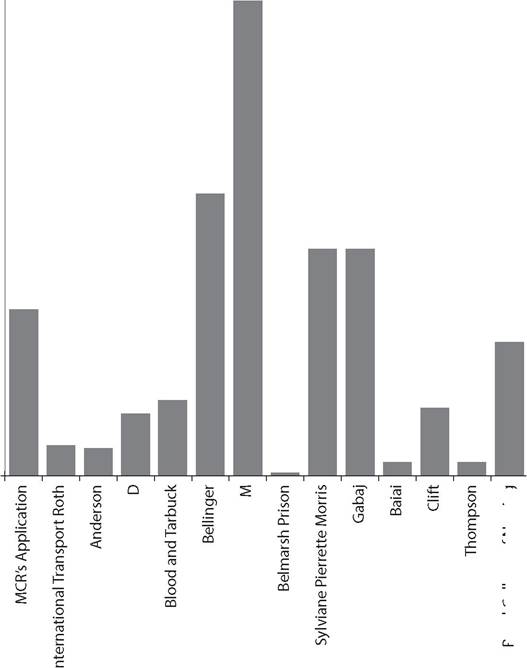
Figure 5.1 Delay between Enactment and Entry into Force of Legislation
Royal College of Nursing
The Ministry of Justice now produces approximately annual[897] reports highlighting declarations of incompatibility and adverse Strasbourg Court judgments, along with government responses. It records every declaration of incompatibility made, whether an appeal from the declaration is pending, whether the declaration has been overturned or upheld, and what action the government proposes to take in relation to the declaration. The database produced by the Ministry of Justice has quickly become the authoritative compendium of declarations of incompatibility in the UK.[898] Although the JCHR has lamented the infrequent updating of the database,[899] it does provide a publicly accessible report card, of sorts, of the government's compliance with declarations of incompatibility. Thus, the annual reports shed valuable light on the government's compliance record. The Human Rights Division of the Ministry of Justice corresponds with relevant government departments about declarations of incompatibility and asks questions such as: What are you doing? How far have you got? What is the next stage? Anything we can do to help?'[900] [901] Such correspondence keeps the issue raised by the declaration of incompatibility alive and puts pressure on the relevant government department to address the incompatibility. The JCHR embraced its revised role in relation to declarations of incompatibility by continuing to correspond with ministers and hold the government to account on the timing and merits of its response. In R (Sylviane Pierrette Morris) v. Westminster City Council and First Secretary of State (No 3)56 and R (Gabaj) v. First Secretary of State,[902] section 185(4) of the Housing Act, 1996 was declared incompatible with Art. 14 of the Convention on the basis that it required a dependent of a British citizen to be disregarded when determining whether the citizen had a priority need for accommodation, when that dependent was subject to immigration control. The government took a very long time to address the incompatibility and to bring remedial legislation into effect. The JCHR wrote to the Minster for Housing, seeking his proposed response to the declaration. The minister's reply was as follows:[903] I am writing to advise you that the Government has given this matter careful consideration but the Secretary of State has not yet come to a decision whether to repeal or amend section 185(4). This matter raises some important policy issues and consequently further consideration and consultation with other Government departments will be necessary before a final decision can be made. However, I should like to assure the Committee that the Government intends to remedy the incompatibility as quickly as possible. While the government continued to ponder over how to address the incompatibility, the JCHR expressed concern about the fact that the government had not analysed the impact of the continuation of the incompatible provision on individual rights.[904] It then recommended that the government swiftly provide 'a detailed draft of their proposed remedy, together with the detailed reasons for their view'.[905] The government proposed to remove the discrimination in the social housing regime that was declared incompatible with the Convention, but retained elements of discrimination in the new regime, which was a cause of concern to the JCHR. The JCHR corresponded extensively with the government, seeking a fuller explanation of its views, and made it clear that it was of the opinion that the proposed regime would also be incompatible with Convention rights.[906] Similar iterative correspondence followed the Court of Appeal's declaration of incompatibility in R (Baiai) v. SSHD.[907] In that case, the Court was considering the compatibility of the government's 'Certificate of Approval' scheme for marriages involving a person subject to immigration with the Convention. The Court in effect made two declarations of incompatibility—one based on the right to marry without discrimination, and a broader declaration based on nationality discrimination. The government accepted the first declaration, but appealed to the House of Lords against the second. While the appeal was pending, the JCHR engaged in detailed correspondence with the relevant minister, asking, in particular, why the discriminatory elements of the scheme had not been removed.[908] The minister pointed out that a revised scheme would only be introduced following a final decision by the House of Lords. The JCHR continued to press the government for detailed a justification of its conduct, highlighting that:[909] In cases like this, where the Government accepts part of a statutory scheme is incompatible with the Convention, but proposes to appeal against a wider declaration of incompatibility, a choice must be made about the timing of any reform. This choice must clearly strike a balance between the cost, administrative inconvenience and parliamentary time involved in removing the incompatibility and the detriment suffered by those who are affected by the ongoing application of the incompatible provisions. In our view this balance can only be struck on a case-by-case basis. The government later notified the JCHR of its plan to address the incompatibility through a remedial order, but failed to provide it with details about the substance of, and timetable for, the order, for a significant period of time. The JCHR made a damning statement against the government in its next report, demonstrating that delays would not enable declarations of incompatibility to fall under the radar:[910] We are concerned that it is now almost a year since we asked for further information on this case. The relevant declaration of incompatibility is over three years old and yet we still have no clear proposals to scrutinise or any timetable for action.... In the light of the earlier prolonged delay in this case, further procrastination is unacceptable. We call on the Government to publish its draft Order and its timetable for reform as soon as possible. The JCHR's practice and procedure of corresponding with government ministers over declarations of incompatibility became increasingly entrenched. In accordance with its guidance, in some cases, the JCHR's correspondence began even when declarations of incompatibility were awaiting appeal in higher courts. In R (Black) v. Secretary of State for Justice,[911] the Court of Appeal declared section 35(1) of the Criminal Justice Act, 1991 incompatible with Art. 5(4) of the Convention, since it left the decision of parole of long-term determinate sentence prisoners to the Secretary of State. The chairperson of the JCHR promptly sent a letter[912] to the Secretary of State for Justice within weeks of the Court of Appeal judgment, even though it was ultimately to be reversed by the House of Lords.[913] The JCHR has not taken kindly to government apathy in notifying it about responses to declarations of incompatibility. For instance, the government sought to remedy one declaration of incompatibility[914] through secondary legislation, about which it did not inform the JCHR. A strong reprimand from the JCHR was to follow:[915] We are... concerned by the fact that the secondary legislation designed to respond to this declaration of incompatibility was not drawn to our attention by the Government. We recommend that in future the Government always draws such instruments to the attention of this Committee, to ensure that Parliament receives the advice of its expert human rights committee about whether the instrument remedies the incompatibility identified by the courts. Thus, the JCHR ensures that the government cannot allow declarations of incompatibility to slide off the political agenda. Through frequent correspondence and reports, it presses the government to notify it of the form, timing, and substance of its proposed response. Much has been written about the JCHR's modest record in actually persuading the government to carry substantive amendments to proposed legislation.[916] But one thing is clear—the JCHR places continued pressure on government departments showing passive resistance to declarations of incompatibility.[917] This ensures that the government cannot simply tide over declarations of incompatibility and lean on the burden of inertia that such declarations place on those seeking a change in the law. The JCHR has taken many transparency-promoting measures, including publishing all its correspondence with government departments, releasing an annual report on government responses to declarations of incompatibility, and pressing the Ministry of Justice to publish an annual database of declarations of incompatibility. All this makes it fairly simple for human rights activists, pressure groups, and the society at large to track government responses to declarations of incompatibility.[918] Through constant correspondence, follow-up, reminders, and, to use its own language, 'chasing',[919] of ministers, the JCHR has effectively imposed a principle of legality-type requirement[920] on the government. The government cannot simply retain legislation that has been declared incompatible with Convention rights on the books without manifesting an unequivocal intention of doing so. The theoretical option of complete 'ignorance' of declarations of incompatibility, which many of the commentators on the HRA have alluded to,[921] has remained just that—purely theoretical. In many cases, even when the government has been haphazard in notifying the JCHR about declarations of incompatibility, the JCHR has continued to take its role of monitoring government responses seriously. Of course, we should be mindful of the context in which the JCHR operates vis-a-vis declarations of incompatibility. Thus far, there have been less than two declarations of incompatibility a year,[922] making its task of identifying these declarations and monitoring government responses relatively uncomplicated. How its effectiveness in doing so might change with a relative increase in the number of declarations of incompatibility is difficult to predict. JCHR recommendations are clearly not binding on Parliament or the government. Nevertheless, in the current state of play, the JCHR makes it almost impossible for any government to ignore declarations of incompatibility in the hope that they will fade from the public consciousness. The Strasbourg Court As noted in the Introduction, the Strasbourg Court is a supranational court established under the Convention. It decides applications made by individuals, groups, NGOs, or member states, claiming that a member state has violated the rights set out in the Convention or its protocols. The Court only considers applications after all domestic remedies have been exhausted.[923] It may award 'just satisfaction' to applicants.[924] Its judgments are binding on member states that are party to the judgment, and the Committee of Ministers of the Council of Europe (CoE) supervises their execution.[925] The Strasbourg Court also rallies institutional weight behind the declaration of incompatibility. This happens in two ways. First, British courts give significant traction to Strasbourg Court decisions when deciding cases, including challenges to primary legislation, under the HRA. Second, the Strasbourg Court grants a margin of appreciation to decisions taken by national authorities in member states, including courts. Practice has shown that the mere possibility of an adverse ruling against the government in Strasbourg has often been sufficient to compel a change in the law following a declaration of incompatibility. These matters will now be considered in turn. Section 2(1) of the HRA: —Taking Strasbourg Court Decisions into Account If you come and listen to a human rights case being argued in the [UK] Supreme Court, you will be struck by the amount of time counsel spend referring to and discussing the Strasbourg case law. They treat it as if it were the case law of our domestic courts.[926] Baroness Hale's extrajudicial observations provide a striking glimpse into the role that Strasbourg case law plays in domestic adjudication under the HRA. The existing constitutional arrangements in the UK give Strasbourg Court case law a level of importance that is highly unusual in the domestic context. Section 2(1) of the HRA states that when deciding cases in respect of Convention rights, courts 'must take into account' decisions of the Strasbourg Court. The first thing to note about this section is that it does not, as some people have argued,[927] give Strasbourg judgments merely persuasive authority in domestic courts. Nor are Strasbourg Court decisions binding in domestic courts.[928] Rather, they are a 'mandatory relevant consideration'[929] that courts are obliged to consider when deciding matters concerning Convention rights. Further, section 2(1) is not restricted only to Strasbourg Court judgments to which the UK is a party. From the early case law under the HRA, courts developed what came to be known as the 'mirror principle' in their approach to Strasbourg jurisprudence. This principle, which was first articulated in R (Alconbury Developments) v. Secretary of State,[930] requires domestic courts to follow 'clear and constant' jurisprudence of the Strasbourg Court. However, if the Strasbourg Court arrived at a conclusion that was fundamentally at odds with a principle of the British Constitution, courts would not need to follow it.[931] The most famous exposition of the mirror principle was to come from Lord Bingham soon after it was expounded, in his judgment in R (Ullah) v. Special Adjudicator: 'The duty of national courts is to keep pace with the Strasbourg jurisprudence as it evolves over time: no more, but certainly no less.'[932] The justification for this principle was that since the Convention was an international agreement, the meaning of Convention rights needed to be uniform across all 47 member states. Therefore, the Strasbourg Court should be considered the authoritative interpreter of the Convention.[933] In another case, Lord Brown suggested a modification to Lord Bingham's test so that it would read: 'no less, but certainly no more'.[934] He argued that as a practical matter, British courts would be well served to commit errors of under-enforcement rather than errors of overenforcement of Convention rights. This was because in cases involving the former, aggrieved parties could take their case to Strasbourg, whereas in cases involving the latter, the government would have no choice but to allow the error to stand. Practice developed to the effect that judgments of the Grand Chamber of the Strasbourg Court, consisting of 17 judges, would be treated as more authoritative than other judgments.[935] It was made clear from the start that Strasbourg Court judgments would not necessarily be presumptively final. To begin with, only 'clear and constant' jurisprudence would be followed. Further, even clear and constant jurisprudence that was at odds with some fundamental principle of the Constitution or misunderstood some aspect of the domestic law would not be followed.[936] There were many variations of this second exception, including that decisions which 'misunderstood',[937] were 'misinformed about',[938] or were based on an 'imperfect understanding'[939] of, domestic law or procedure, would not be followed. Nevertheless, the ground covered by the mirror principle encapsulates many cases in which domestic judges feel compelled to follow Strasbourg jurisprudence with which they have serious or principled disagreement. This is best reflected in the House of Lords' judgment in SSHD v. AF (No 3),[940] on the compliance of closed material procedures, an essential part of the government's anti-terrorism framework, with the right to a fair trial. Just before that judgment, a Grand Chamber of the Strasbourg Court decided a case[941] that had a decisive impact on the Lords' decision. Lord Carswell made the point subtly, noting that even though 'not all may be persuaded' by the Strasbourg Court's decision, they were obliged to apply it.[942] Lord Hoffman, on the other hand, said that he would follow the Strasbourg Court judgment 'with very considerable regret', even though he believed that the decision 'was wrong' and destroyed a 'significant part of this country's defences against terrorism'.[943] The most famous opinion in the case was Lord Rodger's, who said: 'Even though we are dealing with rights under a United Kingdom statute, in reality, we have no choice: Argentoratum locutum, iudicium finitum—Strasbourg has spoken, the case is closed' (italics added).[944] This case shows that even when British domestic courts genuinely disagree with clear and constant Strasbourg jurisprudence, they have no choice but to follow it. Derogation from the Strasbourg case law enters the picture only when Strasbourg has committed some more fundamental error, such as misunderstanding an aspect of domestic law. The Supreme Court recognized this in a subsequent case, where it was held that disagreement with Strasbourg is not an option where its jurisprudence is clear and authoritative, and it has expressed a coherent view.[945] The duty to take Strasbourg jurisprudence into account, coupled with courts' interpretation of that duty, has significant implications for the declaration of incompatibility. A British judgment making a declaration of incompatibility based on a clear and constant line of Strasbourg jurisprudence is likely to find favour in Strasbourg. This also establishes an incentive for British courts to follow Strasbourg jurisprudence, since doing so would strengthen the normative force of the declaration of incompatibility itself. As McGoldrick says, '[T]he "political imperative" to pass remedial legislation would clearly be weaker, if a UK court or tribunal has interpreted the Convention rights beyond Strasbourg case law.'[946] Litigants that see a declaration of incompatibility remain unaddressed can take their case to Strasbourg with the expectation of a judgment against the government.[947] More recently, however, there have been a number of cases in which the Supreme Court has showed an appetite to disagree with Strasbourg, and engaged in 'dialogue' with it over the scope and effect of Convention rights. This has prompted some commentators to argue that British courts are moving away from the mirror principle, and no longer feel obliged to follow Strasbourg jurisprudence in the same way as they did before.[948] But these cases are easily reconcilable with the early cases expounding upon the mirror principle, because they involve Strasbourg Court jurisprudence which, in the Supreme Court's view, has misunderstood aspects of domestic law. For instance, the issue before the Supreme Court in Horncastle[949] was whether a criminal conviction based solely or to a decisive degree on the statement of a witness whom the defendant has had no chance of cross-examining would necessarily infringe upon the right to a fair trial under Art. 6 of the Convention. Strasbourg Court jurisprudence suggested that it would, but the Supreme Court refused to follow Strasbourg. Lord Phillips set out the position succinctly:[950] The requirement to 'take into account' the Strasbourg jurisprudence will normally result in the domestic court applying principles that are clearly established by the Strasbourg court. There will, however, be rare occasions where the domestic court has concerns as to whether a decision of the Strasbourg court sufficiently appreciates or accommodates particular aspects of our domestic process. In such circumstances it is open to the domestic court to decline to follow the Strasbourg decision, giving reasons for adopting this course. This is likely to give the Strasbourg court the opportunity to reconsider the particular aspect of the decision that is in issue, so that there takes place what may prove to be a valuable dialogue between the domestic court and the Strasbourg court. This is such a case. Taking into consideration the Supreme Court's judgment, a Grand Chamber of the Strasbourg Court later modified its position.[951] In another case,[952] the Supreme Court acknowledged once again that it would not be bound to follow each and every decision of the Strasbourg Court. However, where there was a clear and constant line of decisions whose effect was 'not inconsistent with some fundamental substantive or procedural aspect' of the law, and 'whose reasoning does not appear to overlook or misunderstand some argument or point of principle', the Strasbourg jurisprudence would be followed.[953] The Supreme Court said that the Strasbourg Court did not commit any of these errors in its jurisprudence, and therefore followed it. Another striking aspect of the case was that the Strasbourg Court's judgment had disagreed with two previous decisions of the majority on the House of Lords,[954] confirming the minority view. Dissenting opinions significantly raise the stakes in such situations, because they would compel the Supreme Court wishing to depart from Strasbourg jurisprudence to not only posit that Strasbourg fundamentally misunderstood the domestic position, but also that their brethren in dissent did. There have been mixed views from the bench about whether British courts can leap ahead of Strasbourg by giving more generous interpretations to Convention rights than the Strasbourg Court. The majority in Ambrose v. Harris[955] observed that Strasbourg should be closely followed, since it was not within domestic courts' role to expand Convention rights. This confirms the continuing likelihood of declarations of incompatibility being 'affirmed'[956] in Strasbourg. However, in a powerful dissent, Lord Kerr deprecated what he described as ' Ullah-type reticence' by the judges, noting that it was not open to the domestic judges to refuse to determine the application of a Convention right simply because Strasbourg had not spoken.[957] Similarly, in another case, Lord Brown observed that it would be 'absurd' to await an authoritative decision from Strasbourg before a domestic court could arrive at a finding that Convention rights had been violated.[958] However, even the opinions enabling British courts to move ahead of Strasbourg jurisprudence point towards an expected affirmation of the domestic court judgment in Strasbourg, implying that the institutional purchase of the declaration of incompatibility remains powerful. Lord Kerr, for example, referred to anticipating Strasbourg's decision on an issue, as part of engaging in a process of dialogue with that Court.[959] Lord Brown said that even though a domestic decision can expand Convention rights, it must 'flow naturally from existing Strasbourg case law' and could not expand the scope of the Convention beyond what was 'reasonably envisaged' by the Strasbourg Court.[960] The example he provided is instructive for the purposes of this chapter:[961] Suppose, for example, that the domestic court was inclined to give a Convention right an altogether greater reach than Strasbourg showed any likelihood of giving it, but that, so interpreted, the right would plainly conflict with domestic legislation. Is it seriously to be suggested that, pursuant to section 4 of the Human Rights Act 1998, the court could and should make a declaration of incompatibility?... I cannot suppose that Parliament so intended or, indeed that such an approach would lead to satisfactory results. On similar lines, Lord Wilson said in another case that the Supreme Court could leap ahead of Strasbourg, as long as it did not act 'extrava- gantf/.[962] These observations make it plain that the judges—including those who posit that domestic courts can leap ahead of Strasbourg— have remained highly conscious of the approval of their decisions (including declarations of incompatibility) in Strasbourg. The Margin of Appreciation The second reason for which the declaration of incompatibility is likely to find favour in Strasbourg is the Strasbourg Court's application of the 'margin of appreciation' doctrine. It is worth noting at the outset that even though the Strasbourg Court is not an appellate court in the strict sense, it does not consider applications de novo. As with most international courts,[963] it only considers matters after all domestic remedies have been exhausted.[964] This means that the Strasbourg Court usually has the benefit of a domestic court ruling in its case materials. It conceives of its role as reviewing, rather than replacing, the decision of the domestic court.[965] The margin of appreciation doctrine enables the Strasbourg Court to perform this reviewing function. According to the doctrine, the Court grants national authorities a margin of appreciation when reviewing their decisions. The doctrine found no explicit mention in the original text of the Convention.[966] But Protocol 15, which will enter into force when the states parties have signed and ratified it, will incorporate the doctrine into the preamble to the Convention.[967] The width of the margin of appreciation varies according to the circumstances of the case and the Convention rights engaged.[968] The doctrine has a subsidiarity-based rationale, acknowledging that national authorities are better placed to delineate the scope and content of Convention rights in the first instance. As the Strasbourg Court famously put it in Handyside: 'By reason of their direct and continuous contact with the vital forces of their countries, State authorities are in principle in a better position than the international judge to give an opinion on the exact content of [the rights in question].'[969] This rationale was reiterated in the Brighton Declaration at the High Level Conference on the Future of the European Court of Human Rights, where it was stated that the margin of appreciation 'reflects that the Convention system is subsidiary to the safeguarding of human rights at national level and that national authorities are in principle better placed than an international court to evaluate local needs and conditions'.[970] The margin of appreciation has significant implications for the declaration of incompatibility. Since the margin includes domestic judicial decisions,[971] declarations of incompatibility fall within its ambit. Thus, a domestic judicial ruling that primary legislation is incompatible with Convention rights increases the likelihood that Strasbourg will also find that Convention rights have been violated. This is not a matter on which scholars universally agree. Some have argued that the margin of appreciation doctrine instead decreases the likelihood of success for litigants who go to Strasbourg armed with a declaration of incompatibility[972]—how- ever, they fail to acknowledge that the margin of appreciation includes not only political decisions, but also domestic judicial decisions declaring legislation incompatible with Convention rights. The Strasbourg Court has gone so far as to say that in many contexts, it would reach a conclusion contrary to the national court only if the latter's decision was 'manifestly unreasonable'[973] or 'cannot reasonably be justified'.[974] Others have argued that the Strasbourg Court will not inevitably reach the same conclusion as a domestic court because domestic courts focus on the particular legislative provision, whereas the Strasbourg Court focuses on the violation of Convention rights in specific circumstances.[975] However, it is highly unlikely that a declaration of incompatibility will be made at the domestic level in a situation where litigants' Convention rights are not violated. The House of Lords has noted that barring in exceptional circumstances, it will refuse to make a declaration of incompatibility in the abstract, without the actual violation of victims' Convention rights having been established.[976] Declarations of incompatibility thus occupy an unusual position. Even though they are often treated as a finding against the government, since they provide no automatic legal redress, litigants armed with a declaration may take their case to Strasbourg. This results in a situation in which the margin of appreciation benefits not only Conventionviolating conduct,[977] but also Convention-protecting conduct.[978] On some occasions,[979] British courts have undertaken the task of predicting whether a particular matter would be within the state's margin of appreciation. Such analysis puts the cart before the horse—the margin of appreciation granted by Strasbourg will include the very judgment that has predicted what the width of the margin is likely to be. So even if British domestic courts make a declaration of incompatibility on a matter that they predict to be within the margin of appreciation, their judgment is likely to be affirmed in Strasbourg, since, through their own judgment, they would have effectively altered how the margin is viewed.[980] As Lord Hoffman put it, 'The margin of appreciation is there for division between the three branches of government.... There is no principle by which it is automatically appropriated by the legislative branch.'[981] The Practice: The Threat of Going to Strasbourg Having said all this, the practice has remained somewhat disconnected from the theory of litigants taking their case to Strasbourg following a declaration of incompatibility. In many cases, the Strasbourg Court has strengthened the declaration of incompatibility through a judgment before, rather than after, the declaration was made. Here, an application to Strasbourg was not required following a declaration of incompatibility, since a change of law was forthcoming. The House of Lords' decision in R (Anderson) v. SSHD [982] (making a declaration of incompatibility against the law which enabled the Home Secretary to decide the tariff period for prisoners sentenced for life), for example, was based on the Strasbourg Court's judgment in Stafford v. United Kingdom.[983] Following the decision, the Home Secretary had been advised that a possible application to Strasbourg would almost certainly result in a judgment against the government.[984] Parliament soon enacted primary legislation[985] removing the incompatibility. However, there have been cases in which litigants, armed with a declaration of incompatibility, have actually threatened to take their case to Strasbourg. The force of that threat, combined with other factors, has placed enough pressure on the government to change the law. Of course, establishing causation for the government or Parliament's choices is always a tricky exercise, and it is difficult to know the precise extent of the role played by the litigant's threat in the government's decision. Nevertheless, let us consider a few examples. In Blood and Tarbuck v. Secretary of State for Health,[986] Ms Diane Blood sought a declaration that provisions of the Human Fertilisation and Embryology Act, 1990 were incompatible with the Convention in that they specified that when a child was conceived with the sperm of a deceased man, he would not be treated as the father of the child. At this early stage, she threatened to take her case to the Strasbourg Court in the event that the law was not amended. The government's initial reaction was to contest the case in the domestic court 'tooth and nail', and urge Ms Blood not to take the case to Strasbourg.[987] However, the government ultimately relented and consented to the issuance of a declaration of incompatibility in the domestic proceedings. Soon after the Administrative Court made a declaration of incompatibility, Ms Blood suggested that she would be prepared to bring a 'further challenge' to Strasbourg if the government did not act promptly.[988] About six months later, the law was retrospectively amended to enable men to be treated as the father of a child in such circumstances, subject to certain conditions.[989] Parliamentary debates make it clear that the threat of proceedings in Strasbourg, in which the government would 'inevitably face condemnation', formed a major impetus behind the declaration.[990] The threat to go to Strasbourg following a declaration of incompatibility was still clearer in Bellinger,[991] in which the House of Lords declared a statutory provision[992] (that failed to recognize the marriage of a post-operative male to female transsexual to a man) incompatible with Convention rights. Mrs Bellinger repeatedly warned that she would take her case to Strasbourg. She did so in an interview shortly after the Lords' decision, in the following words:[993] I am extremely saddened today knowing that I have gone all the way through the British legal system and it has failed me [Mrs Bellinger was seeking a remedy under section 3 rather than section 4 of the HRA]. Now I fear I am left with no choice other than to seek redress in the European courts, a possibility my legal team will now look into. As Parliament continued to retain the incompatible law on the books, Mrs Bellinger later went ahead and filed an application in the Strasbourg Court.[994] However, the Strasbourg Court was not called upon to make a decision, since the application was withdrawn after the law was changed[995] in order to address the incompatibility. These cases provide evidence of the fact that the Strasbourg Court's 'bark (or the threat of a litigant going to the Strasbourg Court armed with a declaration of incompatibility), combined with other factors, has been sufficient to prompt the government to change the law following a declaration of incompatibility. In most cases, its 'bite' has not been required. Can it be said that the government may find it worthwhile to call the bluff of a litigant armed with a declaration of incompatibility, by taking no steps to address the incompatibility? There has only been a single occasion on which the Strasbourg Court has arrived at a judgment on the application of a litigant armed with a domestic declaration of incompatibility. That was A v. SSHD,[996] involving a challenge to the Anti-Terrorism, Crime and Security Act, 2001 (ATCSA), which allowed the indefinite detention without trial of foreign terrorist suspects. The litigants threatened to go to Strasbourg in the event that the government did not address the incompatibility promptly:[997] a threat that soon materialized into an application. Even after it was filed, the withdrawal of the case was used as a bargaining chip for the government to take immediate action.[998] The Strasbourg Court confirmed the conclusions of the House of Lords, both on the question of whether there was an emergency threatening the life of the nation, and whether the state measures complied with the requirements of the Convention.[999] Under its margin of appreciation doctrine, the Strasbourg Court accorded a high degree of institutional respect to the judgment of the House of Lords, observing that it would displace the conclusions of the House only if satisfied that it 'had misinterpreted or misapplied Art. 15 or the Court's jurisprudence under that article or reached a conclusion which was manifestly unreasonable'.[1000] This was in spite of the Strasbourg Court's normal line of reasoning that derogating measures are usually strictly required, and hence legitimate, under Art. 15 of the Convention.[1001] Thus, this case suggests that the proverbial 'bite' (or a decision of the Strasbourg Court) is likely to prove as difficult for the government as the 'bark' (or the threat of filing an application in Strasbourg). Having said that, it is now worth addressing the elephant in the room—Smith,[1002] the prisoner voting rights case. As I noted in Chapter 2, the declaration of incompatibility made in that case is the only one that has not (yet) been addressed by primary legislation or through a remedial executive order. As is often the case, the first judgment highlighting that domestic legislation imposing a blanket ban on the voting rights of prisoners was inconsistent with Convention rights came from the Strasbourg Court,[1003] following which a British domestic court made a declaration of incompatibility. In a subsequent case, the Court of Appeal[1004] and Supreme Court[1005] refused to make further declarations of incompatibility on the same issue, since the previous declaration was already on the table. Why has the pressure exerted by Strasbourg not yet prompted an amendment to the law in this case? The answer emanates from multiple factors that have conspired together to found a stalemate. The ban on prisoner voting rights has been inaccurately portrayed as a fundamental and longstanding facet of British law, with which a foreign court was attempting to interfere. As one Conservative MP remarked in the House of Commons, 'It is the settled view of the British people, through their elected representatives in the British Parliament, that prisoners should not have the right to vote, and it has been that way since 1870.'[1006] However, as Murray demonstrates, restrictions on franchise historically 'rested on very limited legal authority7 and were subject to several exceptions by the middle of the twentieth century.[1007] This is a point which, although not lost on the judges,[1008] has been drowned out in the political discourse. In turn, this idea has also channelled a wave of Euroscepticism and suspicion about the interference of the Strasbourg Court in domestic policymaking. Oddly enough, even MPs from the two largest parties who otherwise take pro-civil libertarian positions have staunchly defended the ban on prisoner voting rights.[1009] The judgments from Strasbourg have also attracted considerable ire from politicians because they touch upon what is widely considered a sacrosanct aspect of the British constitutional project: parliamentary sovereignty and the legislative process. This is because in making its decision, the Strasbourg Court had taken into account that the Westminster Parliament had not substantively debated the ban on prisoner voting rights in the context of contemporary penal policy and current human rights standards.[1010] Finally, the narrative underlying the issues, or the faces of the prisoner voting rights movement, have not helped in reshaping the public consciousness. The original claim in the Strasbourg Court was brought by John Hirst, described by one scholar as an 'an axe-wielding killer celebrating his win with champagne as he pours YouTube abuse on the authorities'.[1011] The domestic case in the Supreme Court seeking a further declaration of incompatibility involved two claims by prisoners serving life sentences for murder, prompting one of the judges hearing the case to observe that she had 'no sympathy at all' for either of them.[1012]