The Argument
This set of observations illuminates the three crucial puzzles identified earlier, which the bargaining hypothesis leaves unexplained: why negotiations on taxation became regular and institutionalized when incentives are normally to avoid them, especially under conditions of low public goods provision; how different social groups solved their collective action problem and raised effective resistance to a ruler; and how exchanges with groups controlling most wealth (and status), typicВally assumed to be commercial, led to the incorporation of lower orders of society and especially the countryside, which alone allows us to term a regime inclusive and territorially anchored, i.e.
representative.[85] I elaborate on these connections next.Taxation was a top-down demand imposed, initially at least, on an irregular basis. Social actors had little incentive to support a central institution that only extracted from them without also meeting some systematic demand. That demand is widely associated with war presВsures. But war was also intermittent and a top-down imposition. The demand for justice, on the other hand, was a bottom-up, pressing, daily concern across social orders. Crime and order, corruption of officials and local power-holders, and especially disputes about property rights in land were pervasive concerns throughout all cases, generating spontaneous demand for adjudication. The expression of grievance had a universal medium: the petition submitted to the ruler’s court. This was non-routine justice, appealed to when regular channels failed. The practice dated to antiquity and occurred throughout the premodern world, from ancient Rome, to Western Europe, to the medieval and early modern Ottoman and Russian Empires, as well as the Far East.[86] In the twelfth and thirteenth centuries, Europe saw a remarkable trend of petition-making that transformed political interaction just as parliaments were forming.
Petition-making seems typical of polities with low institutionalization; perhaps relatedly, petitions today are a re-emerging part of governance in a period of democratic crisis.[87]Premodern rulers across regions were supreme judges in their realm and their court was also a court of law. When rulers could centralize judicial practice at their court, subjects had incentives to demand that meetings become regular. Conversely, rulers then had a ready forum in which to present tax demands. This overlap of the judicial and fiscal functions generated a process I describe through the historical instituВtionalist mechanism of institutional layering, which was crucial for the emergence of representative regimes that were polity-wide and inclusive.111 The greater the ruler’s capacity to enforce this structure, the more regular the representative institution. As political scientist Robert Bates has noted, coercion can be socially productive.[88]
Ruler power was also fundamental in solving the collective action problems of different social groups. The most effective institutionВbuilders, as we will see, were rulers who controlled most land in their territory and thus the distribution of land rights. When subjects received land conditionally from the crown, they were burdened with common obligations, especially to provide military, judicial, and administrative service. Joint obligations created incentives to act in common, especially when taxes were imposed across all social orders with few immunities.
Crucially, attendance at the royal court and representation were also originally obligations, just as jury duty remains to this day.[89] This requires recalibrating a key assumption, since we deem representation to have been a hard-won right. Its obligatory character is clear in a very common practice: representatives throughout Europe often adopted the Roman legal form of plenipotentiary powers, the powers given to legal agents to represent litigants in court.
This legal form was transposed to political practice, as explained in Chapter 4, so that local communities would be collectively bound by decisions of their representative; it was not, initially, a right demanded from below. This point has been lost in modern social science, even though, I argue, it was critical to the trajecВtory of representative institutions.The capacity of premodern rulers to enforce these obligations varied widely. Justice was a universal demand, but ruler preponderance occurred only rarely, and institutional outcomes depended on the interВaction of the two. Existing accounts, as seen above, have predicated such outcomes on mercantile wealth and debt. But this cannot explain how a regime became inclusive and anchored throughout the territory. Urban populations, where mercantile wealth is assumed to be concentrated, were limited - throughout Europe the average until 1800 ranged between 11 and 16 percent of total population and they only exceeded 30 percent in the Iberian peninsula, Belgium (briefly), and the Netherlands, whilst England formed its Parliament when urbanization was at 4 percent of the population.[90] To explain territorial anchoring beyond narrow urban pockets, compellence of the nobility was key.
This was so for two main reasons. On the one hand, without power over the nobility, rulers had limited access to the populations under noble jurisdiction. When nobles could be compelled, by contrast, as in England, rulers could summon representatives from across society, both rural and urban. Needing allies, the nobles themselves often included their dependent tenants. Contrary to most accounts, the step of including broader social groups is thus temporally and causally secondary; elite compellence comes first. When the high nobility could not be compelled, as in most Continental cases, it was often the king who incorporated lower social groups into assemblies as a counterbalance. Without including the countryside under noble jurisdiction, however, representation had limited political effects, as in France and Castile: urban groups dominВated but representative institutions lacked the strength and inclusiveness to become effective instruments of governance of the whole polity.
The result is identified with absolutism, even though, as discussed in Chapter 5, realities on the ground suggest weak, not absolute, power. In other cases, such as Hungary, Poland, even Russia, weak rulers challenged by powerful magnates created a new, lower and dependent nobility instead and generated representative activity with that group.[91] This resulted in what I call “second-best constitutionalism,” which also proved less resiliВent over time.Compellence of the most powerful was also necessary because these were the groups that were powerful enough to curtail the ruler.[92] Nobles were the hardest group to systematically involve in representative instituВtions, however. They hardly lacked joint interests that could have enabled collective action: they were linked by ties of kinship, patronage, marriage, fealty, ritual, and property, as sociologist Julia Adams has shown for the early modern Netherlands and many historians for France.[93] However, only rarely did they coordinate so as to produce enduring institutions, despite frequent rebellions. After all, Adams explains Dutch decline through elite failure at the polity level. Collective action was historically rare, I argue, because it mostly depended on a ruler capable of compelling nobles to attend the center.
Nobles typically had a collective interest in doing so when they faced inescapable common obligations, whether in state service or taxes. When nobles could gain exemptions from obligations (usually in exchange for military service), they lacked incentives to cooperate in countering the crown’s demands. We will see that it was their absence - not the assumed royal “absolutism” - that made representative institutions founder, as in France and Castile. By contrast, English rulers ensured that nobles were regular attendees at the crown’s court, sessions of which eventually coaguВlated into Parliament - they also performed service in addition to their military duties and contributed to taxation.
Also crucial was the role of fiscal ties, either through loans or debt, in cultivating the patterns of dependence this account posits as necessary for representative institutions.Noble presence is what sustained Parliament after all during the critical period of its emergence: after 1258, nearly sixty out of seventy Parliaments contained no popular representatives.118 As argued in Chapter 2, separate accounts are needed to explain the rise of the instituВtion of Parliament as a regular forum (in which compellence of the nobility was key) on the one hand and representative practice itself (where inclusion of broader strata is the issue) on the other. But a key observation emerges from the account: no elite compellence, no enduring representative institutions.
The “fundamental political dilemma” is thus resolved when coercion is successfully channeled through institutions that conscript the most powerful challengers, who could then counteract the ruler. This solved both the collective action problem of the nobility and enabled the territorial anchorВing of the regime. These dynamics, I argue, flowed from the effective distribution of land by rulers under conditional terms and from the relations of dependence generated by royal judicial powers (Figure 1.1).
This account, however, based as it is on collective obligation, conflicts with the conventional assumptions about the importance of Western individualism and private property rights for the Western trajectory, especially in England.119 A recurrent finding of this book is that traits that appear unique to the West, and England in particular, can be found across cases with very different institutional outcomes, sometimes in more radical form. Chapter 11 for instance will show the striking similarВities between English and Ottoman property rights in land, both of which were conditional, contrary to stereotypes in the field that assume that Ottoman rulers arbitrarily suppressed such rights.
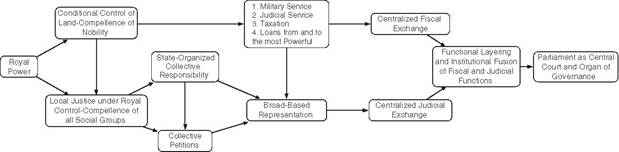
Figure 1.1 The English pathway to representative emergence
118
Sayles 1974, 18.
119
Macfarlane 1978; North 1990.
Moreover, rulers in all cases examined in this book strove to build effective judicial structures at the local and central level, typically drawing from a common pool of instruments. Petitions for instance inundated the court in London as much as in Moscow or Istanbul. Another major instrument deployed to impose order locally was collective responsibility, whereby a group was held responsible for the actions or obligations of a member. Where English outcomes differed was in the greater capacity of the English crown to impose such duties at the supra-local level and to summon all administrative units (the counties and towns) of the polity in a systematic way to the center. “Common petitions” in the English Parliament integrated local grievances into general political demands resulting in legislation: this is how the bill of legislation was born. Collective responsibility was foremost applied in representation itself, binding the whole community to the commitments of a representative.
Locally, the more such judicial instruments were under royal control, the easier it was to mobilize them on a systematic basis across the polity to serve ruler needs, whether to contribute to taxation or to perform service. If collective responsibility was not systematically aggregated at the center and if royal courts did not have binding power throughout the polity, a central system of representation could not be sustained.
By contrast, I show how in the Russian and Ottoman empires state weakness meant that social life was organized mainly at the local level, with weak mechanisms of aggregation: the state was unable to impose uniform organization at a supra-local level, with only some few exceptions (as in some episodes in Russian history). As a result, judicial interaction between center and periphery in those cases was highly atomized. Before we attribute this variation to cultural differences or conceptions of rights, to warfare pressures or economic conditions, as existing theories do, we must assess the differential capacity of rulers to achieve institutional change. As we will see, this capacity typically preceded the pressures of war and it shaped economic change.
In short, this argument predicts that, if we observe inclusive repreВsentative practices at the polity level, we should expect greater ruler power, conditional rights over land, and power over the most powerful (in most cases the nobility). These factors enable both the imposition of service and collective responsibility locally, but also, critically, the cenВtral summoning of localities that fused judicial and fiscal exchange. The cases studied range along different points on these continuums (Figure 1.2).
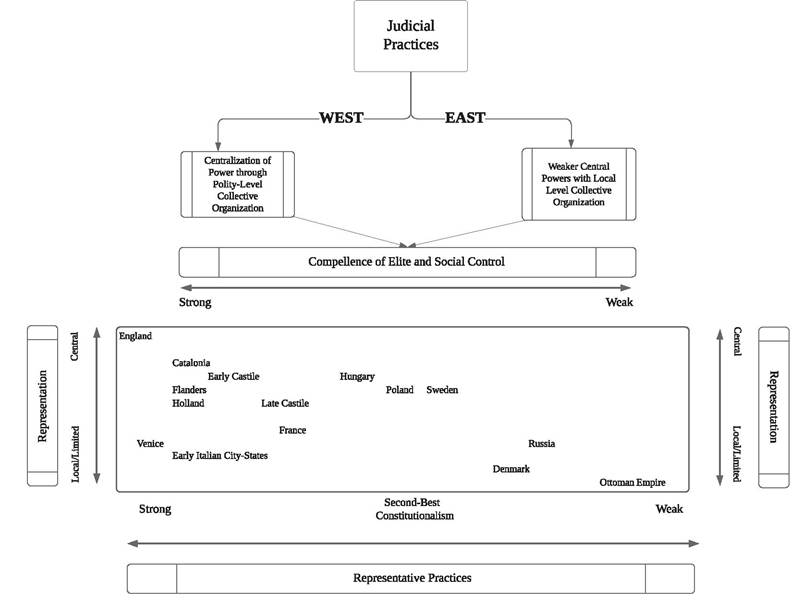
Figure 1.2 Variation of cases on key dimensions
This book is not claiming that polity-wide representation is, was, or should be the only form of governance. Multiple other forms have existed, many highly functional. Nor does it assume that other regions exhibited some “failure” in not developing representation. It simply takes the form that prevailed in Europe, for better or worse, and seeks to illuminate some of its necessary conditions.
1.4