Restitution, Repetition, Recompense and Unjustified Enrichment in Scots Law
ROBIN EVANS-JONES (ABERDEEN) AND phillip Hellwege (cologne)[608]
INTRODUCTION
Alan Watson has always stressed the importance of the study of the historical relationship between legal systems.
In his honour we intend to do something slightly different: to study the interplay in Scots law between two systems by which the law of obligations was ordered at different times within the civilian tradition. Alan Watson’s teacher, David Daube, showed how enduring the form in which knowledge is first recorded can be.1 The form in which law is first recorded will often endure long after its substance has changed and with it the rationale for the original model of classification. We will argue that what has come to be the (Scots) law of unjustified enrichment, under the influence of natural law thinking, was cast in a particular form by Stair. The central feature of this classification was to order what were known as obediental obligations according to the content of the obligation: restitution, recompense, or reparation. Reparation concerns the law of delict so what is now recognised as “unjustified enrichment” was in fact distributed within the classifications restitution and recompense. This natural law scheme, we will suggest, came under the influence of the model of obligations established by Roman law, which looks exclusively to the source of the obligation as the main canon of classification. It is a development of this scheme that treats “unjustified enrichment” as a source of obligations. Our central argument will be that the modern Scots law of unjustified enrichment, in its present state, is the mixture of two models of classification; one that looks to natural law for its inspiration and one that looks to Roman law. The most important result of this intermixture of two models, one of which made an important classification according to the content of the250 Robin Evans-Jones and Phillip Hellwege
obligation and one of which, at a similar level, looked to the source of the obligation as the central canon of classification, is that the modern Scots law of unjustified enrichment (classification according to the source of obligation) is itself still centrally subdivided according to the content of the obligation; broadly stated—whether the obligation is to restore a certum (repetition) or to make good an incertum (recompense).
stair’s classification
Stair follows a natural law, not the Roman institutional scheme of obligations. He divides obligations into two main categories: obediential and conventional, of which we are concerned only with the former.2 Obediential obligations are then subdivided according to whether their content is restitution, recompense or reparation.3 Restitution and recompense are obligations to restore some kind of plus acquired by the defender and reparation is about making good a minus caused to the pursuer. Reparation, which is the domain of the modern law of delict, is not our concern. We shall now briefly investigate the meaning of restitution and recompense as these terms are used by stair.
Restitution
Stair defines restitution as: “The obligation(s), whereby men are holden to restore the proper goods of others [...]”.4 Clearly restitution is primarily about restoring objects (certae res) held by the defender. Since Stair also includes the condictiones within this title, restitution also must include the obligation to restore exact sums of money (certa pecunia) received by the defender under certain conditions. Thus, as Birks has put it, “restitution” is the obligation to restore benefits capable of “exact return”.5
We must remember, however, that for Stair the cause of action of restitution is “obediential”. An obediential obligation to restore something capable of exact return arises in a much wider range of circumstances than “unjustified enrichment”. For Stair the foundation of the obligation of restitution appears to lie in the law of property;6 it is an obligation whose foundation lies in owner-
2 James Dalrymple, Viscount Stair, Institutions of the Law of Scotland (Edinburgh, 1681, 2nd edn 1693, Tercentenary edn by D M Walker, Edinburgh and Glasgow, 1981) (hereafter cited as Stair, Institutions by book, title, and section) 1.3.3.
3 Other obediential obligations are e.g.
between husband and wife, parent and children. See on Stair’s obediential obligations in general, Stair, Institutions,1.3.4.4 Stair, Institutions, 1.7. 1.
5 Peter Birks, “Six Questions in Search of a Subject—Unjust Enrichment in a Crisis of Identity”, (1985) Juridical Review 227, at 235: idem, “Restitution: A View of the Scots Law”, (1985) Current Legal Problems 57, at 62—3.
6 See, e.g., K G C Reid, “Unjustified Enrichment and Property Law”, (1994) Juridical Review 167, at 168-70.
Restitution and Unjustified Enrichment in Scots Law 251 ship. The claims enforceable with the condictio seem to be treated as analogous to the property claim on the reasoning that although ownership has been transferred, the “cause” for that transfer has failed. Thus “restitution” for Stair is an extremely broad legal category where the source of obligation is obediential and the content of the obligation is an exact return of what was received (certa res or certa pecunia). It is worth noting that in terms of the length devoted to each subject within the classification “restitution” the pure property cases attract vastly more attention than the condictio (later understood to be unjustified enrichment cases).
Recompense
Stair defines recompense (or remuneration) very broadly as the obligation “to do one good deed for another”.[609] It has as its paradigm “all obligations of gratitude”, which as a notion clearly ranges further than what is understood as the modern law of unjustified enrichment. The first example of recompense understood in this broad manner is the obligations of gratitude arising from gift.[610] The next class of case is negotiorum gestio which is associated with the idea of “one good deed for another” with the difference that the deed is not done animo donandi “but of purpose to oblige the receiver of the benefit to recompense”.[611] The next group of examples of recompense concerns what in modern law is understood as unjustified enrichment.
Stair nevertheless clearly distinguishes the enrichment cases from negotiorum gestio describing them as “The other obligation of recompense”.[612] The examples of enrichment given by Stair are the actions against minors and the mala fide builder, the actio de in rem verso, and some other situations like the obligation of contribution which arises when goods are thrown overboard to save a ship.We summarise for Stair. The content of the obligation of restitution is to return certa res or certa pecunia. The benefit to which recompense applies is an incertum. The obligation may be to show gratitude, to pay for expenses necessarily incurred by another in connection with one’s affairs or to pay the amount by which one has been enriched at another’s expense (in quantum lucratus). While recompense includes some instances encompassed by the modern law of unjustified enrichment, for Stair it is a classification that extends beyond enrichment in this narrow sense. The reason is that it includes a range of cases classified according to the content of the obligation where the source of the obligation is obediential. It is important to note that there is no actual classification in Stair called “repetition”. He does, however, use the term to denote claims (of
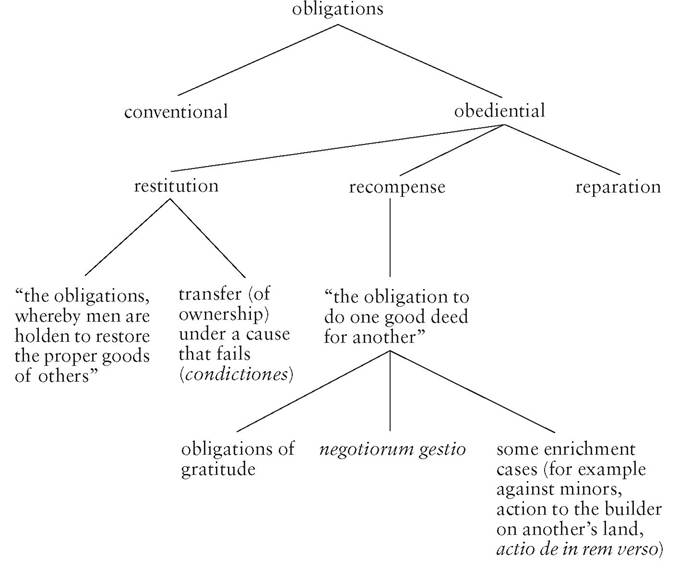
Figure 23.1: Summary of Stair’s scheme of restitution
restitution) arising from the condictiones to recover property or money. 11 For example: “Restitution of things belonging to others, may seem to be an effect of property, whence cometh the right of vindication or repetition of any thing [...]”.12
bankton’s scheme
Bankton follows Stair closely. Restitution is the obligation to return certa res/pecunia and arises in a broader range of cases than unjustified enrichment.13 The paradigm case of recompense is very clearly the obligations of gratitude arising from gift: the first section of “Recompence” is entitled “Gift”.
Section two concerns “Negotiorum gestio”, and section three the “Rhodian law”.14 It is11 Stair Institutions, 1.7.2 and 1.7.9 respectively.
12 Stair Institutions, 1. 7. 2.
13Lord Bankton, An Institute of the Laws of Scotland, 3 vols (Edinburgh, 1751—1753; repr. Stair Society (vols 41-43), Edinburgh, 1993-1995) vol. 1, 208-21.
14 Ibid. vol. 1, 226-37.
not until the fourth section on recompense that the enrichment cases are dealt with. Here we encounter the general principle Nemo debet locupletior fieri cum alterius jactura.
erskine’s approach
Erskine’s sections on restitution and recompense are much shorter than the earlier institutional treatments. The obligation of restitution applies to two classes of case: to “whatever comes into our power or possession which belongs to another, without an intention in the owner of making a present of it” and to things given for a cause that fails.[613] In terms of the length of treatment the discussion of the pure property cases has been severely curtailed. For Erskine the cases governed by the condictio concerning a cause that fails appear to have an equal standing with the pure property examples which in Stair and Bankton were dealt with at much greater length. In other words there appears to have been a growth in stature of what are later recognised as the “unjustified enrichment” cases within the obediential obligation of restitution.
The main development in Erskine is in the section on recompense:[614] the obligations arising from gift and negotiorum gestio are now omitted. The reason is that these are the two parts of Stair and Bankton’s treatment which do not (at least directly) concern unjustified enrichment. The wide conception of recompense found in Stair and Bankton has therefore being narrowed down to correspond to situations of “unjustified enrichment” alone.
bell’s approach
The most interesting feature of the treatment found in Bell’s Principles lies in the difference between the fourth edition, the last edition for which he was responsible, and the fifth edition edited by patrick Shaw.
Bell’s Fourth Edition
Restitution is said to lie (a) “against one in possession of the property or goods of another without his consent” and (b) “or who has, in consequence of error, received payment of money not legally due to him” (main condictio case).[615] The striking feature of what follows is that the condictio is accorded a fuller treatment than the property cases. In other words, the enrichment cases have
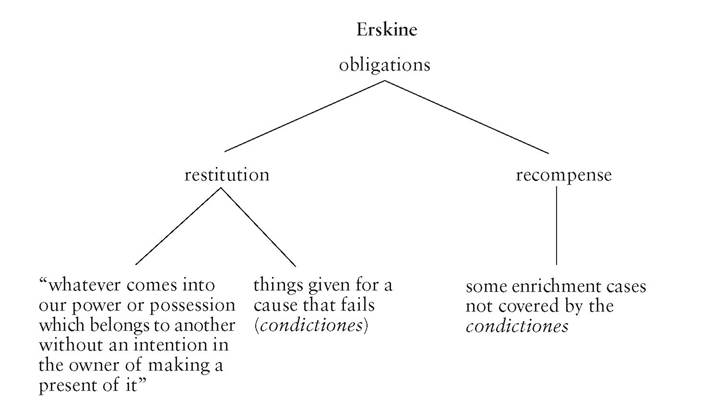
Figure 23.2: Summary of Erskine’s scheme of restitution
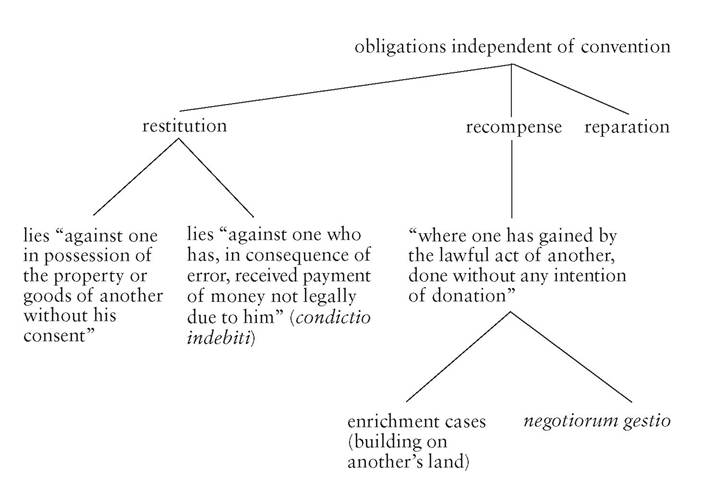
Figure 23.3: Summary of Bell’s Principles (4th edition) scheme of restitution
Restitution and Unjustified Enrichment in Scots Law 255 come to dominate the classification “restitution”. Recompense on the other hand has reverted back to a slightly wider conception than that found in Erskine, since it again incorporates negotiorum gestio.[616]
Bell’s Fifth Edition
There have been some very important developments in this edition edited by Patrick Shaw. For the first time in the institutional treatments we find a completely new classification called “repetition” separate and distinct from “restitution”. The general definitions of both these classifications are as follows. First, for restitution: “The law gives an action of restitution against one in possession of the property or goods of another without his consent [...]”.[617] Secondly, for repetition: “Whatever has been delivered or paid on an erroneous conception of duty of obligation, may be recovered on the ground of equity [...]”.[618]
This is the first use of “repetition” as a basis of classification in the institutional scheme. If it had been intended to denote claims for the recovery of money, as is now generally thought to be the case, it would be inexplicable why the text should speak of (things) being “delivered” or (money) “paid”. In fact, the term introduces the section on the condictio indebiti. Gero Dolezalek suggests that the term “repetition” is used in imitation of the French Civil Code which talks of “repetition de l’indu”.[619] Given the expansion of the condictio cases within the treatment of “restitution” and the change in the conception of recompense it would be tempting to view the introduction of the special classification called “repetition” as a first, tentative step to extract the “enrichment” cases from the broader classification “restitution”. The difficulty that this approach encounters is that the condictio causa data causa non secuta is still dealt with under “restitution”.[620] However, if this claim is incorporated within the new classification “repetition”, one then does have a body of law that corresponds exactly with the condictiones. This in turn would mean that the main enrichment cases have been separated out from “restitution” as that classification was originally conceived.
In the fifth edition of Bell’s Principles, we find that negotiorum gestio is once more separated out from recompense, which is again narrowly construed to correspond to the (pure) enrichment claims. In our view the conception “unjustified enrichment” is the guiding canon of classification in respect of the development of the meaning of recompense and of the development of restitution. Note that recompense lies in quantum lucratus, whereas the other new classification “repetition” concerns obligations to restore certa res and certa pecunia.
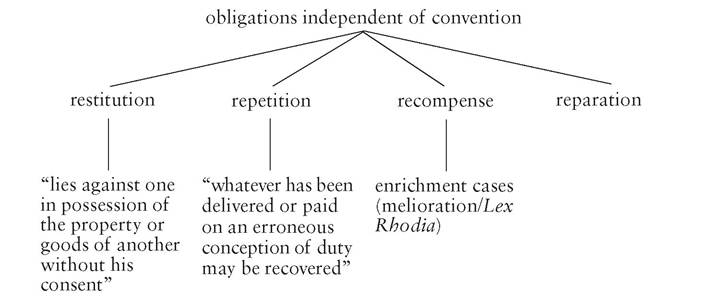
Figure 23.4: Summary of Bell’s Principles (5th edition) scheme of restitution
CONCLUSIONS REGARDING THE INSTITUTIONAL SCHEME
The classifications “restitution” and “recompense” are subject to development throughout the period of the Scottish institutional writers. The scheme commences from a foundation in obediential obligations, which are subdivided according to the content of the obligation. This method of classification came up against the Roman institutional classification of obligations which, because it is far more familiar, has proven to be much more resilient than that initiated in Scotland by Stair. It classifies obligations according to their source in contract, quasi ex contractu, delict and quasi ex delicto.[621] The cases that in modern times have come to be recognised as forming the law of unjustified enrichment constituted the most important part of the obligations that arose “quasi ex con- tractu”.[622] The Roman institutional scheme does not recognise “obediential” obligations. Where the Scottish institutional scheme classifies according to the content of the obligation (restitution, recompense, reparation) the romanistic scheme classifies according to the source of obligation: quasi ex contractu (of which the most important grouping is “unjustified enrichment”)[623] and delict. Within the Scottish institutional scheme “restitution” is developed under the influence of the conception of a law of “unjustified enrichment”. Ultimately it comes to be subdivided by “repetition” which now contains at least the main enrichment case which fell within the old, broad, property-based notion of restitution. Recompense over a period of time becomes narrowly construed to contain only the enrichment cases. Although the cause of action in both classifications is seen to be “unjustified enrichment”, it is still expressed in the language of repetition (restitution) and recompense. The exception is provided by Hume’s more precocious treatment which deals with the cases which conform to the principle quod nemo debet locupletari aliena jactura (inclusive of restitution and recompense) under the heading “Obligations Quasi Ex Contractu”.
It is precisely the interplay between the above two models of obligations which explains the difficulties with which modern Scots law is now confronted. The most important result of the intermixture of the two models, one of which made an important classification according to the content of the obligation and one of which, at a similar level, looked to the source of the obligation as the central canon of classification, is that the modern Scots law of unjustified enrichment (classification according to the source of obligation) is itself still centrally subdivided according to the content of the obligation: broadly stated, whether the obligation is to restore certa res/pecunia (repetition) or to make good an incertum (recompense).
MODERN APPROACHES TO CLASSIFICATION
The development in the Scottish institutional meaning of restitution and recompense has not been recognised. Instead, modern commentators have created a typology of unjustified enrichment that seeks to recreate the spirit of the old natural law classification where content of obligation operated as a central canon of classification. There have been a number of approaches of which we will mention just two: under what is described as the benefit-based theory “restitution” is said to concern claims of unjustified enrichment for specific pieces of property, “repetition” for certain sums of money and “recompense” for the value of services.[624] Another approach is described as the quantum-based theory: restitution is said to concern the recovery of property plus fruits, repetition the recovery of money plus interest and recompense the extent of the enrichment that the defender has acquired at the expense of the pursuer.[625] Where once obediential obligations were classified according to the content of the obligation, we now find that the law of unjustified enrichment is divided internally by modern commentators according either to the nature of the benefit received or to the measure of recovery. Central to the preservation of this unsatisfactory method of classification has been the identification by modern scholars of “repetition” with the recovery of money. This approach misrepresents the historical development of Scots law, it seeks to develop modern law in precisely the opposite direction from the Scottish institutional scheme on which it purports to rely, it
258 Robin Evans-Jones and Phillip Hellwege obscures the cause of action “unjustified enrichment”, and, most importantly, it does not work. Some of the difficulties are highlighted by Chapter 29 of the recently published tenth edition of Gloag and Henderson’s The Law of Scotland. Since it is entitled “Unjustified Enrichment” this chapter looks to “cause of action” as the primary canon of classification. Thus the author states:
“A person may be said to be unjustifiably enriched at an other’s expense when he has become owner of the other’s money or property or has used that property or otherwise benefited from his actings or expenditure in circumstances which the law regards as actionably unjust, and so as requiring the enrichment to be reversed.”28
However, the author continues:
“Although the underlying principles are the same in the various spheres, as a general rule Scots law treats cases involving recovery of money under the heading of repetition, those involving recovery of moveable property fall under the heading of restitution, while cases in which the defender has benefited unjustifiably from expenditure or actings of the pursuer or from the use of his property are dealt with under the heading of recompense.”
Just one of the problems with this approach will be noted. As stated, the law of unjustified enrichment, just like the law of contract or delict, looks to “cause of action” as its basis of classification. The most important cause of action within the modern law of unjustified enrichment is the transfer of property or money or the performance of services which are undue. What is undue is reclaimed with the condictio indebiti. A treatment like that in Gloag and Henderson, which is ordered according to the nature of the benefit received, deals with condictio indebiti under “repetition” where it concerns recovery of money. It then deals with condictio indebiti later under “restitution” where it concerns recovery of property. Under “recompense” there is no mention of condictio indebiti. Yet the cause of action represented by condictio indebiti certainly must appear within “recompense” as this is conceived within Chapter 29. Where I perform services in the erroneous belief that they are due, the cause of action is no different from payment of money or transfer of property in the erroneous belief that it is due. It is unhelpful to create a classification based on “cause of action” (unjustified enrichment) and then to obscure one manifestation of that cause of action merely because the benefit is an incertum. If the unity of the cause of action were recognised even where the benefit is an incertum the method of classification requires the different treatment of the same cause in three different places according to the nature of the benefit received.
CONCLUSIONS
We have shown that the distinction between restitution and recompense turns on whether the content of an obligation was to restore a certum or to make good
28 Gloag and Henderson, supra n.26, para. 29.1, p. 470.
Restitution and Unjustified Enrichment in Scots Law 259 an incertum. To date this difference has been explained in other ways; for example, in terms of the nature of the benefit received or in terms of a difference in measure of recovery. What the alternative approaches have in common is that they demand a differential treatment of identical causes of action. Thus under the claim condictio indebiti we find recovery of property treated separately from the recovery of money either because of the different nature of the benefit or because (rather spuriously) there is said to be a different measure of recovery. The identification of the distinction between restitution and recompense as resting on the content of the obligation has one fundamentally important practical consequence. Stair says that where I have a claim for restoration of a res (let us assume under condictio indebiti) the claim lies in restitution. However, he adds that if I am no longer able to restore what I received (I had perhaps donated it to X) I am bound to make recompense to the extent that I was enriched by receipt of the res.[626] In this case the cause of action is still represented by condictio indebiti with the difference that it gives rise to a claim of recompense. If this is correct, it follows that had the benefit always been an incertum, say, the performance of services which were undue, condictio indebiti will always have given rise to a claim of recompense. In other words, the distinction between restitution and recompense properly understood does not lead to a differential treatment of identical causes of action.
On a more general level, it may be observed that the survival of the natural law classification into modern times, and its elaboration by modern scholars, has seriously obscured the importance of “unjustified enrichment” - itself a development of the Roman classification of obligations - in Scots law. The civil law tradition, of which both Roman law and Natural law are a part, is supremely intellectual. This sometimes makes it a confusing, difficult and challenging phenomenon to understand, as our study hopefully shows. It is one of Alan Watson’s great contributions that he, perhaps above all others in the English-speaking world in modern times, has made this task seem possible.