Plates
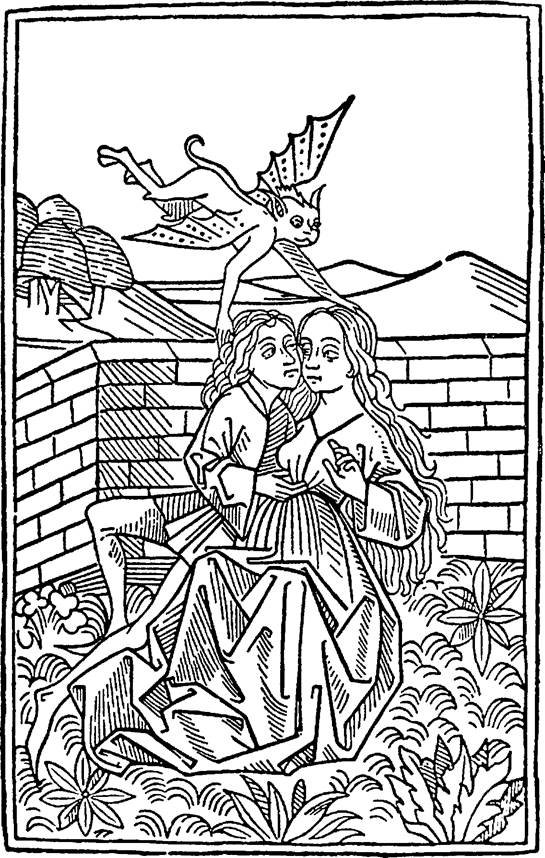
Plate ι. A common medieval belief about human sexual behavior held that the Devil induced sexual desires and provoked people to yield to them, as this fifteenth-century woodcut tries to make clear.
(Woodcut from Der. Seelentrost [Augsburg, 1478])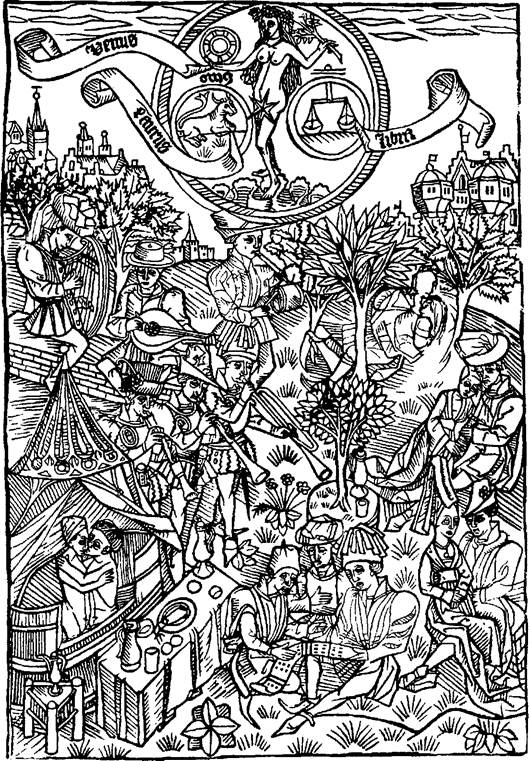
Plate 2. An alternative theory ascribed sexual desire to the influence of the planets, notably Venus. This fifteenth-century Italian woodcut illustrates her powers by showing Venus presiding over seduction in a bathtub following an intimate dinner for two, as well various episodes of amorous dalliance in the open air. (Courtesy of the Newberry Library, Chicago; from Friedrich Lippmann, The Seven Planets)
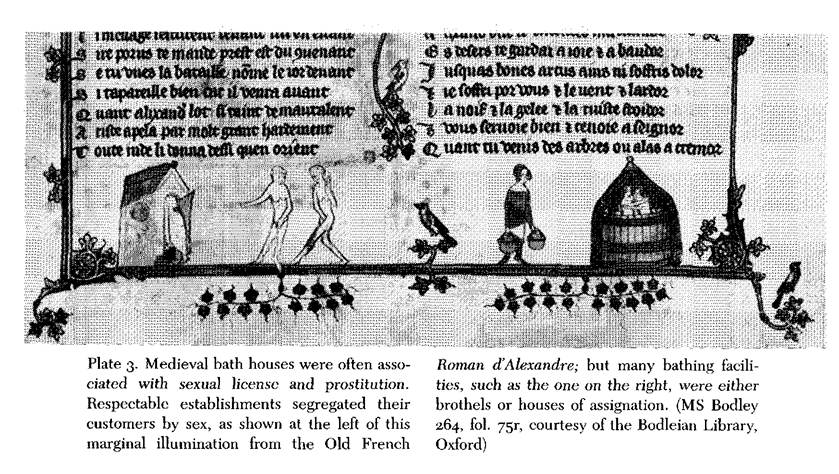
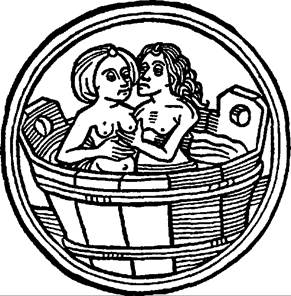
Plate 4. Love in a tub: another example of the role of the bathtub as an engin d’amour in medieval literature and art. (Fifteenth-century woodcut from an Angsburg Calendar, ca. 1480)
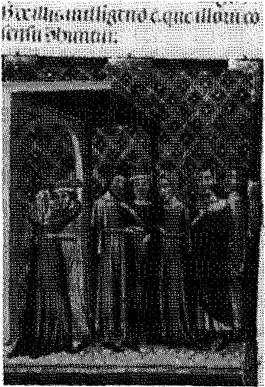
Plate 5. (left) Early medieval canon law discouraged respectable men from marrying women who had been prostitutes, but by the beginning of the thirteenth century this policy had changed. Innocent III positively encouraged charitable men to save fallen women from a life of sin by marrying them. This illumination for Causa 32 from a fourteenth-century Italian manuscript of Gratians Decretum shows such a marriage. (Courtesy of the British Library, from MS Add. 15,275, fol. ⅛.)V)
Plate 6. (right) The exchange of free consent between the couple constituted the sole formal requirement for sacramental marriage according to the doctrine of Alexander Ill’s decretal Veniens ad nos, which remained the basic law on the subject in Christian Europe from the late twelfth century up to the Council of Trent.
Jan Van Eyck’s painting of the marriage between Giovanni Arnolfini and Giovanna Ccnami shows such an exchange between a couple, witnessed only by their dog and the two persons shown indistinctly in the mirror. (Courtesy of the Trustees of the National Callery, London)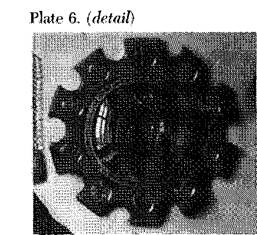
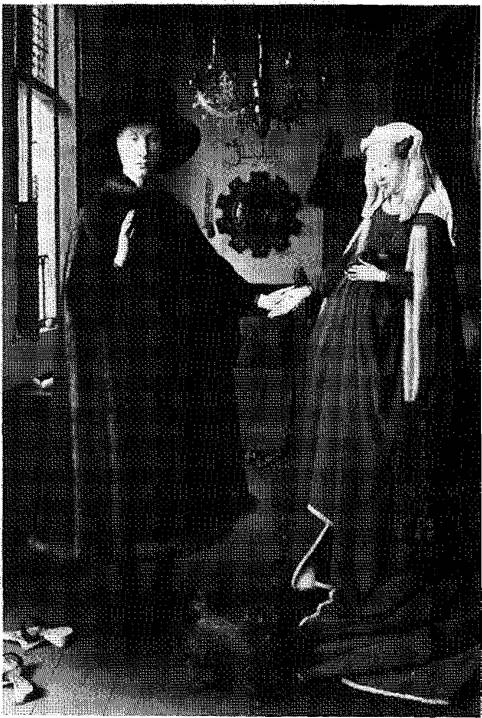
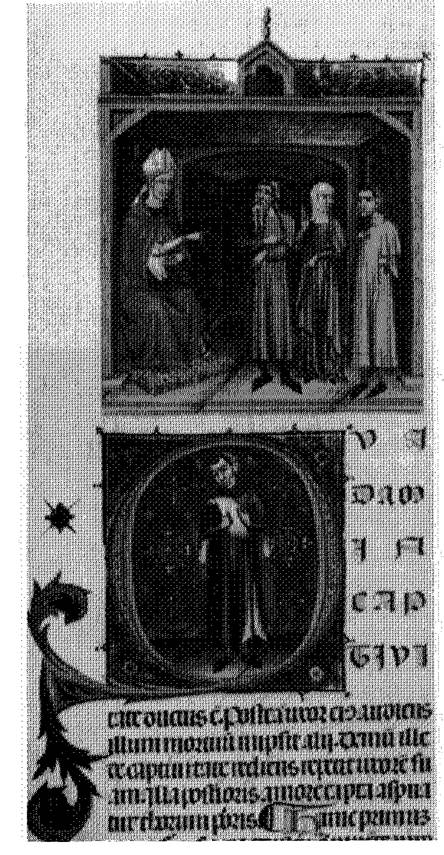
Plate 7. A man who had been presumed dead returns to discover that his wife has married another. He asks a bishop to declare his wife’s second marriage null and to order her to return to him. This fourteenth-century illumination depicts the hypothetical situation discussed in Causa 34 of Gratians Decretum. (Courtesy of the British Library, from MS Add. 15,275, fol. 133r)
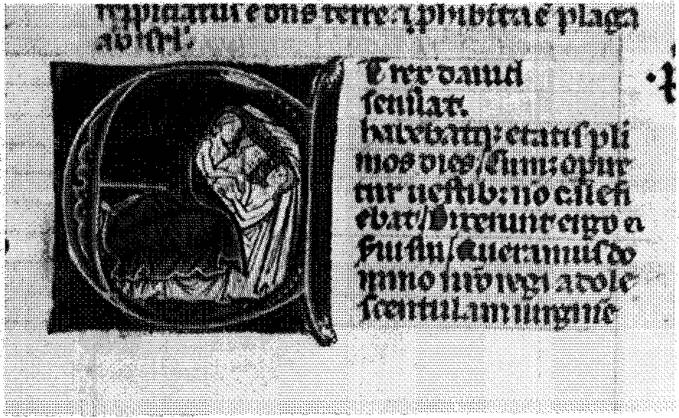
Plate 8. Canon law discouraged, but did not effectively forbid, concubinage, and nonmarital cohabitation remained common throughout medieval society. Peasant couples frequently lived together, sometimes for years, before marrying; priests and other clerics who were forbidden to marry kept concubines instead; young men of humble station who could not afford the outlays involved in marriage lived with shopgirls; servants of both sexes indulged in sexual liaisons, sometimes with one another, sometimes with their employers; young noblemen kept girls of lower status for sexual diversion; and monarchs, even married ones, might keep a concubine or two in addition to an official wife, as did Jaume II of Aragon and Catalunya. The Concubinary king pictured in this fourteenth-century illumination represents King David, but he can stand for many another. (From MS Ee.2.23, fol. 98r, by permission of the Syndics of Cambridge University Library)
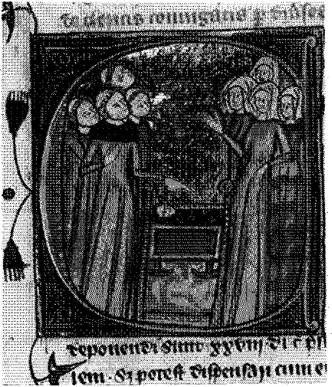
Plate g.
This fourteenth-century illumination from an encyclopedia known as Omne bonum by Jacobus Anglicus shows a cleric with his concubine and their child. The gestures of the principal figures suggest some disagreement between them, but whether over the child's parentage or arrangements for its support is not clearly apparent. (Courtesy of the British Library, from MS Royal 6.E.VI, fol. 296v)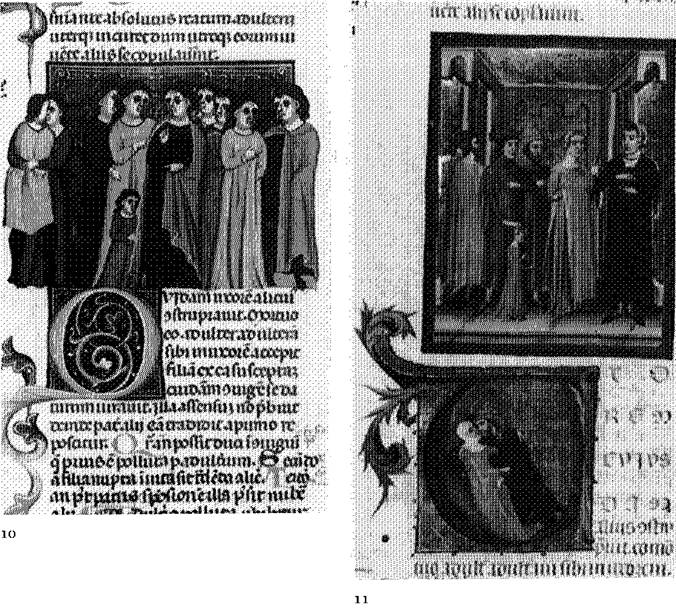
Plates io and 11. Adultery was a serious crime in both canon and civil law, but it was also common in medieval life and Church courts often had to unravel its consequences, including complex questions concerning the inheritance rights of children whose parentage was doubtful, as shown in these illuminations from two manuscripts of Gratian’s Decretumy Causa 31. (Plate 10 from MS Borgh. lat. 370, fol. 269rb, courtesy of the Biblioteca Apostolica Vaticana; Plate 11 from MS Add. 15,275, fol. 87v, courtesy of the British Library)
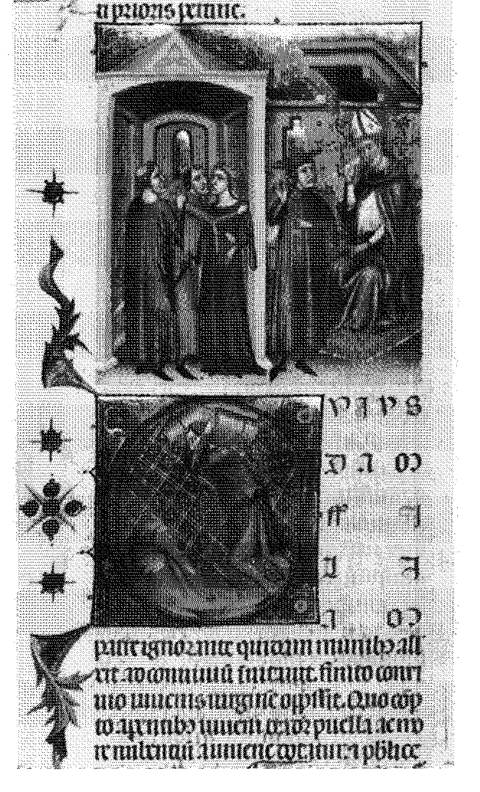
Plate 12. Seduction of young women of well-to- do families by ardent young suitors who were unacceptable to the girl’s parents furnished a common theme for medieval poets and much work for canon lawyers as well. This illumination from a fourteenth-century manuscript of Gratians Decretum shows on the left the union of such a suitor and his beloved being blessed by a priest, while on the right the distressed hither of the girl asks a bishop to annul the marriage. The bishop’s admonishing gesture and disapproving expression suggest that he was not disposed to do so. (Courtesy of the British Library, from MS Add. 15,275, fol. 141rb)
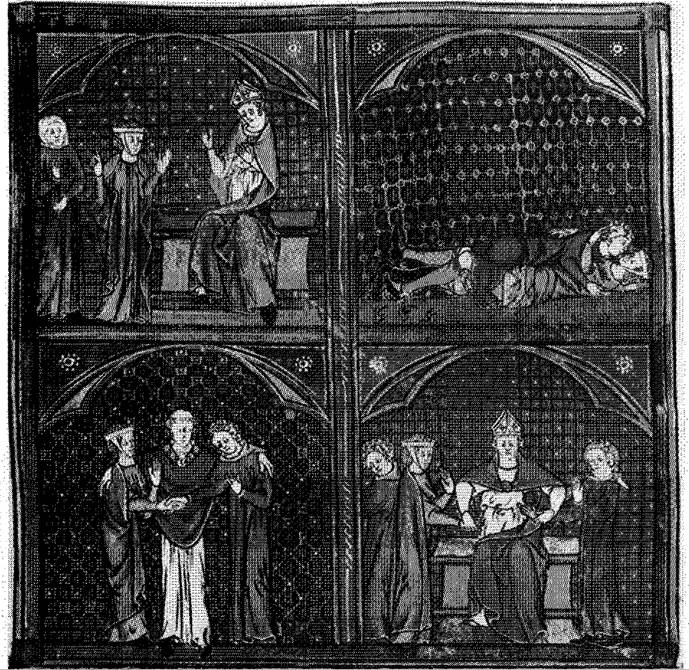
Plate 13. The illuminator of this thirteenthcentury copy of the Decretum seems to have placed these four scenes in the wrong order, but read in proper sequence they illustrate a case of the dissolution of marriage because of impotence.
In the bottom left panel a couple exchange marital consent in the presence of a priest. The episode at the upper right shows them attempting unsuccessfully to Consumate their union. At the upper left the wife complains to a bishop about her husband’s incapacity; and in the lower right panel the bishop symbolically annuls the marriage by disjoining the couples hands. (Courtesy of the Syndics of the Fitzwilliam Museum, Cambridge, from MS 262, fol. 86v)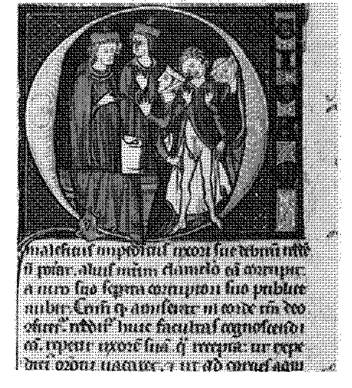
Plate 14. Canonical courts required convincing evidence of marital impotence before they would declare a marriage void. One mode of proof involved examination of the parties by experienced women, who attempted to produce sexual arousal in the allegedly impotent man. In the case illustrated here the husband had clearly failed to respond. (Courtesy of the Walters Art Gallery, Baltimore, from MS W. 133, fol. 277)
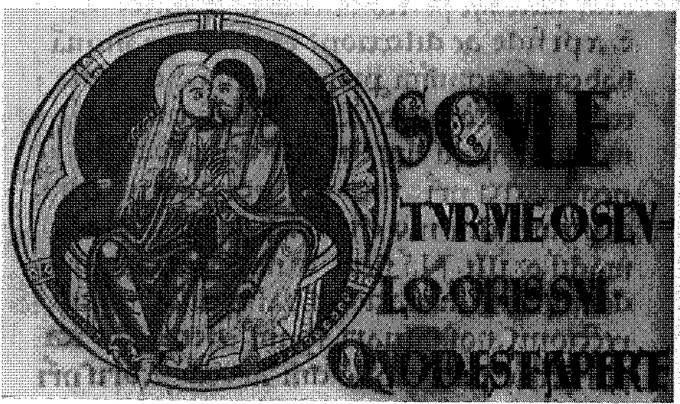
Plate 15. Christ’s love for the human race came to be regarded increasingly in sexual terms during the later middle ages as the humanity of Jesus became a prominent theme in Western theology. Tliis illumination from a copy of the
Song of Songs shows Jesus as a lover embracing his spouse. (Courtesy of King’s College Library, Cambridge, from MS 19, fol. 21v, by the Master of the St. Albans Psalter)
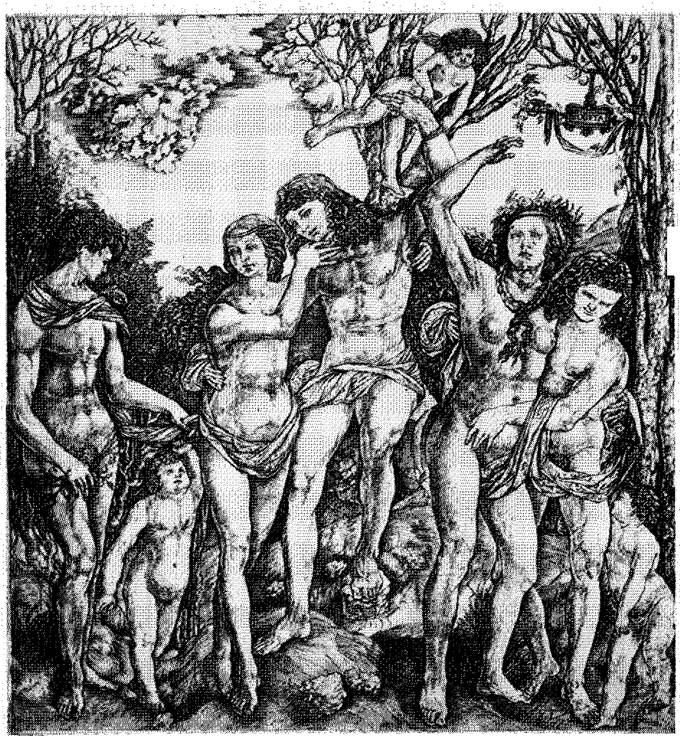
Plate 16. The celebration of sensual pleasure and carnal love became increasingly explicit in the art of the fifteenth and sixteenth centuries, as the “Allegory of the Power of Love” by Cristofano Robetta (1462-1522) makes plain. (Courtesy of the Toledo Musevim of Art)
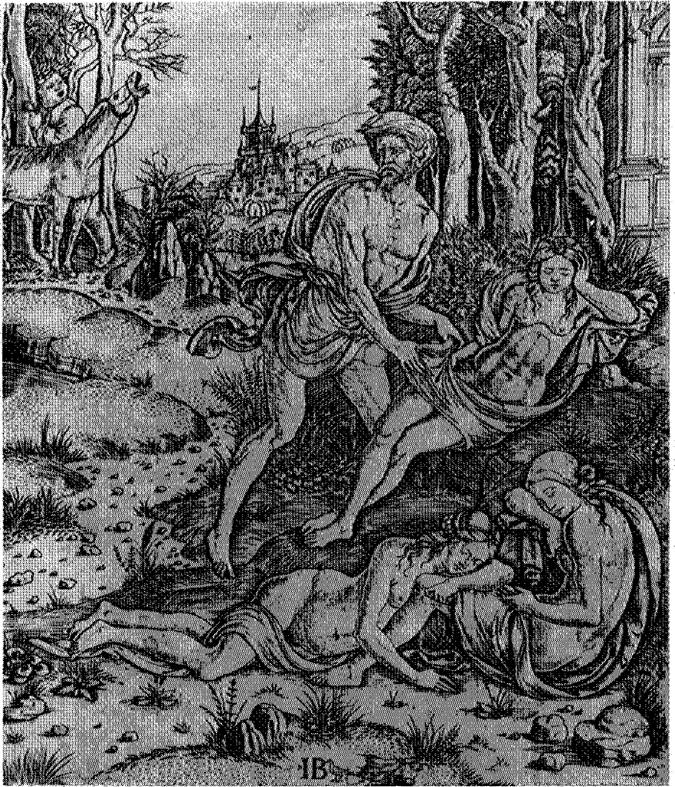
Plate 17. This late fifteenth-century engraving forcible rape.
(Courtesy of the Detroit Institute of “Priapus and Lotis” uses a mythological epi- of Arts; gift of Mrs. James E. Scripps) sode to illustrate the horrors of the crime of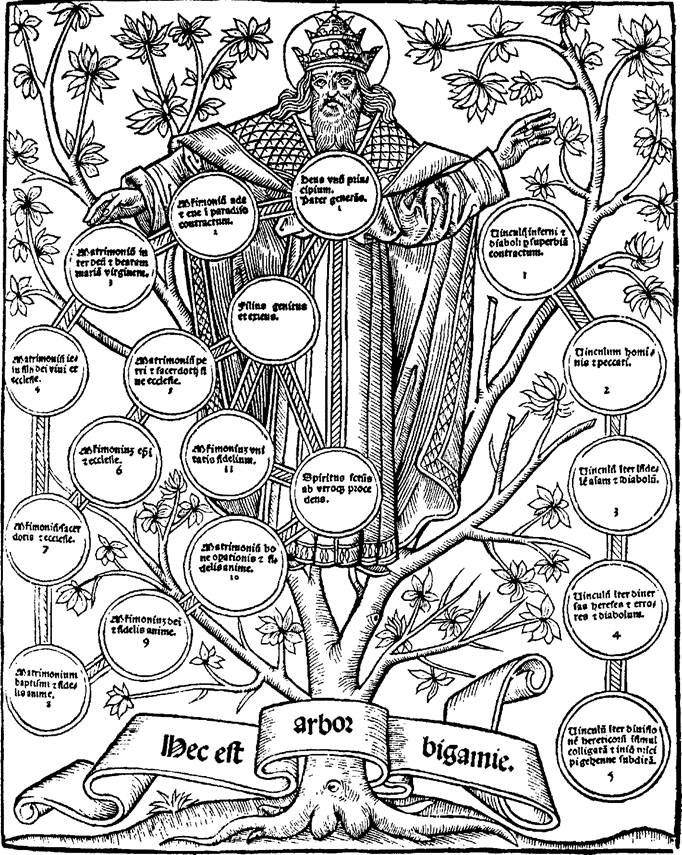
Plate 18. The “Tree of Bigamy” presents in graphic form various types of good and evil relationships, applying thirteenth-century canon law terminology to theological concepts. The woodcut is from the Lyons, 1537, edition of the Summa aurea of Hostiensis.
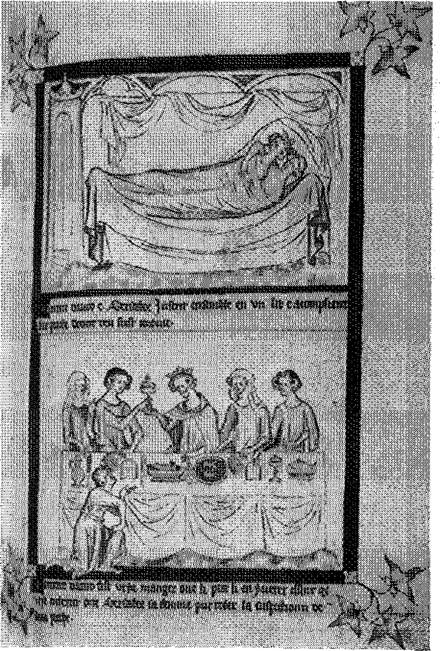
Plate 19. David and Bathsheba. Medieval moralists often cited the story of their relationship (2 Kings 11:2-27) as a classic example of the perils of sexual temptation and adultery. From Queen Mary’s Psalter, an early fourteenthcentury manuscript, now in the British Library, MS Royal 2.B.VΠ, fol. 57r. (Reproduced by courtesy of the British Library)
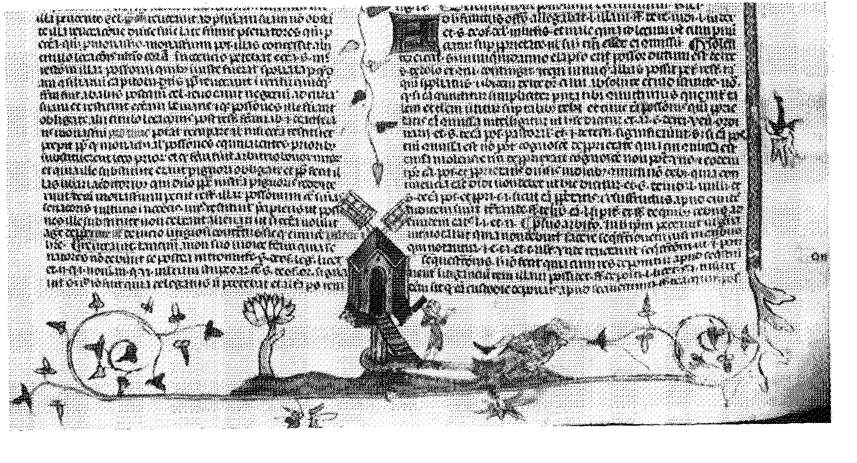
Plate 20. Privacy was at a premium in medieval communities, and couples sometimes found it impossible to be alone, even at intimate moments. This miniature from the fourteenthcentury “Smithfield Decretals illustrates a situation also documented in court records of the period. (Courtesy of the British Library, from MS Royal 10.E.IV, fol. 115r)
More on the topic Plates:
- The Action
- Consumptive, Productive, and Secured Credit
- The Statute
- Brundage James A.. Law, Sex, and Christian Society in Medieval Europe. The University of Chicago,1990. — 716 p., 1990
- 2. Plant-Forward Alternatives
- Latin America and the West Indies
- Blockchain as a Grand “Technical Fix”—Assessing Existing Pilot Projects
- Interpretation in the Statutory Core
- Urban Slavery and Social Mobility
- Marrying and the Catholic Church in the Americas