Marital Sex in Gratian
Gratians treatment of marital sex was conditioned by his attempt to construct a coherent theory of marriage. Basic to his theory was the proposition that the joining of man and woman in marriage is part of the natural law, ordained by God, and common to all peoples on the earth.[925] Gratian insisted that marriage ought to be monogamous.
While he was familiar indirectly with Plato’s argument in favor of men having wives in common, Gratian rejected this practice as inappropriate for Christian believers.[926] He also cited with approval early conciliar condemnations of heresies teaching that marriage was unsuitable or improper for Christians or that married persons could not be saved.[927]Gratian, along with the theologians of his period, grounded his marriage doctrine on St. Augustine’s teaching about the three appropriate goals of marriage. Marriage was good because it promoted and, indeed, made possible the virtue of conjugal fidelity; it provided a suitable moral and religious setting for the rearing of children; and it promoted mutual support and love between the married couple, who manifested their attachment to each other through their sexual union. These moral benefits of marriage differentiated it from adultery, fornication, and other nonmarital sexual relationships.[928]
Gratian outlined his theory about marriage formation in the second question of Case twenty-seven in the Decretum. An attentive reading of this section makes it clear that Gratian considered marriage came into being, not as the result of a single action, but rather as a two-stage process.[929] He distinguished between the initiation of marriage, when the parties exchanged words signifying consent to marry one another, and the completion or perfection of marriage through sexual consummation.[930] Both steps were necessary in order to create a binding marriage.
According to Gratian, marriage is both a spiritual union, achieved through the exchange of consent, and a physical union, achieved through sexual intercourse. Coitus without consent to marry is no marriage; nor is an exchange of consent that is not followed by intercourse.[931] Gratian employed the dialectical method to reconcile two approaches to the definition of marriage that he found in his sources, namely the consensual theory and the coital theory. As Gratian explained matters, these two theories were not contradictory; rather, they complemented one another. Each described one facet and one stage in the process of creating a marital union, and neither was sufficient without the other.[932]Although Gratian attempted to harmonize the conflict between consensual and coital theories, C. 27 q. 2 clearly makes consummation the key to marriage formation. Consummation transformed the union into a “sacrament” and hence made it indissoluble.[933] A marriage that was simply initiated but not consummated lacked the binding power of a consummated union. A consummated marriage, for example, could not be dissolved in order to enter religion, but an unconsummated union could be sundered for this purpose.[934] Likewise consummation created an obligation between the partners to pay one another the marital debt upon demand, whereas there was no such obligation between a couple joined in a merely consensual union.[935] Moreover, if one partner proved incapable of intercourse and hence could not consummate the marriage, the union could be dissolved and the partners (or at least the one who was not sexually incapacitated) could remarry. But if the marriage had been consummated by even a single act of sexual intercourse, then it remained binding even if one partner subsequently became impotent.[936] In addition bigamy was only possible if the bigamist was a party to a previously consummated first marriage.
If the first union had been contracted by consent but never completed by sexual intercourse, then a second union by either party was not punishable as bigamy.[937]Gratian thus opted for what came to be called the “Italian solution” to the problem of the relative importance of marital consummation and consent. In so doing he rejected the alternative “French solution,” which held that prior consent to a first union, whether consummated or not, would invalidate any subsequent marriage so long as both parties to the first union remained alive.[938] Fi-
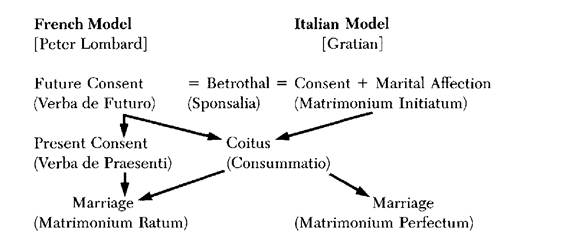
Figure 6.1. Theories of marriage formation
nally, Gratian cited with approval a number of venerable authorities who had expounded the coital theory of marriage and indicated his agreement with their views.30
Gratian deliberately framed his theory of marriage in the particular form described here. His sources did not force him to adopt this construction, for he had readily available in Ivo’s Decretum authorities who supported quite different views. Nor was it likely that oversight or indifference led him to omit from his discussion of marriage theory the distinction between present consent and future consent to marriage. That distinction originated apparently with Peter Abelard and was current in theological circles when Gratian wrote his book.31 Parisian theologians were soon to adopt the present/future consent distinction as the cornerstone of their marriage theory, since it complemented their preference for emphasizing the spiritual, as opposed to the carnal, dimensions of marriage.32
Gratian deliberately ignored that model and, instead, assigned to physical consummation a primary role in marriage formation. His reasons for that choice are not altogether clear. Both oral agreements and sexual intercourse can present difficulties of proof.
Agreements are often witnessed, while intercourse usually is not. On the other hand, it may well be easier to corroborate an alleged act of consummation by circumstantial evidence than it is to demonstrate that an agreement has been made, if there are no witnesses and the testimony of the parties conflicts. It was bound to be even more difficult to discover unequivocal proof in disputed cases as to whether consent, if given at all, had been cast in the present or the future tense. Although he made no mention of3"C. 27 q. 2 c. 16--18. On the origin and transmission of these canons see Jean Gaude- met, “Recherches sur les origines historiques de la faculte de roιnpre Ie mariage non consomme,” in Salamanca Proceedings, pp. 326—31. Although sexual intercourse was necessary for consummation, sexual union under some circumstances might not consummate the marriage; see Alesandro, Gratians Notion, pp. 87-88.
31 Mullenders, Mariage presume, p. 13.
32John T. Noonan, “Power to Choose,” Viator 4 (1973) 424-25, 428; Georges Duby, “Le mariage dans la societe du haut rnoyen age.” in Il matrimonio nella societd alto- medieυale 1:25-26.
the problem of evidence in his discussion of marriage in C. 27 q. 2, Gratian’s decision to place primary emphasis in his marriage theory on the tangible physical act of intercourse may have reflected concern with this basic juridical problem.
That Gratian gave primary emphasis to consummation in constructing his marriage formation theory did not mean that he ignored or depreciated the importance of consent. On the contrary, consent was an essential element of his definition of marriage, and he discussed consent issues at length. While he maintained that marital consent must be free and uncoerced,[939] Gratian recognized certain limits on the free choice of a marriage partner. First, both parties must be of an age where they could give meaningful consent; at a minimum this meant that both parties must have attained the age of seven before their consent could be considered binding.[940] Second, Christians could not marry infidels or Jews.[941] Third, those bound to observe celibacy could not marry anyone at all.[942] Fourth, no one could marry a person to whom s/he was related within seven degrees of kinship by blood or by a Active relationship.[943]
Gratian left open the question of whether the consent of the parents was necessary for a binding marriage.
Although he seems to have assumed that families would normally play an important role in the choice of marriage partners, he stopped short of making their consent essential to marriage.[944] He also failed to adopt a firm position on the question of whether previous sexual intercourse created a bar to marriage. Gratian seems to have inclined toward the belief that intercourse created some type of legal bond between the partners, but he stopped short of holding that such a relationship would prevent subsequent marriage between them.[945] He also implied that under some circumstances the creation of marriage might be made conditional upon some event subsequent to the exchange of consent. If the condition were not fulfilled, there was no marriage.[946]Matrimony, in Gratians eyes, created a social bond between the parties, and the constituent elements of that bond were consent and consummation.[947] He
said nothing explicit about love as an essential element of marriage, although at one point he paraphrased a statement of St. Augustine to the effect that marriage was a school for love; this may well imply that Gratian expected that love could grow out of marriage, rather than that love ought to precede the marital relationship and form an intrinsic element of it.[948] Although Gratian was certainly no spokesman for courtly love ideas, his views in some respects paralleled notions about romantic love propounded by the poets writing during the period when Gratian composed his book. Gratians insistence On freedom of choice in selecting marriage partners and his emphasis upon the notion of marital affection were notions compatible with those championed by the love poets of his age.[949] By marital affection—a term he borrowed from Roman law, but whose meaning underwent significant change in his text—Gratian seems to have understood, as Roman jurists had done, a habitual attitude of respect, deference, and consideration toward ones spouse that differentiated a marital relationship from casual cohabitation.
But in addition, Gratians use of the phrase is tinged with the sense of an emotional bond between the spouses, a mutual attachment and regard for the well-being of one ano⅛er that seems closely related to the qualities poets invoked in their descriptions of love.[950]Gratians discussion of the marital relationship repeatedly emphasized its personal nature.[951] Couples contracted marriage by exchanging consent and consummating it through sexual intercourse, both decidedly personal matters. It was consistent with this personalist approach that Gratian was prepared, although reluctantly, to accept informal, clandestine marriages as valid. He was certainly not enthusiastic about clandestine unions and in one passage he labeled them void,[952] but elsewhere he insisted that once entered into they were just as valid and indissoluble as formal, public marriages.[953]
Gratian regarded intercourse as an essential element of marriage formation. Nevertheless, he believed that marital sex should be strictly circumscribed, although his treatment of the role of sex was less restrictive than that of many earlier authorities. In explaining the rationale behind earlier regulations that had forbidden women to enter the church immediately after childbirth, for example, Gratian cited a passage ascribed to Pope Gregory I that grounded the prohibition on the proposition that the pains of childbirth were retribution for the pleasure experienced in sexual intercourse. This passage argued that it was necessary for the new mother to be purified of the ritual pollution resulting from sexual pleasure prior to entering a sacred place. Gratian held, however, that these purity regulations were no longer in force and that they had never been part of the natural law.[954]
Gratian agreed with St. Augustine that sex must have been different in paradise than it is now. Sexual intercourse in Eden had taken place without heat; the marriage bed was then unstained by sin, and women gave birth without pain. With the first sin, however, all this changed. Sex could no longer be experienced without the itch of passion and the impurity that lust entails. Yet marriage must not on this account be condemned, Gratian cautioned, because sensual pleasure should play only a subordinate role in marital relationships.[955] The proper function of marital sex was for procreation, according to Gratian. Persons who married for sexual enjoyment he described as fornicators, a label that he justified with citations from St. Jerome and St. Augustine.[956] Although they may have been fornicators in spirit, they were married nonetheless, even if they married for unworthy and unacceptable reasons.[957] [958] Gratian further qualified his theory about the motivations underlying marriage by granting that Christians could legitimately marry in order to avoid temptations to commit fornication or adultery.32 In summary, Gratian felt that Christians ought to marry for a positive reason, namely in order to reproduce; they might marry for a negative reason, namely in order to avoid sexual temptations. But they should not marry primarily for sexual passion and physical pleasure. Marital sex was a serious matter for Gratian. It must not be excessive in frequency, must not involve “extraordinary voluptuousness,” or the “whorish pleasures” that St. Jerome condemned.[959] Above all, marital sex must not be “unnatural,” which Gratian apparently took to mean anal copulation and perhaps oral sex as well.54 Unnatural sex in marriage was worse than adultery or fornication, according to the sources that Gratian cited.55 His objection was not primarily that anal and oral sex were contraceptive; rather he reprobated these types of intercourse because they were an inappropriate use of the sex organs, and that, he believed, ran counter to natural law. Intercourse in a “natural” fashion but with contraceptive intent Gratian classed as a very slight sin, a moral blemish, much like such other minuta peccata as excessive talking, eating after one’s hunger was sated, registering annoyance at an importunate beggar, or oversleeping and as a result being late for divine services.56 Much of Gratians discussion of marital sex was based upon his concept of marital debt, that is the duty of husbands and wives to make themselves available for intercourse upon their spouse’s request. Sexual intercourse in marriage was thus both a right and an obligation. The marital debt idea rested ultimately upon St. Paul’s demand (ι Cor. 7:3- 4) that husbands and wives pay each other what is due and Paul’s further observation that the husband had power over his wife’s body, just as the wife had power over her husband’s. The right of one spouse to demand the conjugal debt and the obligation of the other to comply with the demand led Gratian to construct an elaborate theory of marital obligations. The conjugal debt arose, according to Gratian, at the moment when the marriage was consummated. Prior to that time there was no sexual obligation between the parties, and the exchange of marital consent by itself did not create a duty to consummate the union. Once an act of intercourse had taken place, however, a mutual obligation of sexual service sprang into being; thenceforth the spouses were bound to render sexual services upon demand.57 The obligation was absolute: it made no difference, at least in principle, where or when the demand was made; the spouse from whom the debt was required had to comply. mC. 32 1. q. 7 d.p.c. 10 and c. 11. 55C. 32 q. 7 c. 12-14. 56D. 25 d.p.c. 3 § 7. Although at C. 32 q. 2 c. 7 he quoted St. Augustine, De nupt. et concup. 1.15.17 (CSEL 42:230) to the effect that contraceptive intercourse is the moral equivalent of adultery, Gratian himself explicitly rejected this view at C. 32 q. 2 d.p.c. 5: “Sic Ccontrario datur intelligi de his qui ConiugaIi affectu sibi copulantur, quod etsi non causa procreandorum filiorum, sed explendae libidinis conveniunt, non ideo fornicarii, sed Coniunges appellantur.” He reaffirmed this position once more at C. 32 q. 2 d.p.c. 16. Noonan, Contraception, p. 174, seems to imply that Gratian adopted Augustine’s view, but this contention rests on the rubric that summarizes Augustine’s text. Gratian’s rubrics, however, do not necessarily reflect his own views, and in this case he clearly differed from Augustine’s position. 57Thus C. 27 q. 2 d.p.c. 26 and d.p.c. 28; C. 32 q. 2 d.p.c. 2; C. 33 q. 5 d.p.c. 11; Elizabeth Makowski, “The Conjugal IDcbt and Medieval Canon Law,” JMH 3 (1977) 99-114; Alesandro, Gratians Notion, p. 88; Vaccari, “Tradizione canonica,” pp. 533-47- The marital debt was one area in which Gratian not only conceded but absolutely insisted that men and women enjoyed equal rights before the law. The wife had every bit as much right to demand sexual dues from her husband as he did from her. This parity in respect to the conjugal debt was Gratians most emphatic venture in the direction of a doctrine of equality between the sexes.[960] Gratians treatment of abstinence from marital sex was conditioned by his ideas about the marital debt. Although he reproduced some earlier statements from the penitentials in favor of abstinence from marital sex during Lent and other penitential seasons, as well as prescriptions about sexual abstinence during menstruation, pregnancy, and lactation, his discussion of these texts made it clear that he considered them of secondary importance.[961] True, spouses should not demand payment of the marital debt during the periods of prescribed abstinence, but if one spouse made the demand, then the other was obliged to comply. Gratian thus subordinated periodic cycles of marital abstinence to the requirements of the conjugal debt and, whereas in the penitentials the abstinence regulations appeared as absolute commands, for Gratian they were a secondary issue in the sex life of married persons. The theme of reciprocal sexual obligations extended into Gratian’s discussion of voluntary separation in order to enter religion. His whole discussion of this matter centered on the proposition that such a separation required mutual consent. The husband who made a vow of continence without his wife’s consent gave her in effect a license to commit adultery, and this he had no right to do.[962] The husband shared the guilt that resulted from his wife’s misconduct and this would offset any virtue he might attain through ascetic observances.[963]
More on the topic Marital Sex in Gratian:
- Contents
- Conclusions
- Gratian on Concubinage
- Jurisdiction, Procedures, and Evidence in Sex Cases
- Legal Scholarship in the Late Twelfth and Early Thirteenth Centuries
- Nonmarital Sex and the Decretists
- Concubinage in Decretist Doctrine