Hungary and Poland
The land regime in both Hungary and Poland was similar to the rest of the premodern world, from England to the Ottoman Empire. In Hungary, initially, “all land was held of the ruler, originating in an act of donation and ennoblement.”[1043] Similarly, when the Piast kings rebuilt the Polish kingdom, they were considered lords of the lands of the kingdom of Poland, with patrimonial rights to grant land at their discretion.[1044] Their capacity to enforce these rights varied, as did the mode in which lands were distributed, whether conditionally or not.
Unlike in England, but similar to France, local lords in both cases retained jurisdictional rights and greater autonomy. This, accordingly, weakened the territorial anchoring of the crown in the localities, thus making the assemblies an affair of the nobility - Poland for instance was a “Republic of Nobles.”Nonetheless, the parliamentary activity that was observed can be traced to mechanisms identified in this account, all predicated on some level of dependence on the ruler. Land ownership was still conditional on relations with the crown, especially military service; 2,400 Polish estates were confiscated through court verdict for failure to serve in 1497, for instance.[1045] In Hungary, “upon the expiry of the nobleman’s line or his conviction for perfidy, his property reverted to the ruler.”[1046]
Another commonality with England was crucial. As the historian Martyn Rady notes, “One of the outstanding features of medieval Central European society as a whole is that its nobility stood for the most part in a direct relationship to the king, not holding their property at one or several removes from the ruler by process of subinfeudation and thus not dividing their fealty.”[1047] Since “military service was due to none but the king,” Polish relations were also “similar in this respect to English feudalism.”[1048] They entailed typical feudal obligations, like knighting the king’s son.[1049] I next examine the two cases separately.
10.1.1 Hungary
Assembly activity in Hungary appears in the eleventh century, followed by the grants of two charters that have elicited comparisons with Magna Carta in the thirteenth. It continued into the early 1300s, then lapsed until the 1380s, only to gain strength over the following century, before collective action weakened, leading to defeat by the Ottomans in 1526. The following sections explain how this development can be illuminated by the factors identified in this book.
10.1.1.1 The Eleventh Century: Royal Control of Land and the Emergence of Parliament Like English kings, Hungarian ones began the process of state-building already holding most of the territory of the realm. King Stephen (1000-38) controlled approximately two thirds of the country’s revenues.[1050] “[B]eyond doubt in Stephen’s time, the king and his family became by far the greatest landowners of the kingdom. They retained for their own use huge and contiguous domains.”[1051] The kingdom was divided into about forty counties (megyek), later increased to seventy-two.[1052] A royal governor headed each county, the count (ispan), with military and jurisdictional authority as well as the right to appropriate one third of the local income, like the “third penny” of English earls - the rest went to the king.[1053] This county system remained a core institutional feature of the Hungarian kingdom for the next five centuries, structuring provincial power relations and providing a relatively homogeneous administrative system that allowed strong organization of representative practices, though less so than in England.
As elsewhere in Europe, the king held judicial sessions, the “days of the law” at Szekesfehervar once a year - though he held itinerant sessions more often.20 Their purpose was “redressing the grievances and settling the differences of the military ruling class,”[1054] similar to the English Parliament.
Barons and prelates participated in judgments, though attendance was problematic. In a dualism that lasted into later centuries, legislation was formulated by the Royal Council. It was composed by the highest nobility, the ispans, and the bishops, who witnessed the major decisions issued by Hungarian kings throughout the twelfth century.[1055] But this met originally at Esztergom, 50 miles away.[1056] Nonetheless, the sparsely surviving legislation since the eleventh century gradually transformed Hungarian society from one composed of semi-nomadic steppe people to settled agriculturalists “with rights and duties like those of the rural population of contemporary England or Northern Italy.”[1057] Yet the institutional fusion observed in England did not appear here - early assemblies have thus not left a solid institutional imprint.[1058]10.1.1.2 Thirteenth Century: Conditional Landholding, the Servitor Class, and Second-Best Constitutionalism Evidence picks up again in the early 1200s, when the king still controlled most land, estimated at more than half or even 70 percent.26 The key “constitutional” moments generating charters of rights occurred in 1222 and 12 67.27 Unlike England, however, neither of these moments involved the higher strata of the nobility, which the Hungarian crown was less able to control. Rather, a new group of nobles was created by the crown by rewarding military service and loyalty to counterbalance the higher nobility, producing second-best constitutionalism.
The higher nobility had been empowered by the extensive land grants by Andrew II (1205-35), the New Institutions. A group of about twenty barons received land from the crown “forever” (perpetuo iure) and unconditionally, as an allod (haereditas).28 Without conditional relations, barons became a centripetal force challenging the king’s control, despite owing their offices to him, diverging from the English pattern.29 The new lower nobility, the servientes regis, had ties with the king that were more conditional and hierarchical, especially in the early period, holding land as a royal donation.
They owed military service not in return for this land, however, but because they now belonged to the “royal household,” a fictional entity assembling those tied to the king through ties of fidelity (fidelitas) and protection.[1059] In this period, they were also still subject to taxation, only gaining full exemption after the fourteenth century.[1060]It was this group that petitioned the king for a charter of rights, the Golden Bull, in 1222 (and in 1231).[1061] They demanded to be placed under the king’s direct jurisdiction to counter the higher nobility.[1062] As in Magna Carta, relations of dependence generated judicial demands; the servientes wanted more royal government, not less.[1063] Petitioners demanded that justice be delivered regularly, so court meetings were to be held annually in Szekesfehervar “to hear cases” and that the king protect the servientes against the magnates and remove them from the jurisdiction of the lords. But they also asserted stronger claims than their English counterparts, for instance, to have the right to name heirs by will. They asked that their lands revert to the crown only when no relatives existed; that royal lands not be granted in perpetuity, as this allowed their holders to develop independent power in the localities, threatening them; that they were not obliged to follow the king on military expeditions abroad; and that they be exempt from some taxes.[1064]
The same dynamic underlies the second constitutional moment, when a new lower nobility forced the king to reconfirm the Golden Bull in the assembly of 1267 and to give them a role in government and the administration of justice. As in 1222, they demanded that they be judged by the king and palatine, not local lords. They too were recruited into the royal army and granted land in the provinces and noble status to counterbalance the baronial class.36 Barons had grown in power again, especially after the Mongol invasion in 1241, which killed more than 20 percent of the population.37 Under such pressures, assemblies had been sparse until the last quarter of the thirteenth century.
Nonetheless, as in England, this second constitutional moment occurred whilst county judicial structures were being strengthened. Historians typically describe this as the transition from the “royal” to the “nobiliary county,” as a step to greater autonomy for the new service nobility. However, the transition resembles the “territorial anchoring” we observed in England: the court system was guided by the crown; it was an “organ of the state apparatus.”38 Developments were not linear and backsliding occurred as royal power receded in some areas while baronial power grew. Nonetheless, the crown ordained that the service nobility elect four judges/sheriffs (the indices servientium, later nobilium, or szolgabirak) from its ranks, delivering county justice typically on property rights claims.[1065] Original court powers were limited, however. Bela IV (1235-70) remedied this by recognizing the lands of the service nobility as free and by “unifying the judiciary powers of the ispans and sheriffs and creating county courts with enforcing powers.”[1066] Judicial business was carried out in county assemblies (congregationes) held multiple times per year, which were also convened by a royal official.[1067] This judicial activity made county courts central to local life. The “noble county” thus acquired quasi-corporative form by 1280.[1068]
This judicial infrastructure coordinated by the state was also crucial for the growth of representation. In a decree of 1267, Bela ordered that “each county was obliged to send two to three representatives to the royal legislative assembly.”[1069] As in England, county courts handled this obligation. However, unlike England, the crown introduced the lower nobility to these practices to counterbalance the high nobility, the barons - an instance of second-best constitutionalism.[1070] Demands were more radical than in England accordingly: in 1298, a law stipulated that the Royal Council be staffed by members elected by the Diet, but this was not observed.[1071]
Petitions were as central here as they were in all other cases.
They were submitted to the royal court and chancellery, especially by the landed nobility pursuing matters of inheritance or possession.46 The “clamour of petitioners” was so high that kings had to devise mechanisms to either limit them by requesting them in writing or divert them to regular institutions, for instance, the itinerant palatine or the high judge. Yet the institutional fusion observed in England was not reproduced effectively, given weaker ruler powers, and assemblies did not yet consolidate. Moreover, the practice of collective responsibility cannot be traced through accessible sources. However, clans and family structures (aviti- citas) were central in shaping landholding and inheritance until 1848, so their role should be further studied.4710.1.1.3 Fourteenth to Sixteenth Centuries: Royal Strength, Judicial Infrastructural Growth, and Parliamentary Fluctuations The constitutional moments observed in the fourteenth century were also instances of second-best constitutionalism, mostly predicated on the service nobility, not the barons. These occurred under the Angevin kings, whose reigns (1301-82) have been called the “apogee” of Hungarian power.[1072] Despite royal strength, assemblies were only held until 1323, a constitutional moment happened around 1351/52, and then assemblies are not recorded until the 1380s (Figure 10.1). This does not challenge my argument, which is confined to necessary conditions. The claim is not that all rulers were budding constitutionalists determined to hold parliaments when their power was strong - only that if we do observe enduring polity-wide parliamentary activity, we should expect stronger ruler powers.
But the decline merits an explanation. Its answer lies again in royal incapacity to subdue the baronial class and thus achieve effective territorial anchoring throughout the kingdom. This condition also explains why, even when assemblies became increasingly frequent after 1387, through dynamics that resemble those of city-states more than England, elites were unable to sustain collective action over the long term, leading to defeat by the Ottomans. To the degree that assembly activity did occur, however, it was preceded by judicial centralization and at least temporary ruler strength. The following two subsections show in greater detail how Hungarian developments reflect this logic.
The Angevins, Representative Fluctuation, and Judicial Infrastructure, 1300-1382. The early reign of Charles (1301-42) echoes the model of parliaments forming in response to weakness. Charles embarked to restore royal power by reclaiming lands granted away by previous rulers and to curb baronial powers through civil war but also legal reform.[1073] Assembly activity until 1323 happened under an embattled crown countering the barons by co-opting the lower nobility. This alliance helped Charles to win the civil war. However, the point is that, as such, assemblies did not last. Instead, the king governed with a much-reduced Royal Council, composed of select barons and prelates, where he continued to judge.[1074]
Alternative hypotheses can’t explain the decline of representative activity after 1323 either. Bellicist logic suggests that rulers had few incentives to strengthen administrative structures when military pressures were weak.51 However, the argument cannot be extended to this case, as no decline in military pressures can be ascertained in this period; if anything, between 1316 and 1340 there were “only two years when no â€?royal
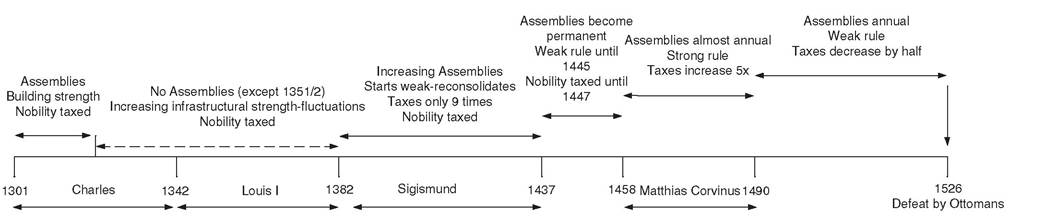
Figure 10.1 Hungariantrajectory3 1301-1526
campaign’ was proclaimed.”[1075] Another hypothesis would be that assemblies lapsed because Hungary experienced a “resource curse”: the largest European gold mines were discovered, accounting for three quarters of European production after 1320. This was added to an already large production of silver.[1076] However, a sudden windfall is not sufficient to undermine constitutional practices: if infrastructural control had been strong, a new resource could have supplemented revenue, it need not have displaced it.[1077] Rather, for assemblies to survive over time royal power over the most powerful had at least to be sustained and it was not.
Nonetheless, that central assemblies lapsed did not mean local judicial and representative practices did so too. Instead, the crown tried to undercut the high nobility by granting the lower nobility similar rights and by reorganizing both county and local judicial institutions.[1078] Under Charles, royal officials, the vice-ispans, supervised criminal, land, and peasant- related justice in the county courts, the sedes iudiciaria (i.e. seat of judgment, sedria in short). They ensured that the local nobility served as elected magistrates (the iudices nobilium or szolgabirak, with antecedents since the thirteenth century, as seen). Court burdens were considerable, as the court met twice a month.[1079] This resembles the English pattern of “self-government at the king’s command.” More occasional was the triennial assembly called congregatio generalis, the supreme judicial forum of the county summoned by the king. This also elected officeholders and representatives. The local nobility selected twelve jurors to represent them.[1080] As the assembly included and judged residents of all ranks, it created the concept of a community that embodied the entire realm in the central Diets.[1081] This assembly included not just the barons and prelates but the lower nobility (gentry) as well and non-noble freeholders (until the fifteenth century) - an equalizing trend that evokes English conditions. Other assemblies, ordered by the king as inquisitions, examined a broad array of judicial cases. As Rady notes, the authority of the crown was enhanced by these measures.[1082]
The next constitutional moment under Louis I (1342-82) occurred during another jurisdictional expansion aiming to undercut baronial privilege, in 1351-52. The one major Diet meeting had judicial purposes - legislation was issued by the Royal Council.60 Louis further homogenized the legal status of lower knights and the upper nobility, aiming to weaken the latter: he extended to all most liberties and rights of inheritance granted in 1222.61 This echoes the English pattern of imposing legal equality across orders. Crucially, however, English kings first granted common law rights to lower tenants and only conceded these to the higher nobility after they collectively organized through Parliament, indicating higher original royal powers.
Louis’ reforms aimed to re-centralize administration as counts grew more independent. For instance, from 1350, property rights cases moved from county to central, i.e. royal, law courts. Royal itineration was also key, as a top royal official administered the general eyre of the palatine, which became “the only local forum where the county gentry could meet a person who represented supreme authority” after 1342.[1083] [1084] Louis restricted the inheritance rights of extended kin in favor of the crown, thus reducing clan power.[1085] By the 1360s, he recentralized county powers by concentrating two or more counties under one royal official, so that the government of the entire kingdom was administered by ten or twelve knights commanding troops (seigneurs de bannerets').[1086] After 1370, he asserted the “king’s right” (jus regium) on all lands for which title could not be proven.[1087] But the family unit was strengthened, as land was entailed, “meaning that the noble estate was the common property â€?in perpetuity’ of the ancestor, i.e. of the original owner,”[1088] similarly to England but perhaps even more restrictively.
These policies look remarkably like those of Henry II and Henry III, examined in Part I. Yet they are viewed as evidence of county “decline” by some Hungarian historians.67 What really indicates a “decline,” however, is that at the same time, barons were “trampling” on the local nobility, thus inhibiting royal jurisdiction at higher rates than in England in the formative early period. So when counts lost the monopoly over the right to convict and punish criminals, the ius gladii, it was not royal institutions that took over, but local lords instead.68 The crown also had to exempt the lower nobility from a tax, which great lords evaded, enabling them to recruit more peasants. This is similar to a pattern in Russia (see Chapter 12), showing how tax exemptions of lower groups often occur when the crown cannot control the most powerful lords.[1089]
By Louis’ death in 1382, only a third of the kingdom was under his control, with the Church as the only other major single landholder.[1090] Following the pattern noted already, where control over the high nobility weakened, inclusion of the lower classes, the non-nobles, suffered. They were sidelined in the county courts after the 1380s and were finally excluded in 1433-35. Assemblies thus “became almost exclusively an institution of the nobility,”[1091] reflecting the weaker territorial anchoring of the Hungarian regime. This veered the regime into the aristocratic trajectory that proved fatal a century later. When barons grew in power in England, by contrast, as after the 1380s or during the War of the Roses (1455-85), Parliament was already institutionally consolidated.
So, it’s not that Hungarian rulers lacked incentives to create an administrative apparatus before 1450; they took similar measures to those observed in England from the 1200s. However, they faced stronger baronial resistance early on and failed at points.
Assembly Resurgence, Power Distribution, and Decline, 1380s-1520s. The subsequent period poses two questions: first, how parliaments started meeting more regularly after royal power suffered the downturn just described and how they were even further consolidated after the 1440s when, at the same time, royal power was fluctuating sharply and the baronial class often displayed semi-sovereign status. Assemblies were called occasionally after the 1380s; they became permanent after 1437, almost annual under the strong king Matthias Corvinus (1458-90), more frequent under the weak kings that followed, but then collapsed when they could not raise enough taxes to fund resistance against the Turks in 1526, leading to the break-up of the country. An account of origins cannot cover the whole of parliamentary development in each case, but some brief points will show how it is consistent with the logic proposed here.
Military pressures cannot explain the increase in assembly frequency after 1387, as they were also high before 1382,72 though they indeed increased further in the 1400s, at a time of royal weakness and under the Ottoman threat, as Ertman notes.73 The main point here is that these assemblies depended on the local court structures revamped by the Angevins, as described above, and further strengthened in the following period. County courts became the court of appeal for nobles of all status by 1405,74 endowing counties with a corporative character.[1092] [1093] Service was as binding here as it was in England: once elected, judges had to serve for a year unless they presented a valid reason or paid a fine, as in England.[1094] Local judicial operations procedurally interlocked with central assemblies: all local court business was suspended during parliament sessions.[1095] Crucially, just as in England, royal jurisdiction expansion had occurred by establishing rules of procedure, not substantive law, throughout the realm, as Rady has noted.[1096]
Moreover, the representative outburst after 1437 may have met the same death as many others had it not been followed by two strong leaders, regent John Hunyadi (1446-53) and then his son and king, Matthias Corvinus (1458-90). From 1446, the Royal Council had to meet regularly to hear petitions, displaying some institutional fusion.[1097] Matthias further consolidated his kingdom into “the leading power of central Europe.”[1098] He reasserted control over major barons and extensively reformed the central judicial system,[1099] also raising taxes more than fivefold - and representation again spiked.82
However, the weakness of subsequent leaders led to an institution that ultimately collapsed. By 1500, the Diet had even acquired the right to elect officials assessing and collecting taxes as well.83 It veered in a democratic direction, as the local nobility gained the right to be summoned individually, not by county representatives, amounting to thousands present.84 Accordingly, the plenipotentiary powers of early representatives were supplemented with instructions (and eventually with imperative mandates).85 As a result, tax revenue collapsed in the early 1500s from 800,000 florins under Matthias to under 200,000,86 leaving the kingdom unable to face the Ottoman attack in 1526.
Economic approaches, as we have seen, tend to ascribe such weakness to commercial, especially urban, weakness and dependence on the state. Indeed, Hungary’s urban population is estimated at only 3.4 percent of the total with Austrian and Czech lands, whereas the highly urbanized regions in Europe were over 20 percent. But England’s rate was 4.4 percent in 1300 and was even slightly less until 1500.87 The problem rather was that, as in Castile and France, the Hungarian third estate was represented in parliament only by royal towns.88 Royal weakness accounted for that: many towns and the surrounding countryside were under noble or ecclesiastical jurisdiction, so they were represented through their lords. Hungarian towns appear weak because they were outnumbered by nobles.[1100] Wherever the crown could not control the nobility, as will be seen for parts of the Holy Roman Empire, towns suffered. Towns were also only entitled to “hear and report” in parliament and did not obtain legislative powers, which we have also seen to be an indicator of weak central powers.[1101] Yet, royal cities provided “the principal source of royal revenues.”[1102] Nor was urban freedom lacking in Central Europe.[1103] Another factor may have been critical: in Hungary, towns were mostly populated by foreign groups, especially Germans, who were not well integrated into the public sphere; this may have inhibited further urban growth.[1104] Urban size and importance cannot be treated as exogenous to the political power balances in place.
In any case, representative practice in Hungary had had regularity due to the judicial integration of the realm and the Diet’s judicial functions. These caused it to be called until 1848 in the Habsburg-ruled provinces of Hungary, even when it was not a governing body.[1105] What made such integration possible was spikes in royal authority. When such authority lapsed, the territorial anchoring of the regime suffered, as did the crown’s power over the most powerful, undermining not just representation but the regime itself.
10.1.2 Poland
Hungarian patterns were not exceptional; Polish ones were very similar, even though accessible sources do not permit as detailed a processtracing. In the 1570s Poles proudly declared they were electing their kings and co-legislating with them, later asserting the right of resistance; their “Republic of Nobles” survived into the eighteenth century.[1106] Seventeenth-century Poland was much closer to the modern democratic model than its English counterpart ever was before the nineteenth century. The assembly was in fact so strong that nobles possessed full and equal veto powers (liberum veto). This attested to both noble class power and crown weakness. It also paralyzed action leading to the dismemberment of the state in 1795.
Yet, like Hungary and the city-states that appeared to challenge my thesis, at critical points Poland depended on the dynamics foregrounded in this account. A polity-wide representative institution, the Sejm, was consolidated in 1495. But representative activity was extended first at the local level after the 1440s and 1450s, ultimately drawing on institutional innovations of the 1380s. These in turn would not have been possible without the reassertion of royal authority after the 1320s, following the fragmentation of the kingdom in the previous century. Two kings renowned for their strength spearheaded this transformation, Casimir the Great (1333-70) and Louis I (1370-82; he was also king of Hungary and unified the crowns). They consolidated what historians have called the “Corona Regni Poloniae at the height of its power.”[1107]
Ultimately, this account concurs with Ertman’s ascription of Poland’s eventual collapse to “structurally weak monarchs” who could not prevent state institutions being appropriated by a patrimonial elite.[1108] However, these conditions were not caused by variation in war pressures; rather, they were often endogenous to existing power balances, as elsewhere. Kings still sought to erect administrative structures, but their resources were weaker.
The process of state consolidation pitted Polish kings against powerful local magnates, dukes and palatines with formidable local governing and jurisdictional powers. So kings replaced dukes with royal agents (starostas), who took over the local judicial institutions (wiece).[1109] Starostas were called “royal arms” (brachia regale) and performed a function similar to that of sheriffs - like them, they were removable at will.[1110] Yet they too eventually gained too much power, turning into rival forces. But Casimir unified state chanceries and codified customary law to create a Polish “common law,” whilst ruling by Royal Council.100 Interest in creating an effective administration was not lacking, therefore. Just like the University of Cracow was founded in 1364 but neglected until 1400,101 administration-building was hampered by limited resources. After 1374 the new king, Louis I, had to even decrease tax collection, from 12 gros per manor to 2, due to noble resistance - he had tenuous control over the country.102
Louis too faced powerful magnates, who claimed the right to advise kings at the center and who dominated the main local assemblies, the judicial wiece.[1111] It was, accordingly, from a position of weakness that the next constitutional moment emerged, when Louis extended privileges to the whole of the nobility with the statute of Koszyce in 1374. He extended privileges to broader sections of the population in exchange for military service, whilst reducing the tax burden (and securing the succession of a royal daughter).[1112] The very thinly sourced historical works present the moment as a concession to a nobility led by the magnates, so it is not clear if this was a case of second-best constitutionalism - where a king faced with powerful magnates co-opts the lower nobility by granting rights. But the promise to the lower nobility to suppress the justiciars, who delivered justice, undermined magnate interests, which is why it was not achieved until much later.[1113]
Nonetheless, after the crown imposed this juridical framework of rights, it helped unify the Polish nobility into a large class, the szlachta, which provided them with a collective identity and turned them into the “communitas nobilium.”[1114] The first Polish Diet (Sejm) was called shortly thereafter, in 1384-86, though the lower nobility did not yet have electoral rights.[1115] Functional layering did not fully occur - law was made by the Royal Council, which accorded to the nobility its habeas corpus rights, for instance (the captivabimus).103 Crucially, the central assembly did not involve taxation negotiations.[1116] Although nobles (as well as clergy and some towns) were personally exempt from taxation, they still had to approve taxation over their underlying populations.[1117] Accordingly, as in France, taxes were decided at the local and provincial level, the sejmiki and provincial sejms, which were predicated on the aforementioned judicial structures.[1118] Though the crown encouraged this, it is best seen as reflecting royal weakness, also observed in the assembly’s power to select the queen’s husband, as Ertman noted.[1119] In fact, “early Jagellonian Poland was dominated by the great nobles.”113
This second stage better exemplifies second-best constitutionalism. As part of his struggle against the magnates, the king supported the gentry and “the young barons of the kingdom” as well as the towns. At the next constitutional moment, when the Nieszawa liberties of 1454 were granted, the king again favored the gentry and “opened the way to the parliamentary system by widening [their] liberties while restricting those of the oligarchy.”[1120] So after the 1450s the monarchy gave “the gentry a consultative role distinct from - and as a counterweight to - that of the magnates.”[1121] As the historian Frost points out, however, this still did not amount to a “watershed” in Polish politics nor the right to consent to new laws, only the sejmiks’ right to consultation.[1122]
One thing that the Sejm did demand, strikingly, was functional layering. Kings served as supreme judges in the Sejm as in England, but laws had to be passed asking them to “hold regular judicial sessions twice a week... during the Seym debates so that the two might overlap” and so that adjudication did not lag. But kings were unable to “manage the mass of cases submitted” to them after the 1520s, as noble petitions and judicial disputes were streaming into the Sejm.[1123] Still, some petitions even began to shape legislation, as elsewhere (though, as for Hungary, they seem not yet systematically treated by historians). Royal courts were also in demand, especially for appeals, as litigants wanted to avoid local courts controlled by power-holders; local courts consequently declined by the late 1400s, similarly to England, but nobles were subject to their own courts.[1124] Similar building blocks, however, had different aggregate outcomes due to ruler weakness.
Ruler strength also affected the institutional development of the Sejm, which was first divided in two chambers under Jan Olbracht (1492-1501). Such division was explained in Chapter 2 as a consequence of ruler strength, albeit here this strength was very temporary. Indeed, Olbracht had a strong following in the lower nobility: he accorded them a series of privileges, by removing them from the jurisdiction of the starostas and tenants-in-chief, i.e. the magnates, and by restricting the rights of peasants and townspeople.[1125] The chamber division was, moreover, enabled by the local judicial institutions that were strengthened in the previous decades, allowing the local nobility to elect representatives.120
Thereafter, however, the Chamber of Deputies became so independent that collective action was undermined. But it was the king who first ensured that it became a co-equal branch of government after 1505, with the statute of Nihil Novi which stipulated that “nothing new” could be decided without its input.[1126] This was granted so “that the monarchy would never again be at the magnates’ mercy.”[1127] The more radical rights ascribed to the Polish representative body indeed stemmed from royal weakness. Eventually, however, the imperative mandate prevailed, displaying the Polish nobility’s greater independence that led to the liberum veto - any member could reject a decision, taking the principle of quod omnes tangit to its logical conclusion.[1128] Bellicist logic correctly notes that these developments occurred under military pressure and central weakness. But these precocious constitutional steps under a weak crown, while increasing concessions to the lower nobility and producing the “democracy of the szlachta” by the 1570s, ultimately undermined the Sejm's capacity to operate as an effective organ of governance.[1129]
The problem, however, was not the lower nobility's increased strength; it was royal incapacity to control the magnates. Magnate armed forces “were often equal in size to the peacetime army of the Crown.”[1130] The local nobility sought support from a crown too weak to offer a counterweight, unlike originally in England. Critically, the crown had to accept that starostas became “immovable landed officials for life,” i.e. conditionality was undermined.[1131] The Senate accordingly gained in strength, whereas taxation decisions remained in the local diets. But this meant great imbalances between regions, greater resistance, and fewer revenues. It also meant that the territorial anchoring observed in England, which bound agrarian and urban populations to the center, did not occur. When external pressures became overwhelming in the early 1700s, as earlier in Hungary, the entrenched rights of the institution obviated a solution to the collective action problem and Poland was eventually dismembered.
10.2