Focus
The research involves a consideration of both law and history. Part of the endeavВour is to reframe relevant historical events as legal processes as a way of gaining deeper insight into the underlying dynamics.
The general scope of this workDOI: 10.4324/9781003313366-1
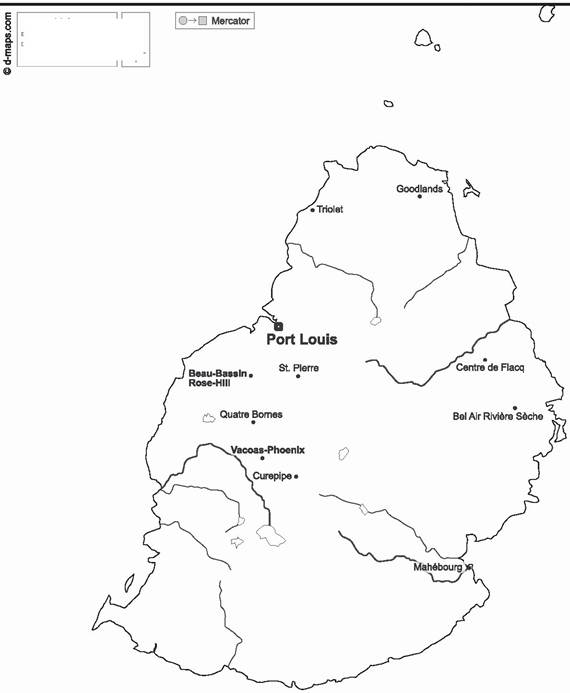
Figure 1.1 Map of Mauritius1
| IOkm | N |
| 6mi |
can be described as laws affecting plantation labour in 19th-century Mauritius, but within that wide area four concrete legal events have particular historical importance: (1) the abolition of the slave trade; (2) the abolition of slavery and the introduction of apprenticeships; (3) the introduction of indentured labour from India on an informal basis; and (4) the beginning of state-regulated labour migration from India. To some extent, these mark out distinct “eras” of rule - the first spanning the period between 1810 and the abolition of slavery in 1835, at which point the second period begins. However, they are also overlapping, as
1 Mauritius map, d-maps.cowwm. [accessed 8 August 2021]. post-emancipation apprenticeships coincided with the informal recruitment of indentured labourers from the Indian subcontinent.
This work contends that each of these events are linked: each was conceived as a result of the effects of the preceding one. Just as the abolition of slavВery responded to the problematic that emerged in the aftermath of the aboliВtion of the trade in slaves, so also did the informal recruitment of indentured labour from India respond to the shift from slavery to apprenticeship. The later government-backed scheme was conceived to respond to the failures of private labour migration. To best address the processes involved, each event is accorded a separate chapter in which, in addition to the research questions set out below, one particular segment of 19th century Mauritian society is investiВgated. Thus, Chapter 3 examines the effects of the abolition of the slave trade, which provides insight into the conditions the slave population laboured under. Chapter 4, which addresses the context in which the abolition of slavery was effected, allows for a closer examination of the white ruling class who felt their interests were threatened. Chapter 5 deals with the informal introduction of indentured labourers from India, and thus permits an assessment of certain cultural issues that were important in the context of an increasingly multi-ethВnic society. Chapter 6, which discusses state-sponsored indenture immigration, addresses the last part of the process, which saw Mauritian society being assemВbled during an eventful 19th century.
1.1.3