The Manifestation of LIQUID LEGAL
2.1 The Expectation on Legal Has Changed: A Good Thing!
2.1.1 AnOptimisticMindset
Despite the inevitable pain, the insecurity caused and the stress infused into our daily lives by the disruptive change we are facing, there are strong reasons to go through it with an optimistic mindset.
We just always need to keep in mind that the underlying request is a positive one and that the ultimate aim is a good place to be. The push on legal to “do things differently” is in fact just the enabler, the means to win back time from repetitive and self-referential work. The actual goal is to be able to redeploy the time and thus to invest more (in fact most) of our time into activities that add immediate value for others. In short: the underlying request is to increase legal's relevance!So, as we transform our current state, as we change legal's state of aggregation and become LIQUID LEGAL, we will preserve our core, but unleash our potential.
We will stop looking backwards by farming traditions, but instead we will move forward with innovation and a new mindset. We will stop being passengers, but become co-pilots that add direction and additional momentum. “...‘Legal can be just as effective and innovative as any other part of the company...””
Let me provide a—widely known—example to make this more tangible. When I started my current role, heading the legal business support for Europe, Middle East and Africa, my legal team was in a state of constant fire drill. The downsides are obvious, so allow me to summarize it with what I call the three “O”s’: overburdened, over hours, overworked. The upside, however, is also well known and I call it the “voodoo-effect”: No one knows what you really do in detail, if it is all even really needed, but it looks impressive and the belief is that you better do not question the voodoo-master but praise her or him when it is done.
2.1.2 An Example
A core element of our issue at the time was the commonly known problem of the lawyer being called in too late, to then be left to hunt all the information required to get a complete contract done and to finally run after all sign-offs required to be ready for signature—which was then the final logistical challenge. I do not want to take you through the full analysis of the problem and its resolution, but rather illustrate a couple of main points related to changing the expectation on and the perception of legal:
(i) The traditional working mode of the lawyers actually disguised that a full function plus a defined process was missing, i.e. the function of analyzing the full deal (e.g. tender or request for proposal), identifying all specialists required, define their work-packages, determine timelines, make sure all followed the same win-strategy, get all approvals... let’s call it deal management. To fix it we defined this role, its basic processes and started to invest headcount in it—rather than continuing to add lawyers to a foggy and disorganized bundle of tasks, most of which they were neither trained nor hired to do.
(ii) The main driver of inefficiency and “heat” on the team was random and typically far too late engagement. We integrated a simple—but mandatory— step into our CRM-tool: sales now needs to answer a few basic questions at opportunity stage, the answers to which indicate whether a lawyer (or deal manager) needs to be involved. We also got access for legal to the CRM-application and established two basic reports: (1) on large opportunities in the pipeline to know what is potentially coming our way—the most basic report sales management is using anyway; and (2) one showing the results and adherence to the registration process.
7Fawcett, “Foreword: Creating Your Path—Building Towards Liquid Legal”, p. ix.
(iii) We established the logging of non-standard requirements in contracts and deals we got involved in—allowing us to automate approval flows and go back to precedents.
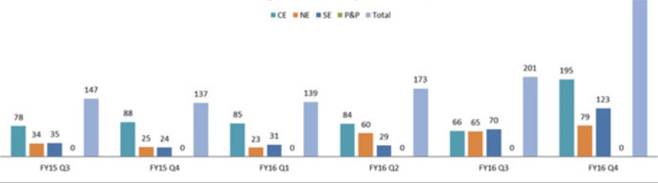
So what did we gain? Let us look at some numbers: Over the course of 5 years we doubled the run-rate of cases & deals on the team—while lowering the overall run rate of OPEX by 30 %! On employee listening surveys we stood out by 10 points in terms of overall satisfaction of the team, satisfaction with management and organized work environment. Well, our peers in other functions were happy, too, as we offered them an organized step-stone and process to deal with the most complex part of our business.
And our internal main client, sales? Next to appreciating all of the above, we saw a remarkable change: Sales started to invite us to their business reviews, i.e. when the business is being analyzed! We were asked to bring our analytics on deal trends, complications and our ideas on how to improve our go to market so that we can win more deals faster. Well, we could simply pull that from our database, but I still could not stop myself from asking the question to our EMEA SVP of Go to Market, Manfred Reitner: “How come you thought about inviting us?” The answer was eye-opening: “You are the only function that sees all of the most critical deals and contracts holistically and end-to-end; you lead the negotiations with our customers on contracts and you have data on their requirements that no one else has - it would be stupid not to invite you?”.—Nothing to add.
What was our strategy?
• We had decomposed our traditional way of doing things—accepting the challenge that legal was asked to resolve the issue, regardless of traditional boundaries.
• We had taken another step out of the ivory tower and proposed a change of process in the space of our clients, promising a win-win—earlier engagement and visibility for better service and more controlled traffic on the team.
• We started to use the metrics we gained by way of leveraging simple tools to support our processes—and we offered them also to our clients.
The only open question that keeps getting raised to me every now and then, like a bad memory in the soul of the organization: Why is deal management in legal? I am typically tempted to keep the answer very simple: WHY NOT!?
2.1.3 TimetoAct
The expectation on legal has clearly changed and will continue to do so.
We must be careful not to get paralyzed and reactive by just staring at the symptoms and accommodating them. Let's leave our traditional sphere and dare to apply new solutions rather than wait for a special invitation.As Cummins stated in his foreword: “Knowledge is rapidly becoming an easily accessed commodity. It is the application of knowledge that increasingly has value, which differentiates the ‘trusted counsellor' from the ‘mere specialist'. Here we have the explanation for that question about the General Counsel; should he or she be the most senior specialist, or perhaps the intermediary who links legal opinion with business context?”[217]
2.2 Boundaries Collapse: And the Playing Field Is Growing!
The days are gone when the world of legal was protected from intrusion and when the various players in legal had clearly identified and mostly separated roles. Let's take a look beyond the ruins of the castle wall that used to isolate the legal ivory tower for so long—who is out there to challenge the legal kingdom and who are the new contenders for a leadership role in our industry?
2.2.1 LPO's... and Beyond
The LPO's and their refined business models provide a good starting point, because I believe that they will hold quite a central role in the transformation of legal. Today, LPO's are still mostly seen in the context of outsourcing and alternative resourcing, as being the lever to balance out the mix of fixed and variable expenditure towards the latter. While this undoubtedly will remain core to the added value that a professional outsourcing firm brings to the table, there are three more important elements to their role: (i) their ability to support change-management, (ii) their deep understanding of legal technology and (iii) their changing role towards and in comparison to law firms.
Many articles in this book have made the point that additional skills need to be and are being added rapidly to the various role profiles of lawyers, e.g.
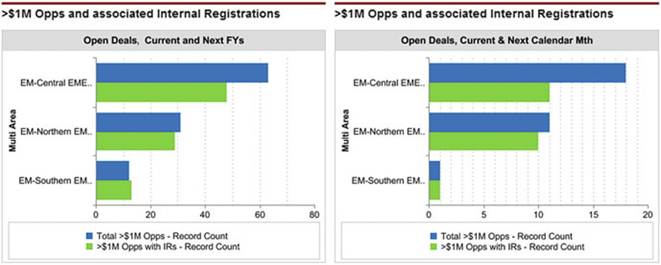
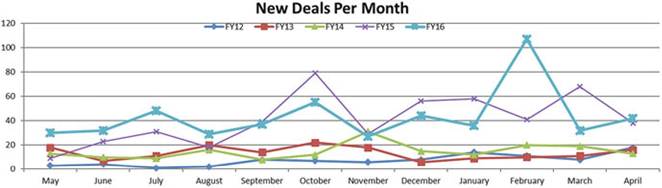
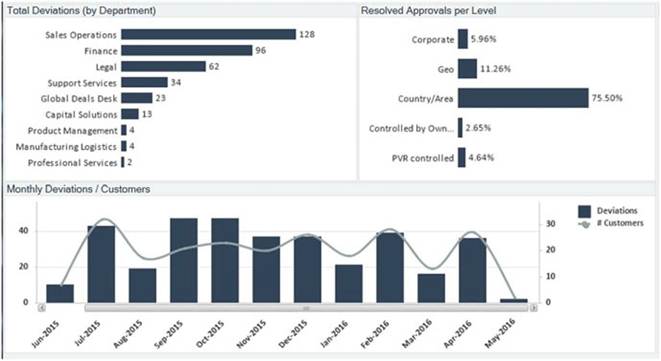
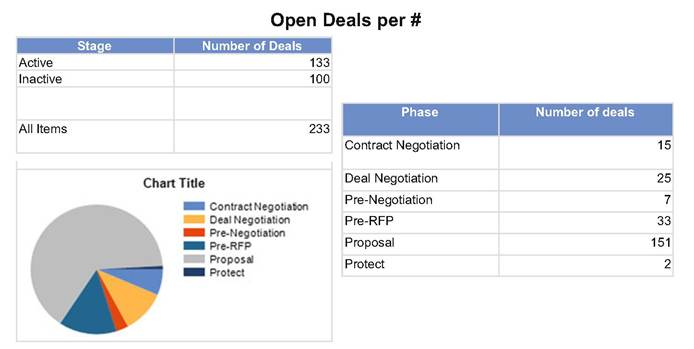
project management, process design, leveraging legal technology in general and automation in particular. As Brown rightfully points out: “Efficient systems and processes directly affect the legal team’s ability to meet the needs of the business, and they also have a profound effect on job satisfaction and retention. To assess and improve systems and processes, the legal sector has started to use Lean, a systematic method for increasing business value by eliminating waste, and legal project management (“LPM”), a growing trend likely to become table stakes within a few years.”[218]Adding the resource constraints and economic pressure to the operational roles in legal, it is evident that it will be next to impossible for legal departments to first develop the skills required, in order to then analyze, decompose, reassess, re-design—in short—to implement all the change required purely with the existing resources. This amounts to the task of changing the tires on a car while driving at full speed. Inevitably, the consequence is that “[s]ophisticated legal departments now expect their law firms and other legal service providers to provide some form of legal project management (LPM), on both hourly and non-hourly fee engagements.... we expect the LPM trend to become table stakes in the legal market for both law firms and law departments within the next three to five years.”[219] [220] Let's make no mistake: Beyond finding and leveraging these new abilities with LPO's (and law firms), legal departments will also expect to see a net-positive effect on their cost-structure; they will expect to benefit from the cost-effectiveness in two ways: first, by the improved way of how the work is being done at LPO's and law-firms and, second, by the fact that the work product more often will not be the resolution of a task, but the support to change how a given legal demand is being answered, leading to efficiencies from standardization and automation. 2.2.2 Technology Thereby, we are already half way into the next important shift in boundaries: Technology. We see a rapidly growing scene of legal technology startups—some even talk about an explosion.[221] Roundtables develop around “LegalTech”,[222] universities invest in research that crosses from the substance of law to technol- ogy[223] and—of course—there is a continuous stream of successful new market entrants in legal technology. However, the landscape is also quite confusing: While the opportunity that legal technology provides is absolutely evident, it seems to play out as an avalanche of solutions for specific elements of legal work. Matthaei and Bues have provided a very good map on the type of legal technology solutions that are available: Broadly, three solution categories can be distinguished within LegalTech: (a) technologies facilitating the access to and processing of legal data and lawyers (b) support solutions, and (c) substantive law solutions. The first category offers solutions which provide a better access to lawyers and legal data ranging from vertical legal marketplaces to legal research and information retrieval. The second category comprises supportive tools which enhance case management and back-office work, ranging from human resources management, accounting, billing, and financing to business development. The third category includes solutions which support or even replace lawyers in the execution of specific legal tasks.[224] The legal technology-scene is in the stormy phase of exploring seemingly endless opportunity. It makes us feel a bit like kids in the candy store—and that actually might be true for both, the consumers of legal technology and the providers, as there are so many features needed and as today's rapid development of technology allows for so many new solutions. Is it the new contract management application, the contract extraction, automated contract assembly, a legal knowledge base, workflow automation, AI... Well, probably it is at some point all of the above (and more), but how on earth can this ever changing armada of technology options be monitored, analyzed, understood, down-selected, piloted and then implemented and be maintained by any legal department? Putting the immediate cost challenge to one side, obtaining and keeping an overview plus acquiring the competency to select an implement already goes beyond what an inhouse department can realistically do. Taking a step back will allow us to realize the fundamental issue—and also the fix. The manifold challenges and the pressure, on the one hand, and the opportunities and the buzz, on the other hand, are a tempting environment to simply jump to a solution immediately. However, what we should do instead, is to spend more time on asking and defining the “why”. What are we hoping to get out if a much larger and profound use of legal technology? What we are trying to ultimately achieve? And who are the key stakeholders, i.e. who are we doing it for? The answer lies beyond the typically invoked cost-benefits, beyond improving response time and SLA and also beyond getting even better feedback from clients. The answer links back to the change in perception of and expectation from legal. Legal is expected (and legal is ready) to change the answer to the question “why are we here?” Legal is not just a self-referential system anymore that as such is a platform for others to create value on top of it. Legal is moving to be a value creator by directly linking to the business process! In this context, technology is the lever— a powerful lever, indeed. Technology provides the data, the flexible and easy access to it and the ability to exploit it for immediate insights that drive better decisions. This is easily said—but underlying this statement we find a wide gap from current state to future state. How will we realistically close it and who can realistically do it? Brenton has pinned it down a first important requirement, as she states that “[The] increased role of legal departments—accompanied by heightened demand for more efficient delivery of legal services, availability of technology, and new entrants to the legal ecosystem—has rendered it impossible to maintain the status quo. It's time to start running legal departments like a business.... To address this need, they are increasingly adding a new function to their management teams—the Corporate Legal Operations Executive, a COO for legal.”[225] With establishing a legal operations function, an inhouse department has defined its interface to the technology market and puts itself into the position to be ready to connect internal demand by the legal sub-functions to both, the market of legal technology and internal IT.[226] But even having an expert—legal operations—scanning and working the market of legal technology will only provide half of the answer. The question remains how to master the enormous dynamic of the market which makes it hard to take long term investment decisions and which makes it a challenge to manage the complexity of implementation and change management. Here, again, we can close the loop to the future picture of both, LPO's and law firms that Ross and Brown (LPO's) and Meents, Markfort (law firms) and Bassli (inhouse perspective on law firms) have described. Both providers of service to legal departments may well be asked to do this including a Software-as-a-Service-element—and by expectation I mean two things, (i) for customers to benefit from the technology upside and (ii) to realize the cost benefit of it! Looking at it from the perspective of legal technology providers— especially in start-up mode—this has tremendous upside, as well. A newly calibrated ecosystem in which law firms and LPO's also work as service providers in terms of technology does open a completely new pathway and becomes a significant multiplier to the market. If you win an LPO with your technology solution, you might have won tens or hundreds of customers. 2.3 Think Data When You Say Technology and Aim at Value, Based on Information Value needs information—information needs data—data needs technology. Putting the use of “technology” in context helps us to avoid the slippery slope of jumping too quickly into the weeds of a technical solution, when we should actually be focused on the data we need to obtain to produce the information we require to create the value we are aiming for. 2.3.1 Two Halves to the Whole: Primary Legal Data and Legal Analytics Before we focus on the value that legal can create by rethinking how we deal with our data, I would like separate to perspectives on data and information in legal: (A) the information that can be produced directly with legal data and the combination thereof (hereafter referred to as “primary legal data”) and (B) the information that can be generated by analyzing legal data or the combination thereof (hereafter referred to as “legal analytics”). An example for (A) would be a contract management application—data (e.g. templates and clauses) is being used to create information, i.e. a contract. An example for (B) would be the analysis run in the contract management application to learn things like: how many contracts have been concluded, in which regions, what have been the most negotiated terms etc.? Why is that important? Well, in a nutshell, value creation from data in a legal department rests on both of those pillars. Indeed, those two pillars are closely interconnected and true value cannot stand stably on just one. Whoever has tried to obtain data for legal analytics from a team while the primary legal data has been inconsistent—or generated outside any application (e.g. manual contracting based on data on c-drives) has experienced the devastating effect this has on the quality of the analysis and thus the usability of the outcome of the legal analytics, or the devastating effect on morale this has had caused by the manual exercise and the time commitment that comes with it. This close interrelation is the reason why the two types of data often get pulled together into one conversation about “legal data” or “legal IT”. However, is crucial to keep in mind that they require distinctly different care and attention when being built, maintained and further developed. Establishing an application for primary legal data typically directly integrates into the operational, day-to-day processes of the full team. Going back to the contract management system, it is evident that this will—and should—be one of the most used systems in the team. Mapping the business requirements to the working process of the team will be of paramount importance not only in terms of change management, but also to obtain the efficiency gains and other upsides that are typically part of the project goal when introducing an application for managing primary legal data. What else sticks out as success factor are: agility and fluidity. What I mean by agility is referring to the fact that in today's work environment, “[o]ur businesses and the underlying information technology must be able to adapt quickly to changing circumstances.”[227] Fluidity, in turn, refers to a need that actually is a hot topic across the IT-industry, not just in legal IT: the ability to process and connect data across the boundaries of individual applications. “Data, to have value, must be in motion, it must be current, agile and available, integrated as close to the point of decision as possible. You must identify the pinch points and blockages that keep data from moving.”[228] To illustrate this point just think about the question, whether your contract management system is interoperable—and connected—to your company CRM-system? Is it reading (automatically?) from a central source the data on the contractual partner? Do you know the status of a given customer because the contract management application “knows” that from interoperating with the CRM?... This could be a long list, but the point is clear: in Legal we are quite used to living in a world of broken records—but we can't afford that moving forward, because data is crucial and efficiency is, as well! Introducing legal analytics into the picture, again there is an important distinction to be made. Mostly, legal analytics are used in the context of “managing the department”. This is an important point to professionalize legal management by a regime of goals that are driven by defined KPI's that in turn are based on metrics.[229] Yet, it is as important for a modern legal function to identify legal analytics that create as such value to the business and other functions. This, in fact, is the essential step that overcomes the self-referential system of legal and that frees legal from the position to only measure its own performance and be—by good old tradition— bogged down to justify its spend, its organization,... its existence. Let me refer back to my example when we started to do legal analytics on the trends we saw in the largest deals and contract negotiations and how that translated into action to optimize our commercial positions as a company. Interestingly, it was only legal that really could pull it all together—our data and then our ability to interpret it, based on our end-to-end view on the deals was crucial. At the same time we used a combination of data from our applications and from the CRM-tool of the company, i. e. we did not only break through boundaries in terms of what kind of added value legal can deliver, but also in terms of how we collaborate with other business functions—in that case sales operations. 2.3.2 Contributing to the Business Review with Legal Analytics Thus, in our case a business review on legal and actively supported by legal has the following elements: 1. Engagement ratio & efficiency 2. Speed & effectiveness 3. Traffic (workload) This is not to state that this selection is necessarily complete or a match for any given situation, but it has proven to work for us and our strategic dialogue with the business and our peer functions. Engagement Ratio & Efficiency How are we doing in terms of traction, i.e. how well is our engagement working, which will tell us about efficiency. We require our sales force to “register” large opportunities at an early sales stage. Registration means to answer less than 10 very basic questions online, right in the CRM-application. The report below is one we actually pull from our corporate CRM-system and it displays the process-adherence rate. Thereby we can see two things—an early trend on upcoming workload and how well the process works (Fig. 1). While this tells us about how well one of our most important interfaces works, we use a similar set of data from our own deal management system that tells us another thing, namely the absolute number of actual new engagements that turn into a “case” on our part, i.e. longer term work for us. We then put this in context over Fig. 1 Engagement and quality of process (own material) Fig. 2 Engagement on new deals over time (own material) time and also compared to the previous years to see trends. Thereby we can indicate to the business when we see peaks and why. We also serve as an early indicator; given the latency of complex business turning into a successful sale, we can add to the prediction on the pipeline. Last but not least, again this tells us about actual load (Fig. 2). Speed & Effectiveness Complexity on deals or negotiations is interesting to dissect, because it easily translates into complication, i.e. several effects that can slow down to “get the contract or deal done”. The most common complications are: (i) identifying and coordinating all stakeholders; (ii) getting functional input and decisions in the time and quality required; and (iii) getting overall approval by higher management ranks on the overall risk and opportunity profile. As to (i), this is where we have introduced a whole new function to our department—the deal manager—whose job it is, among many other tasks, to drive the right and effective deal team set up. As to (ii), we have started to pull the reports (Fig. 3) on which stakeholder (by department) owns (meaning is responsible content-wise for) the most deviations, “deviation” meaning a customer request that demands us to move away from a standard position. Why is that interesting? Well, first, if you lead on Fig. 3 Deviations from company standard positions (own material) that deviations-chart as a function, you will want to analyze why that is. So, why is in the example provided below, sales operations generating the most “deviations”? Are they too conservative on certain positions? Are they off market standard? Or are they just diligent? First, it is worth noting that a high number is not a bad thing: If most of those deviations can be dealt with at a low level in the organization, e.g. because there are pre-approved solutions or because decision making power is delegated,—no problem. At this point (iii) comes into play. In fact, if you take a look at the upper right chart, what I just described seems to be the case: about 75 % of the deviations can be resolved within country, while only 11 % need to be decided at an EMEA-level (we call it “Geo”) and only about 6 % need to reach the highest decision level in the company, corporate. You can imagine that this chart looked very different, when we first introduced it several years ago, but the transparency and detail that we could provide led to several improvement-initiatives, based on the new insights on what makes deals and contract negotiations slow down. Last but not least, the common reflex of explaining and proving that in legal we are not the “nay-sayers” or “complicators” is being extinguished. This message is actually there—we are only in third spot of owning deviations—but it is nothing but a side-effect of analyzing the overall speed of decision-making in the business. Traffic (Workload) Of course, keeping track of workload is a key element of information for and about the department. This is when the common struggle is twofold: (i) how to obtain relevant data in the first place, without starting to ask the team to become data- clerks, i.e. having to manually enter data into a spreadsheet; and (ii) how to obtain relevant data. If, for example, you take an obvious starting point and track the number of cases or deals on the team, there is a huge variable that almost completely undermines the usability of the data: how much effort or time is needed for a case? Is it an NDA or a simple question that can be answered with an email, or is it a month-long negotiation of a multinational multi-million contract? As to getting to relevant data, the rule of thumb should be simple: legal analytics should be based on data that is being collected automatically, on data that you can pull from the “backdoor” of applications that have been built to support an operational process. In my example above this means, that 90 % of the data is pulled from our application that supports the deal and contracting process or from the CRM-application. The basic rule we had to observe, as we structured our application based on the business requirements we had defined, was to think: “database”. Simple rules had to be rigorously applied—well known for IT-experts in building business application—like being careful with too many “free text-fields”, as they are hard to analyze and to report on or leveraging drop-downs and tags as much as possible. What we got were several helpful views that allowed us to understand load and effort better than ever before. By the amount of big deals and negotiations below, we have an initial indicator. As we capture the current deal phase (a drop downbased click) and deal stage, meaning if a deal is active and thus we are at work, or inactive, meaning we wait for external input (again a simple one-click tag), we can get a fairly good understanding about the current load on the team. 233 deals could be an issue, if 200 were active and most of them in the phase “negotiation”, when typically the load is the highest on the team. But having 133 active and only 40 in a negotiation state provides a very different picture (Fig. 4). Against that background, adding the overall case load, i.e. the simple number of “how many requests for legal support have we received” is a very useful additional factor in the equation, as it adds the dimension of small ticket-traffic to the picture (Fig. 5). Fig. 4 Current run-rate of deals on the team (own material) New AgreementRequests EMEA Fig. 5 Number of support requests on the lawyers per quarter (own material) The above chart clearly indicates an overall upward trend plus a significant uptick in two parts of the EMEA-region. Overall it is a good thing that we are being sought and found, but are we busy with the right things? Or mostly with repetitive requests that could be standardized or automated?—Yet, let us take a moment here: actually, the information on new requests is less relevant for a business review with our clients, but rather important for us running our function. This is data to analyze and discuss in our functional reviews. Since we have quite a few relevant legal analytics for the business to offer, we have better things to discuss with our clients, than the question if we run our function properly. Based on the value we deliver operationally every day and based on the value we deliver strategically in business conversations, we can request the trust to leave the piece of analyzing ourselves to us. We can dare to say: “Let’s not waste time on self-referential topics - let's talk business.” 2.4 Collaboration Is the New Paradigm! Embracing the approach of LIQUID LEGAL leads us from an inhouse perspective to changing the dynamics between our internal clients and legal, moving to a new, much more collaborative approach. Collaboration, however, works as the central paradigm in a much broader context in the transformation of the legal industry. I am with Strathausen as he sets out that “[j]ust like the heart pumps blood through physical organisms, legal, by establishing fair and transparent rules among people, departments, lines of businesses, divisions and subsidiaries, can carry trust through business organisms. Liquid legal is the belief that trust is the essence of business - and that together, we are better off than alone.”2"1 2.4.1 Driven by the Future and by Non-Profit A prime and very profound example for that new paradigm are future oriented and innovation driven non-profit organizations like CLOC or IACCM. CLOC, as described earlier in this book by Brenton, is based on collaboration at the heart of 21Strathausen, “Masters of Ambiguity: How Legal Can Lead the Business”, p. 31. the matter—in legal operations: “[CLOC] is a collaborative, community-driven organization of legal professionals focused on defining the future of corporate legal departments. The Association is focused on modernizing, streamlining and amplifying the Legal Operations role within the legal ecosystem.”[230]... “The organization’s mission is to drive innovation and sharing of best practices across legal teams.”[231] IACCM, a widely known global organization in the field of commercial and contract management, has also been founded based on innovation and collaboration. It was the first organization to identify the new opportunity for a function that was emerging from the combination of commerce, i.e. business skills, and contracts, i.e. legal skills. Commercial and contract management has long been (and quite frequently still is today) challenged with the question: Does this belong to legal?... or somewhere else? The answer of IACCM was to simply rise above the hindrances of traditional silos and rather react to a need in industry practice and to approach with an open mind and the standing invitation to all players—lawyers or not—to come together and collaboratively shape the future. As Cummins has put it in his foreword: “There will be many changes in the near future. Examples may include on-line courts, industry standard agreements and digital contracts. But fundamental to social progress is the readiness and ability of the legal profession itself to lead the change agenda. Ultimately, human and social progress will not be held back by the reluctance of lawyers to adapt.”[232] Of course there are many more organizations or informal collaborative circles in our industry—an approach that is on the rise to the benefit of all of us. 2.4.2 Resolving the Riddle Together As Inhouse Departments Six years ago, when I was embarking with my team on the journey to do commercial legal support differently, by integrating a former business function (deal managers) and by starting to be more focused on technology which supports process and provides metrics, I was aware that this would send my team off to a journey into the unknown. A fine challenge that needed trust and a strong team. During our 2-day workshop to build the strategy and the initiatives to pursue our vision, we did a team building exercise: Splash art! A very dynamic way of creating art, while constantly changing the perspective. Opposed to traditional painting, the canvass is not up on an easel, but put on the floor so that you can access it from all directions. Instead of a fine paintbrush, you use paint in all sorts of containers, from which you then throw, drip, wipe... the various colors at the canvass at your own pace, rhythm and based on your imagination. We put as many canvasses right next to each other on the floor as we had locations represented on the team—but the paint was flying all over the whole thing. When we were done, we realized that it was one gigantic and stimulating, colorful piece of art—but we also realized that each of the individual canvasses were as well. It worked as a whole and as parts. This outcome actually was the perfect symbol for our journey, during which we would sometimes feel being distributed on various islands of solution that we would struggle to see fit together until much later when we would be closer to the end-state. Based on that experience, we have engrained the principle of listening and sharing into our professional DNA. Within a company, it happens too easily to confuse your own picture with the whole picture; or simply to forget that one and the same picture looks very differently if you just walk around it. We have found new ways of collaborating with other departments in our company, making crossteam learning and sharing a habit. Yet again, the same is true with peers outside our own company. Collaboration between inhouse departments or peers is pure gold. To put it simply, it was exactly the spirit of sharing and collaborating when navigate the massive transformation we are facing, that brought Kai Jacob, Roger Strathausen and myself together. We met at an IACCM-conference and realized that we were seeing the same picture, but from different angles. Kai heading a global contract management and operations function, Roger advising clients in change and innovation projects, and I managing an EMEA-wide Legal and a global contract management team. We readily took the extra time to share in regular sessions what we have learned and what we struggled with. Each time, we left our meetings with the strong sense of having gained insights and reassurance that continuing to push towards the unknown was the right thing to do. Collaborate to innovate! 2.4.3 You Gotta Talk: Inhouse, Law Firms and LPO's Looking at our common picture and looking at it from a law firm perspective, the paradigm of collaboration works well too. It not only points towards the client, but also towards LPO’s and legal technology. Bassli has made a strong case about how the interaction between law firm and inhouse needs to deepen: “In addition to high quality legal services and advice, we need to get insight into the work of the law firms in a way we have never had before. The law firms are full of valuable information and data about the legal services that we procure from them, which could inform in-house teams about the business of the company they work for more broadly. Yet, that information is not being harvested and business is continuing as usual: deal by deal, legal memo by legal memo.”[233] It is obvious that this requires a mutual understanding that a law firm will only obtain by finding ways to learn more profoundly what their clients are seeking. The same holds true for the relationship between law firms and LPO’s. “Over the next 3-5 years, the challenge and opportunity for LPO providers and their law firm clients is to develop new service delivery models that will drive even greater innovation. It is thus incumbent upon all the key constituent stakeholders in the legal services industry to find better ways of working together.”[234] Law firms continuing to be leading the new ways of delivering substantive legal work for clients; LPO's leading the transformation, process redesign and automation for the same clients; and jointly law firms and LPO's co-piloting the overall transformation with their joint clients in an integrated way. A pretty good match and an obvious call to action—a call to collaborate more profoundly. “In coming years, there is no doubt we will see even closer collaboration between law firms and LPO providers, with the lines of ownership in the legal services delivery model becoming increasingly blurred as stakeholders invest in and enter into joint ventures with one another.” [235] [236] 2.4.4 Legal Tech Legal technology will be a huge, if not the most important lever to transform the role of legal and the way lawyers work. “Technology lies at the core of most of the changes that we are encountering in the professions.”2,8 As pointed out earlier in this chapter, we are still living the stormy phase of legal technology. Thus, under the header of collaboration, the main but strong additional request to make is for legal technology providers to continue the collaborative approach with inhouse departments, LPO's and amongst each other. Whether customers of legal technology can cash in on the promise of legal technology will to a large extend depend on the flexibility and interoperability of the various solutions. 2.4.5 Academia The collaboration of the commercial legal market with legal academia bears huge opportunity for a true win-win. Looking at it from a commercial perspective, the academic world offers a wealth of research, insights and concepts that the legal industry can tap into when navigating through transformation. Change Management, leadership theory, finance and business administration skills etc. come to mind. The prerequisite for the extended role and influence that Strathausen attributes as a future potential to lawyers, is that the individuals rethink their personal curriculum, their pathway to acquire the skills necessary to fill such an extended role. “Legal can lead the business because lawyers are masters of ambiguity - trained to see different sides of a matter, to understand varying interests of different parties, and to lay the foundation for win-win situations. When it comes to mergers and acquisitions, to corporate strategy, to product lines and service portfolios, in fact: with regard to all business decisions that require assessing scenarios and weighing alternatives, lawyers should stop limiting themselves to legal aspects only.”[237] The same applies to the management side of things. Driving a consistent strategy, based on a vision and measured by metrics-based KPI's requires a skill set that universities—while typically not the legal faculty—can provide. Pauleau, Roquilly and Collard rightfully remind us to seek the expertise that is already existing: “Implementing KPIs is not a one-off exercise. It requires the execution of a transformation program to make the successful transition to running LDs like real Business Units. In this respect, LDs need to follow the guidelines applicable to all business transformation programs.”[238] Against the background of the decomposition of professional work, i.e. the breaking up of traditional work clusters to enable multisourcing across several professions,[239] [240] Tumasjan and Welpe point at the opportunity that lies in not just putting smaller blocks of tasks back together; they recommend that we rather consider the co-creation approach: “The co-creation approach aims at bringing together all stakeholders involved in a certain process and improving their interactional patterns. Rather than merely searching for process improvements in all single steps involved in product or service delivery and optimizing their efficiency (e.g., Six Sigma), co-creation focuses on what the stakeholders of a process (e.g., employees, customers, suppliers, distributors) experience and how this experience can be altered for better results for everyone involved.”[241]' Just by acknowledging how many valuable ideas from various authors coming from various academic fields support this book, the huge opportunity becomes evident that academia holds for people working on mastering the transformation in legal. At the same time there is a challenge ahead in this for our own academic home: the legal faculties. Given the massive spread of how the legal education is structured globally and to which extent certain universities and law schools have already adjusted to the changing landscape in the legal market, any generalizing comment bears a huge risk of imbalance. I think, however, it is fair to say that for the most part, legal faculties are still pending to adjust their curriculum to the changes in the legal industry and to the changing role of a lawyer. We do see the emphasis in the role shifting from “knowing the law” to “knowing the business” and “knowing how to orchestrate legal work”. Legal outsourcing, legal supply chain, legal technology and of course legal management concepts etc.—we should be mindful that for the most part none of this is yet taught at law school. Matthaei and Bues are clear on the competitive advantage—or disadvantage—this can be: “In order to ensure that lawyers are well equipped for the challenges imposed by LegalTech, legal education needs to amend its curriculum. Many universities and law schools are ill-equipped to train their students on LegalTech and on the applications that are already available. Law schools have to revise their curriculums as part of a larger interdisciplinary approach. They should, for example, introduce LegalTech lectures, courses, clinics, internships, conferences and workshops which provide the theoretical and practical knowledge for the future jobs [...].”[242] However, as Rhodes states in her book “Lawyers as Leaders”: “Although leadership development is now a forty-five billion dollar industry, and an Amazone search reveals close to 88,000 leadership books in print, the topic is largely missing in legal education.”[243] Thus, as much as anyone working in today's legal industry is called upon to leverage broadly the power of research and academia, as much are law schools challenged to rethink their curriculum to include new subjects adapted to prepare young talent better for their future role. By way of an example we just need to look at Haapio and Barton making the case for transitioning to business friendly contracting by the concept of preventive and proactive law (PPL): “Preventive Law focuses on dysfunctional cycles that generate recurring losses. It seeks to identify and understand the conflicting elements of a system, [...], that, unless somehow resolved, will continue to generate problems. Proactive Law adds a focus to achieving positive goals and value. Together, PPL can alter mentalities and harness tools toward smoother operations and successful outcomes.”[244] A concept developed by the independent power of academia itself, waiting to be leveraged much more broadly in legal curricula as legal transforms. 2.5 It Is Time for a New Vision! It almost seems odd to write it down, as it is part of any management class: We, as leaders (situational or managerial) of our function, need to lead our teams into the transformation with a clear vision! 2.5.1 The Law of Gravitation Has Been Called into Question Yet, it is not a coincidence that this needs to be called out. Far too long, legal— specifically inhouse legal—has co-existed in the shadow of others, as a selfsufficient system that was “special” and thus quite untouchable and that could thereby surround the business like the moon surrounds earth, kept on track by the mild forces of gravitation, a known companion but also a bit far away. The course is set by planet earth, sometimes a bit defocused by other planets... so why bother? The answer is quite straight forward: The traditional law of gravitation for legal has been called into question! It is quite confusing to imagine what the legal landscape will look like just in 5 years—let alone in ten—or as Cummins puts it, “... whether a physical lawyer is needed at all - or whether Robert the lawyer becomes Robot the lawyer.”[245] [246] Sometimes it seems that we are surrounded by unstructured forces of change, a lot of questions or daring theses triggered by it, most of them well-founded, but all somewhat based on the unknown of where the wind of change will drive us. Well, “[i]f one does not know to which port one is sailing, no wind is favorable.”33 So there we are, at a moment where we need to take all the scattered pieces of information we can obtain and define a vision of what the future will hold for us, respectively our teams. Do we know for sure? No—but this is why a vision is not a prediction of the future, but a picture of who we, as a function, aspire to be in that future as unclear and unpredictable as the conditions might still be. 2.5.2 The Cornerstones So what do we know then, that can serve as the cornerstones to define our new vision: 1) We will remain a function that ultimately supports business outcomes (while this might be a business for ourselves, if we think beyond the legal inhouse part of the industry). 2) We will leave—or be driven from—the ivory tower by the massive transformation of professions overall; again, legal is not special. Thus, our reason for being must not be derived from our own system, but must instead be based on our will to create measurable value. 3) As we are exposed to the forces of efficiency and cost-effectiveness like never before, we will professionalize how we run ourselves—we will apply business discipline like any other function. 4) To avoid being haunted by the “do more with less” phantom, we must embrace the opportunities of legal technology as much as the opportunities that we can derive from decomposing the work and applying new labor and co-operation models. 5) We will not succeed by “throwing technology” at every problem—the investment will be too high, the change pain to big. It is data and information that we need to create outcomes, while technology is the pathway there. Thus we need a legal information strategy as our compass for the journey into legal technology. 6) We need to be masters of our data and we must make it a habit to actively use it—for the sake of managing our work and teams better and to enable and underpin our goal to create value for our stakeholders. 7) We are in this together. We have to invest in and leverage the rapidly growing opportunities for collaboration in our ecosystem—be it with academia, legal technology, law firms or service providers in our industry. This might not be complete, but I hope that you look at it as useful crystallization points also derived from this book, useful to get to your vision with your teams. A well-defined vision must be the starting point. Pauleau, Roquilly and Collard have rightfully cautioned us to not jump right into goals, KPI and metrics: “Far too often, legal KPIs are merely based on the data traditionally available within in-house legal teams, without giving adequate consideration to what such KPIs are supposed to demonstrate and to whom. We believe that it is necessary to adopt a “top-down” approach: starting from the vision statement of what the LD should do to be in line with the business strategy, thereby making it possible to identify the objectives to target in order to support this vision.”3,8 2.5.3 Balancing Independence and Interdependence At a conference recently I had the pleasure to talk to a General Counsel of a large global corporation and we came on to the topic of “the need for a vision” for a legal department. His position was that a vision was not needed, because legal supports the vision and the goals of the company—period. While this is per se true, it is not the answer to the question at hand. Agreed: the company's primary business is the reason why the legal inhouse department exists, and thus the company goals are a primary reference point. However, we thereby only answer the question “why” we exist, but stopping here would keep us—and our teams—in the dark on “how” we aim to support the company goals and in which spirit. “The company” will never determine the DNA of the legal department and its strategy to link the team in the most fruitful way to the company at large and the company goals. This is our job, our duty towards our teams—and our opportunity to step up and strive to determine how we can create the utmost value.[247] [248] Adding to the picture the transformational forces in the legal industry, defining a vision—a new vision—has never been more urgent. One, if not the common denominator of all articles in this book is that the landscape in the legal industry is changing as we speak and will evolve further. The tectonic plates are in motion. This requires a new map that no one will draw up for us—this is upon us. In measuring the changing world of legal, we must make sure that our new map includes all landmarks: inhouse, law firms, LPO's, legal technology, academia, people development etc. Last but not least, the new vision will also be the anchor point to introduce the combination of and balance between our independence, i.e. our own self, and our interdependence, i.e. how we relate to the company as a whole.[249] Where are we leading as guardians of legality, as fiduciaries of the trust that flows from a legal frame of reference,[250] and where are we supporting as creators of additional value to other frames of reference. Based on a new vision that embraces the new reality and the expanded opportunities for lawyers, legal managers in all ranks have the opportunity—and the duty—to step up as leaders and to show the way. 2.6 Create New Leadership All in all, we are witnessing the need for lawyers to broaden their skill set. Not only must they maintain their legal expertise, they also have to sharpen their strategic and business thinking as well as understand and integrate the valuable lessons from their emotional and social intelligence. In one word, they have to become great leaders![251] Markfort has summed it up nicely, but his statement is as true as it is explosive. Quite typically, and thus also in legal, the managerial ranks are staffed with strong players that have emerged from and developed in the pre-existing setup. In simple terms, we have often seen very good lawyers be rewarded by stepping up to become legal managers. As the role of legal has been well defined and stable for so many years and as the system of legal has been quite closed and independent from the influence from other functions, the role of a legal manager was quite straightforward. This left sufficient room to gravitate quickly to the notion of the working manager; “less manage - more do” is not an infrequently used line in legal departments. 2.6.1 Do... What? I am not debating the concept that management ranks share the responsibility to carry operational burden—and this does not only apply to legal. However, specifically in the more senior ranks of our profession, the order of priority must be reversed: No department will or should in the long run invest in senior (and thus more expensive) managers and leaders, unless those individuals first and foremost make sure that the team is and stays on board with a new vision of legal, that the individuals are equipped with the skills required to bring it to live and that every lawyer is enabled to leverage and orchestrate the much broader range of resources and tools. On top of that, leaders in legal are called upon to build out a new, much broader and truly interactive interface to peer functions and the business at large. For a future legal leader the harmony of vision, goals, KPI's and metrics needs to be natural, as well as both, the understanding of how to create, define and obtain them, and, the ability to make them consistently part of the communication internally and externally. “The General Counsels of today’s legal departments must find ways to add value, deliver premium legal and business consulting services to their internal customers, and provide a competitive advantage to their companies.”[252] The new challenge for a modern general counsel, as Brenton have defined it, describes the DNA that in fact every senior leader in legal must have. This is why Fawcett makes it a point to refer to his leadership team, when he describes the journey towards the future of legal: “As a renewed leadership team, we changed the culture of the group from what it had been - a loosely organized collection of lawyers -to a true team of business partners and counselors.”[253] 2.6.2 It's Not Enough to Be a Seasoned Lawyer? While still remarkable, it is not surprising that on the agenda of the legal all hands that our new GC, Matt Fawcett, ran in his second year at NetApp you would not find a single “legal” topic. It was all about leadership capabilities and the broadening of the mindset towards the role of inhouse legal, the launching of a new vision and the consciousness of being a truly global team. Concepts of authenticity and vulnerability, as key traits of a leader, how to build out and preserve a positive and solution oriented mindset, working across cultures and the department vision to strive to “be the best” were discussed in workshops and panel sessions with experts. This example displays two basic themes that can serve as a general description of the change in leadership expectations in legal: 1) The traditional core competencies of a lawyer are a given, they are the basis to be able do the job, but they are not the full qualification to get it and to keep it. Well, if that is true for every single member of the department, what is the message to the managers—or better—the leaders? The same, but exponentiated: Legal and managerial skills are the basis, it is the leadership skills that get you the job, specifically the ability to build a solid strategy on the cornerstones laid out earlier in this article, that carry the new vision. 2) Being “the best” is utopia—you will never know; but by making it part of the vision you automatically free up from the legacy, the traditional set up in the legal industry, from being defocused by hunting down trails that many others have used in order to meet benchmarks. You provide your department and the individuals that build it, with the freedom to innovate and to try new approaches, and to accept failure in some instances in order to win and advance overall. As the expectation on legal is rapidly changing, as the traditional boundaries within and around legal collapse, as technology becomes the new teammate and data the currency for legal to interact with the business, as the vision changes fundamentally—how can the DNA and the skillset of a legal leader remain the same? LIQUID LEGAL requires lawyers that are leaders—in whatever function they hold in the organization. 2.7 Redefine Roles, Skills & Career Paths 2.7.1 A Lawyer Is a Lawyer Is a Lawyer... Isn't It? You might share the experience when looking at the majority of job advertisements—be it for inhouse or for a law firm: it very often seems like taking a glimpse back in time. It is all about the traditional hard skills of a lawyer, brushed up to work with more demanding talent that seeks to work more team-oriented and more flexibly. But, as my grandmother has taught me when I was a kid, when you point to others, four fingers point back at you. As I had worked towards a new vision with my team, had underpinned it with a strategy and goals and was busy working through the initiatives to make it real, one of my senior managers sent me an email with a new version of our job description. “Probably updated in terms of the most current style guide”, I thought. But instead, it was completely new, right from the start—which is now titled “Introduction” and reads as follows: NetApp Legal is comprised of [...] professionals located in 25 offices in 14 countries. Our motto is “Guide The Business, Guard The Company” and this is founded on three pillars: 1. Partnership 2. Service 3. Integrity We strive to act as a Strategic Business Advisor, End-To-End Business Enabler and Risk Management Centre of Excellence every day. NetApp Legal has built a reputation as a change agent; a department that embraces innovative business models, trusted business partnerships, pioneering service delivery, technology and business process best practices to achieve great things.... As stated above—it is obvious that we have certain expectations in terms of hard skills regarding a lawyer who is joining us and we list those, too, eventually. However and literally: first and foremost, we must make it clear that we are looking for a business oriented mindset, a specific personality type and someone who shares our modern interpretation of the role. How could we miss that when calling into the market? How could I have missed that after having gone so far down that route with my team? A potentially costly flaw that my colleague has pointed out and helped us fix, as Escher reminds us that “[g]ood hiring decisions require two things: 1) a thoughtful process that aligns the criteria for selection with the criteria to which the legal department as a whole is subjected; and 2) a core acknowledgement that tools other than the judgment and instincts of the general counsel and/or the hiring manager are required.”[254] So it is not surprising that, since we use the updated job description, many candidates have provided unsolicited positive feedback on it, stating that it was not only appealing to them, but that they felt good about knowing very clearly what the hiring department is all about, before going into the interview. Against that background, Escher's recommendations on how to conduct more meaningful interviews become even more powerful. 2.7.2 Develop Skills... But What Skills? Hiring talent is one thing, but developing talent has never been more important than in today's fast paced and rapidly changing work environment for lawyers. As we went through the transition with our team, based on a new vision and now also newly drafted job-profiles, it was evident that we needed to get the best possible handle on the potential of the existing team that was partly quite tenured. To be able to do that we had to close another significant gap: we had to translate our vision, the strategy and the roles into a skills matrix. We asked ourselves three questions as design principles: 1. What are the capabilities that are required to do the job (hard skills and soft skills)? 2. How important are they in absolute and in relative terms? 3. What learning and development offerings do we have to work on them? The end result was a matrix that held about 50 skills, weighted with a factor of importance (1,2,3) and associated to the available means of support, e.g. online or in person trainings offered internally or externally etc. Adding a bit of Excel-magic and the matrix was turned into a self-assessment tool that would generate a spiderweb diagram showing the peaks and dents of the respective individual's profile. This was the first of three pillars on which we have built our development program, the other two being, on the job experience (an obligation of the respective manager and the broader leadership team to make it happen) and mentoring (a program based on the initiative of the individual and then facilitated by HR). Beyond the effort that went into building out the substance of our development program, the skills-matrix etc., what have been the key success factors? First, the fact that from the outset this was not a program “by management”. We have asked a small delegation of our full team to run this project—by the team for the team. This protected us from the “ivory tower"-risk of management missing the nuances of the operational reality, as much as it tremendously facilitated the acceptance of the end-result by the broader team. Second, we have made the implementation part of the goal sheet of every manager and employee. Every team-member had to do the self-assessment—while sharing of the results with the respective manager was completely voluntary. Every team member had to have a development plan, linked to the skills-matrix. We got 100 % fulfilment on that goal—it simply made sense, they said. 2.7.3 What Makes a Career The final question to be answered for creating a basis for a long lasting and mutually beneficial employment relationship is: what does the career path look like? Traditionally, the equation is somewhat like this: Career = (job title + job level) * size of the team The element of “people management or not” and the size of the team are still a big factor—subjectively and objectively—in what makes a career in legal. Before you disagree, take a moment and test your company on a simple question: Are there useful leadership trainings which are not tied to the role of a people manager? I bet that for most companies the answer is “no” and you will see my point. Let's compare that to the future role of senior members in legal departments, or better inhouse leaders. The authors contributing to this book form a harmonic chorus of challenge on any concept that ties seniority to people management or leadership to a management role or power to the size of the team. The future leader in legal will be what, I think, is best described as an orchestration lawyer, i.e. an individual with a legal background that is capable to orchestrate a suite of resources in order to create value for the company. Resources, in this context, are defined as budget allocated to get the job done, with an ever smaller part of it being allocated to internal headcount, compared to a larger part being allocated to outside services (LPO or outside counsel) and legal technology. Thus, in LIQUID LEGAL a career will depend on and be built upon the combination of legal skills, business skills and orchestration skills. A fine challenge as “... successful collaboration is more than just good intentions. It involves a mentality and skills that may be relatively unfamiliar or even uncomfortable.”[255] The challenge for talent acquisition and talent development in any role in legal practice is evident, and it is certainly not trivial. At the same time, this translates into a rapidly increasing risk of the gap widening between today's common legal education and modern legal practice. It is the joint responsibility of practitioners in the legal industry and academia to collaborate and jointly determine and staff a newly balanced curriculum. 3