The Human Resources of Legal
As important as technology and efficient operations are for legal departments, Hartung and Gartner are absolutely right in stating that “processes and structure won't save the company's life in a crisis.
It is instead the human workforce that makes the difference.” Telling his own career story, Fawcett[46] provides a real life example of how leadership and team work can transform a legal department:As a renewed leadership team, we changed the culture of the group from what it had been - a loosely organized collection of lawyers - to a true team of business partners and counselors. We found new ways to work with outside counsel, getting better returns and accountability by using data in powerful new ways. We implemented a new “Legal Ecosystem” that integrated legal operations professionals alongside traditional legal experts into a single, coherent global team.
Tumasjan and Welpe[47] maintain that, in order to lead and act entrepreneurially, lawyers must shift from a predominantly preventive to a predominantly promotional mindset:
Regulatory focus theory posits that individuals use two different mindsets to guide their behavior: promotion vs. prevention focus (Higgins, 1998). In a promotion focus, individuals concentrate on gains, advancement, growth, and positive outcomes. They act with an open mindset toward novel opportunities, consider many different alternatives, and “think big”. In contrast, in a prevention focus, individuals concentrate on losses, security, safety, and negative outcomes. They exhibit high vigilance, are prone to behave and think conservatively, and focus on details and accurateness (Halvorson & Higgins, 2013).
Individuals act in both mindsets - depending on the task and situation - but usually, one of the mindsets is dominant.
While entrepreneurial spirit transcends race and gender, Markfort[48] points out that in most legal departments, promoting diversity and gender equality is still in its infancy:
Lawyering, for a long time, has been a masculine domain.
We are just starting to take stock of the real negative impact inflicted on our global society by gender inequality. Whether viewed from an ethical, economic or managerial perspective, statistics demonstrate the benefits we are collectively and individually missing if we don't give this matter the consideration it truly deserves.The below diamond-shaped model of Liquid Legal summarizes what legal departments can learn from established business functions like management, operations and human resources. It combines the four dimensions of principles, people, portfolio and processes into a holistic approach for transforming traditionally reactive and law-focused silos into agile networks that not only satisfy increasing demands for service efficiency and effectiveness, but also, as announced in the title of this paper, reverse the situation and actually start leading the business (Fig. 3).
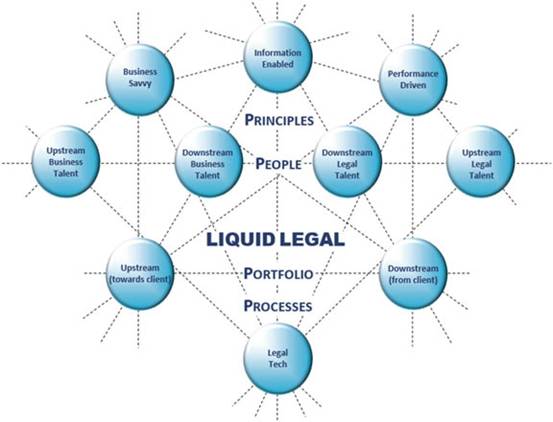
Fig. 3 Liquid Legal Model (own material)
Liquid legal is not defined by departmental borders, hierarchical reporting and an “us versus them” mentality, but by dispersed communities in all lines of business which share the same norms and values. From proactive and preventive law, liquid legal takes over “(t)he goal (...) to promote ‘legal well-being': embedding legal knowledge and skills in corporate culture, strategy and everyday actions to actively promote success, ensure desired outcomes, balance risk with reward, and prevent problems.” (Haapio and Barton, p. 17)
I want to use the term corporate culture to denote implicit and often tacit behavioral norms that promote creativity, collaboration and self-organized teams, a culture in which processes and the interaction of people are more important than fixed structures and managerial ranks.
Seen from a business perspective, law is at least as much collaborative as it is adversarial. One does not have to be an expert in idealism to understand one of the German philosopher Hegel's basic ideas, namely that giving ourselves a rule is the highest form of human freedom.
Law not only means freedom from oppression, but also freedom for expression. It is because of the trust in law that foreigners interact and do business with each other although they are not personally acquainted. In cultural artefacts throughout human history, from religious texts thousands of years old to contemporary Hollywood movies, good wins over evil because the villains, by abusing their fellow men and only seeking their own advantage, fail to create lasting communities and ultimately always turn on themselves. Trust is the ultimate legal currency, and the greatest value delivered by law!Let lawyers be the ones to prove to employees, executives and the whole organization that pursuing business opportunities does not have to be at the expense of legal security. Legal departments of the future can start improving their internal standing by promoting a culture of trust. Just like the heart pumps blood through physical organisms, legal, by establishing fair and transparent rules among people, departments, lines of businesses, divisions and subsidiaries, can carry trust through business organisms. Liquid legal is the belief that trust is the essence of business— and that together, we are better off than alone.
Legal can lead the business because lawyers are masters of ambiguity—trained to see different sides of a matter, to understand varying interests of different parties, and to lay the foundation for win-win situations. When it comes to mergers and acquisitions, to corporate strategy, to product lines and service portfolios, in fact: with regard to all business decisions that require assessing scenarios and weighing alternatives, lawyers should stop limiting themselves to legal aspects only. Instead, they need to go above and beyond what is expected of them and simply start applying their key skill in a business frame of reference: the ability to reason and to think through ambiguity.
5