Redefining the Law Firm Delivery Model: A Journey of LPO Acceptance
In order to survive in today's economy and thrive in the future, many law firms are actively re-thinking their business models. This frequently includes an embrace of LPO and a re-examination of the traditional law firm pyramid structure (partners at the top, junior associates and paralegals at the bottom) as the usual modus operandi for legal services delivery.
Although some believe LPO providers will increasingly contract directly with corporate clients, it is important to consider that LPO providers do not practice law and therefore cannot replace law firms. A more natural fit for LPO is to supplant the lower tiers of the law firm pyramid. This is not to suggest the only benefit of LPO is labor arbitrage, in which expensive junior associates are simply supplanted, on a like-for-like basis, by less expensive offshore lawyers in India and the Philippines. As discussed above, LPO providers are leading the way in the incorporation of technology and process transformation into legal services delivery. And, likewise, law firms are evolving towards greater acceptance of LPO (Fig. 1).Kicking or Screaming In or around 2006, it was not law firms but corporate legal departments that were the first proponents of LPO. Back in those early days, a cocktail of incredulity, mixed with a dash of disdain and served in a frosted glass of tradition, was the tipple of choice for many a law firm partner confronted with the
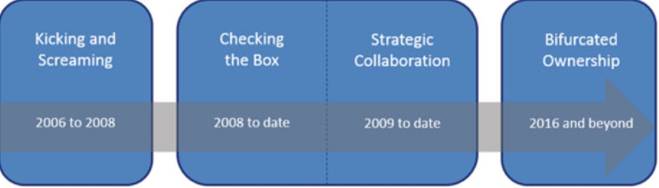
Fig. 1 Law firm adoption timeline for LPO
LPO elevator pitch. Senior executives at leading law firms would protest that LPO was win-win-lose. A win for the firm's clients, a win for the LPO provider, yet a “lose” for the law firm. This viewpoint presupposes the adequacy of two hypotheses that simply do not hold water any longer, namely the zero-sum game, where the more the client loses, the more the law firm wins, and that every penny of revenue generated by an LPO provider is a penny of revenue lost by a law firm.
In any event, these first few years can be characterized, perhaps somewhat harshly, as the phase where law firms were dragged kicking and screaming into the arms of LPO providers. On a case-by-case basis, in-house counsel started to advise their outside counsel that to retain their corporate client business they must begin to utilize LPO providers. In fairness to Big Law, this phase of forcible reluctance has largely passed and did so fairly quickly. Whether the great recession was the dominant catalyst or merely a sidebar to a change in partners' mind sets is a debate for another day.
Checking the Box Law firms have many constituencies but their clients always come first. Major firms' clients are, by and large, cost-sensitive in-house counsels. Firms can gain both a perceived and actual advantage with clients by making clear they understand and are responding to the cost pressures their clients face. In-house counsel muscle-flexing manifested itself not only in ad hoc requests that outside counsel use LPO providers but also in the increasing prevalence of requests for proposals (RFPs) asking outside counsel whether they had relationships in place with LPO providers. Law firms responded in turn by undertaking selection processes of their own to choose one or more preferred LPO providers so they could respond in the affirmative. This is the Checking-the-Box phase and for many firms, once a Master Services Agreement was put in place between the firm and the LPO provider, it was considered a job well done, with no further action required. Many firms today are still struggling with how to navigate the transition from this phase to the one that follows, Strategic Collaboration.
Strategic Collaboration In 2011, my employer, Integreon commissioned research through Legal Week (Legal Week, 5 May 2011), tracking the adoption of LPO among law firms and in-house counsel. While a small minority of firms seemed to worry that using an LPO might send clients the wrong signal, the results of the research showed such fear to be unfounded.
A significant majority, about 75 %, of both in-house and law firm lawyers believed using an LPO did not “diminish the brand.” Rather, those that embraced LPO were perceived as cognizant of the cost, efficiency and quality demands of their clients, and consequently appeared to gain a competitive advantage. A small yet growing number of innovative law firms have begun publicly to acknowledge their relationships with LPO providers. These firms are at various stages of the phase that can be termed as Strategic Collaboration.Under the strategic collaboration phase, law firms can work with LPO providers to expand their offerings and deliver a complete, end-to-end approach, efficiently providing the appropriate level of legal services required for each type of work product. The end of this phase, one that arguably no firm has yet reached, is when LPO solutions are so closely integrated into the firm's overall value proposition that they are simply viewed as part of a suite of re-engineered solutions that the firm provides to its clients across all its practice groups. This requires a firm to embrace LPO at a strategic level, welcoming the LPO provider into the firm, lifting open the hood and working with the provider, as Richard Susskind, a preeminent commentator on the future of the legal profession, would say, to “decompose” legal functions. During this process, the provider and the firm map out “as is” workflows and then re-engineer the processes to incorporate LPO best practices, technology and, where appropriate, lower-cost labor.
The theory behind strategic collaboration is not rocket science, just the premise that the whole is greater than the sum of the parts. Contrary to early concerns that LPO providers would compete directly with law firms, it has become abundantly clear to those firms embracing strategic collaboration that the most effective legal services delivery model is a symbiotic ecosystem in which law firms and LPO providers both play crucial roles.
LPO providers do not practice law and so are not true alternatives to law firms. They do not have the ability to provide advocacy or strategic, across-the-table, one-to-one legal advice. Law firms, on the other hand, do not generally bring a best practices approach to efficient, technology-enabled, legal services delivery with the same rigor as LPO providers. Neither side can individually deliver the holistic, end-to-end services corporate clients are now demanding. While one could argue that law firms with their own, fully integrated, “captive” LPO units can do so, there are limits to the capabilities of even the world's largest law firms and their captives.A common misconception held by proponents of captives is that working with a third-party LPO provider means a loss of control. This is not the case. Control is more about governance than ownership. For example, some captives are out-ofcontrol because they have not been properly set up with service level agreements (SLAs) and rigorous metrics. Conversely, a proper SLA and governance structure can give the law firm more control over a third-party LPO provider than they might typically have over their own staff. Running a captive center, especially offshore, requires a scale that only the largest law firms possess. LPO providers typically offer several other advantages over a captive as well. These include better capacity utilization by aggregating demand across many clients, converting fixed to variable costs, ongoing investments in technology and continuous improvement, and, of course, business continuity assurance through having multiple delivery locations.
Bifurcated Ownership Companies are increasingly finding that, as the saying goes, you can either shape the change or be shaped by it. Unrelenting cost pressure, deregulation, disaggregation, globalization and technological advances have been the genesis of LPO. Over the next 3 to 5 years, the challenge and opportunity for LPO providers and their law firm clients is to develop new service delivery models that will drive even greater innovation.
It is thus incumbent upon all the key constituent stakeholders in the legal services industry to find better ways of working together.In coming years, there is no doubt we will see even closer collaboration between law firms and LPO providers, with the lines of ownership in the legal services delivery model becoming increasingly blurred as stakeholders invest in and enter into joint ventures with one another. This I call the Bifurcated Ownership phase. How long will it be before an LPO provider acquires a major law firm in the UK now that external investment in law firms is permitted via the Legal Services Act? Hardly a week goes by without the rumor mill spinning a story about this or that law firm seeking to monetize either their captive LPO operation or their high-volume practice group. For many of the reasons cited above, it is likely that the majority of those law firms with captive LPO providers today will look to divest these operations in the coming years. The most logical acquirers of these entities may well be global LPO providers.
As time progresses, there is a growing optimism about, and enthusiasm for, reshaping the way legal services are delivered, making the rise of the new, bifurcated model inevitable. The end result of the journey to this fourth and final phase is a seamlessly integrated delivery model, with both corporate and lay clients benefiting from better, faster, more readily accessible and lower-cost legal services.
4