Realizing the Vision: The Corporate Legal Operations Consortium
In 2010, a group of legal professionals from Fortune 500 companies across the country got together with the goal of codifying and bringing these principles to life in the modern legal department.
Since its inception, the Corporate Legal Operations Consortium—or CLOC—has been charting this relatively new territory in collaborative fashion. It has been seeking new ways to enable efficiency, simplicity, and impact within legal departments. The organization’s mission is to drive innovation and sharing of best practices across legal teams.Today, CLOC has become an incorporated entity and is the first legal association to open its doors to the entire legal ecosystem—General Counsels, law firms, technology providers, managed service providers, legal associations, venture capitalists, law schools, students, and others interested in its mission. Initially formed by members from companies in California and the Pacific Northwest, CLOC has expanded to include members from around the world.
2.1 Focusing on the Basics
The CLOC team began by focusing on simple, core challenges that are common to all legal departments. One of the first was around billing. How could law firm billing be managed in a more consistent and effective way?
Traditionally, faced different billing terms from client to client, resulting in time and resources wasted. In keeping with CLOC’s mission to drive efficiency and simplicity, it sought to standardize the industry around routine and administrative tasks, leaving time for attorneys to focus on bespoke legal work. This particular goal has been furthered by the creation of a comprehensive set of billing guidelines.
The result: a process that once required significant time and resources for both, inhouse and outside counsel, has now been made simpler. This is precisely the type of efficiency gain that CLOC strives to facilitate.
CLOC’s billing guidelines are driven by its goal to simplify and create efficiencies across legal departments. Legal departments do not compete on efficiencies. There is no need to recreate documents across departments of different companies. A concise set of guidelines makes things easier for everyone.
2.2 Defining the Role and Focus of Legal Operations
The CLOC team has worked to define the elements of Legal Operations (Fig. 1):
• Strategic Planning: Create a long-term strategy, aligning yearly goals and corresponding metrics.
• Financial Management: Manage the departmental budget. Track accruals and forecasting. Work with Finance to identify spending trends, potential cost savings and efficiency opportunities.
• Vendor Management: Create a vendor management program to ensure quality outside counsel support at the right rates and under optimal fee arrangements. Hold regular business reviews. Negotiate fee agreements. Drive governance of billing guidelines.
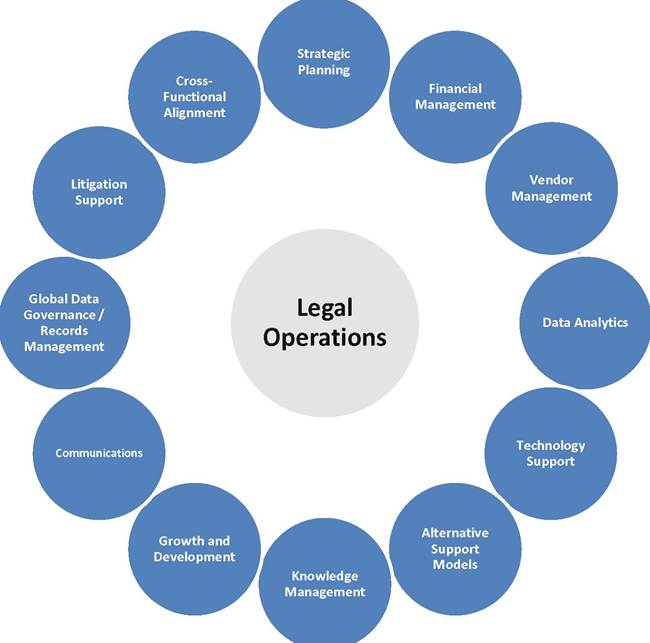
Fig. 1 This graphic is available online here: http://cloc.org/what-is-legal-operations/
• Data Analytics: Collect and analyze relevant data from department tools and industry sources, define objectives to provide metrics and dashboards that drive efficiencies and optimize spend, etc.
• Technology Support: Create a long-term technology roadmap including tools such as e-billing/matter management, contract management, content management, IP management, business process management, e-signature, board management, compliance management, legal hold, subsidiary management, etc.
• Alternative Support Models: Drive departmental efficiency by leveraging managed services, LPOs, and other service providers.
• Knowledge Management: Enable efficiencies by creating seamless access to legal and department institutional knowledge through the organization and centralization of key templates, policies, processes, memos, and other learnings.
• Professional Development and Team Building: Deliver improved GC Staff and overall team performance by globalizing the team and creating a culture of growth, development, collaboration and accountability.
• Communications: Work collaboratively across the legal ecosystem to create consistent global processes, from onboarding to complex project management support. Publish regular departmental communication, plan and execute all-hands.
• Global Data Governance/Records Management: Create a records management program including a record retention schedule, policies and processes.
• Litigation Support: Support e-discovery, legal hold, document review.
• Cross-Functional Alignment: Create and drive relationships with other key company functions, such as HR, IT, Finance and Workplace Resources. Represent the Legal organization at CLOC.
2.3 Evangelizing the Legal Operations Role Across the Industry
Another significant function of CLOC has been to help drive awareness and understanding of Legal Operations across the industry. A decade ago, most corporate attorneys would not have been able to articulate what the Legal Operations role was or why it was important. Thanks in large part to the work of CLOC, it now holds a prominent spot on the legal industry map.
Significantly, CLOC's championing of Legal Operations professionals has propelled those professionals upward. They are now trusted advisors to their General Counsels, holding places among legal executive staff. Further still, the value of the role is being recognized beyond the in-house space, as Legal Operations directors are being added to law firms as well.
CLOC members have been active in speaking to broad audiences about their roles, experiences, and aspirations for the future of the industry. The range of talent among current Operations executives is diverse; about one-third have JDs, one-third have MBAs, and another third has both. Their backgrounds range from traditional legal roles to finance to technology.
However, as the role increases in prominence and law schools begin adding an operations curriculum on the heels of CLOC's education-driven Institute, the legal profession will begin to embrace this career path from the outset.CLOC has similarly been driving awareness of the sort of changes that spurred them to create the organization in the first place. CLOC members have collaborated on presentations at high-profile events around the world—ACC, CxO/CLOC, IACCM, P3, and others—to explain the changes the industry has been seeing and why awareness of those changes is so important. This is another indicator that the operations role is becoming a force.
In these forums, Legal Operations experts have explained exactly what is driving such inhouse change: the evolution of the General Counsel role, combined with the increased prevalence of legal technology and legal service providers, has driven the inhouse department as we know it to a tipping point. What was once a model of slow growth and change in corporate legal departments has quickly transformed into a sink-or-swim environment, where legal departments either start to drive competitive advantage or lose out to the emerging non-traditional providers. CLOC members are teaching others how to swim.
Liquid Legal Context
By Dr. Dierk Schindler, Dr. Roger Strathausen, Kai Jacob
Show me what you offer and how you do it, and I tell you who you are. Brenton provides a tangible litmus test for legal departments to determine how far they have progressed into the future state: still a traditional function? Already a service? Or even a true business unit?
All authors agree that the General Counsels of today must find ways to create value, deliver premium legal and also business consulting services to their internal customers, so that their departments provide a competitive advantage to their companies. Against that background, Brenton details out the—still emerging—new function of Corporate Legal Operations, a COO for legal.
We are watching legal transformation in motion, when we read the story of how they established CLOC, starting in 2010 with a group of like-minded professionals that had a similar role and/or vision for a legal operations function, to now be the first legal association to open its doors to the entire legal ecosystem—General Counsels, law firms, technology providers, managed service providers, legal associations, venture capitalists, law schools, students, and others interested in its mission.
The need for an operations role in Legal is obvious, if we just look at the quite brutal forces and the pace of change, but also if we admit the complexity that comes with it. Today's call to action on legal is not evolutionary, it is disruptive in every possible way: process innovation and outsourcing become the new normal; legal tech is a must, not an option; performance management
(continued) to ensure true creation of business value is mandatory. While front-facing players in a department need to change to master the challenges that come with that in day-to-day practice, there is also a vital need for a function that establishes and constantly improves the operational platform on which an inhouse department can step up to the task.
Besides the functional role of a COO for legal, Jacob adds to the profile when he identifies that “we need people that are technical affine, process minded and open to new technology”. Is the “Legal Information Manager” the new norm?

Connie Brenton is a pioneer in Legal Operations and widely regarded as one of the world's foremost experts on legal industry innovation. For more than 5 years she has served as Chief of Staff and Director of Legal Operations at NetApp Inc. (NASDAQ: NTAP), a Fortune 500 data management and storage provider. She is the co-founder of the Corporate Legal Operations Consortium (CLOC), an innovative and global Legal Operations Association. Connie holds a JD, MBA, and BA in Economics.