Putting It All Together: A Co-creative Approach to Management
How can the insights developed above be combined and applied in a coherent management framework? In our view, the co-creation approach to management (Ramaswamy and Gouillart 2010) offers a general paradigm in which the factors identified above can be summarized and implemented for managing processes in legal departments (and in organizations in general).
The co-creation approach aims at bringing together all stakeholders involved in a certain process and improving their interactional patterns. Rather than merely searching for process improvements in all single steps involved in product or service delivery and optimizing their efficiency (e.g., Six Sigma), co-creation focuses on what the stakeholders of a process (e.g., employees, customers, suppliers, distributors) experience and how this experience can be altered for better results for everyone involved.The authors propose four simple steps that firms or departments may take in a co-creational approach (Ramaswamy and Gouillart 2010): first, all relevant stakeholders that are involved or influenced by a process (e.g., contract management) have to be identified. Second, the current interactions of the stakeholders need to be mapped out and visualized (e.g., how are the stakeholders currently interacting within the process). Third, all involved stakeholders share their current experiences with the process in workshops and generate ideas how to improve those interactions (e.g., how are legal and sales interacting in contract creation and how can disparate repository systems across regions be integrated). Fourth, firms then can implement ideas for improvement using platforms where the discussion regarding further improvements of interactions can continue (e.g., integration of contract creation, negotiation, and repository on one platform and continuing dialog on the platform forum about further improvements).
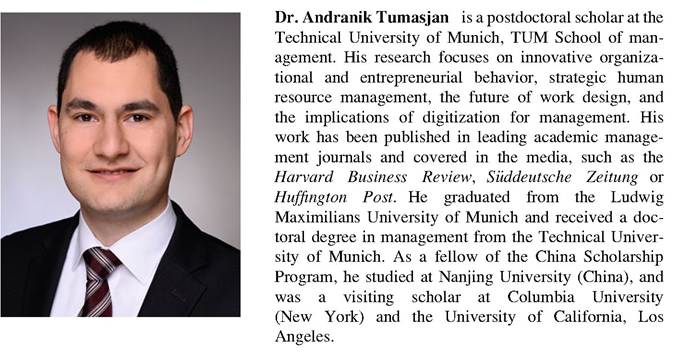
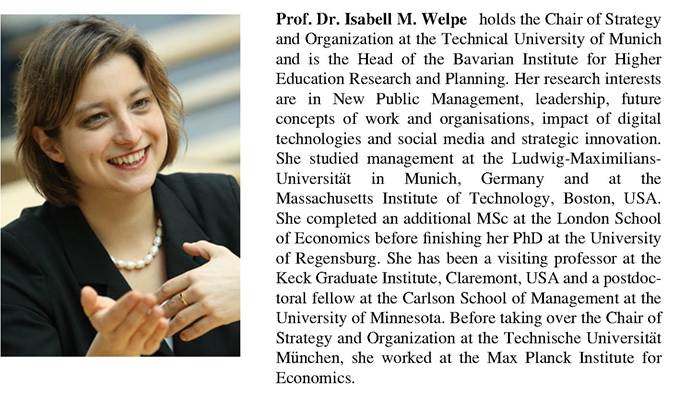
This latter point is crucial: the co-creation paradigm is very much about an ongoing dialog between stakeholders about interaction improvement, i.e., a dialog that needs to be sustainably continued (rather than be seen as a one-shot project) to be effective in the long run. The co-creation paradigm builds on the firm conviction that people are inherently motivated to proactively create and find opportunities to change their environment for the better—key characteristics of entrepreneurial behavior (Tumasjan et al. 2011). It is, in fact, a matter of giving people autonomy, providing platforms for dialog, and the means for implementation. With the continuing technological developments in the digital age (Welpe et al. 2010; Sprenger et al. 2014), all three ingredients are easier than ever to implement. In particular, with the proliferation of digital tools such as company social networks (e.g., Zyncro), collaboration platforms (e.g., Slack) or voting apps (e.g., Pollcode) the facilitative nature of the co-creation paradigm can readily be brought to life in a structured way. However, such tools alone will not serve as a panacea and will likely remain unused unless they fit with an organizational logic that truly cherishes a culture of co-creation. The time is ripe to create such an environment—it may lay the groundwork for legal departments to empower both individuals’ promotion- focused thinking as well as unleash the potential for entrepreneurial acting.
Liquid Legal Context
by Dr. Dierk Schindler, Dr. Roger Strathausen, Kai Jacob
When introducing a KPI-driven environment, there is an inherent risk to default to what may be called “traditional” metrics, typically centered around financials, e.g. cost, variable spend, outside counsel cost etc. Such a reductionist approach enforces a narrow and self-reflective view, instead of a holistic perspective. As Tumasjan and Welpe state: “To create value for their internal clients, corporate lawyers need not only a thorough understanding of the abstract commercial goals of the organization, but they also need to act entrepreneurially in recognizing, evaluating, and exploiting opportunities for value creation.”
The authors calibrate the discussion well, right from the beginning: This is not only about the dimension of finding entrepreneurially minded people; of course, one needs to understand the individual precursors (i.e., individual mindsets) that need to be found and developed.
This is as much about(continued) understanding and creating the organizational antecedents (i.e., structural components) for enhancing entrepreneurial behavior in organizations.
As to the individual side of things, Tumasjan and Welpe make reference to the promotion vs. prevention focused mindset and what makes up one or the other. A great guide for developing and hiring talent which bridges right into the article of Escher, who talks about changing the stereotype when hiring lawyers. They also underline the critical importance of creating the right mindset in the managerial ranks of the department—leading by example is key!
As to the organizational antecedents, the authors draw on research that has identified five key elements for creating an enabling environment for entrepreneurial behavior in organizations: management support, work discretion, rewards, time availability, and organizational boundaries. What does an organization look like that enables entrepreneurial behavior? Tumasjan and Welpe call out the co-creation approach that aims at bringing together all stakeholders involved in a certain process and improving their interactional patterns. Adding innovation and value will replace the mere and siloed improvement of the status quo.
If that is future mindset of individuals in the legal industry, will there even be the opportunity of developing them into other parts of the corporation? “Yes” says Chomicka!
References
Cameron, K. S., & Quinn, R. E. (2006). Diagnosing and changing organizational culture. San Francisco: Jossey-Bass.
Crowe, E., & Higgins, E. T. (1997). Regulatory focus and strategic inclinations: promotion and prevention in decision-making. Organizational Behavior and Human Decision Processes, 69, 117-132.
De Jong, J. P., Parker, S. K., Wennekers, S., & Wu, C. H. (2013). Entrepreneurial behavior in organizations: Does job design matter? Entrepreneurship Theory and Practice, 39, 981-995.
Fields, J.
(2013). Why most lawyers make terrible entrepreneurs. Available at http://www. jonathanfields.com/why-most-lawyers-make-terrible-entrepreneurs/Halvorson, H. G., & Higgins, E. T. (2013). Do you play to win--or to not lose? Harvard Business Review, 91, 117-120.
Hartnell, C. A., Ou, A. Y., & Kinicki, A. (2011). Organizational culture and organizational effectiveness: A meta-analytic investigation of the competing values framework’s theoretical suppositions. Journal of Applied Psychology, 96, 677-694.
Higgins, E. T. (1997). Beyond pleasure and pain. American Psychologist, 52, 1280-1300.
Higgins, E. T. (1998). Promotion and prevention: Regulatory focus as a motivational principle. Advances in Experimental Social Psychology, 30, 1-46.
Higgins, E. T. (2006). Value from hedonic experience and engagement. Psychological Review, 113, 439-460.
Hmieleski, K. M., & Baron, R. A. (2008). Regulatory focus and new venture performance: A study of entrepreneurial opportunity exploitation under conditions of risk versus uncertainty. Strategic Entrepreneurship Journal, 2, 285-299.
Hornsby, J. S., Kuratko, D. F., & Zahra, S. A. (2002). Middle managers' perception of the internal environment for corporate entrepreneurship: Assessing a measurement scale. Journal of Business Venturing, 17, 253-273.
Kuratko, D. F., Hornsby, J. S., & Covin, J. G. (2014). Diagnosing a firm's internal environment for corporate entrepreneurship. Business Horizons, 57, 37-47.
Lanaj, K., Chang, C. H., & Johnson, R. E. (2012). Regulatory focus and work-related outcomes: A review and meta-analysis. Psychological Bulletin, 138, 998-1034.
Nabarro (2011). General counsel: Vague about value? London: Author.
Neubert, M. J., Kacmar, K. M., Carlson, D. S., Chonko, L. B., & Roberts, J. A. (2008). Regulatory focus as a mediator of the influence of initiating structure and servant leadership on employee behavior. Journal of Applied Psychology, 93(6), 1220-1233.
Parker, S.
K., & Collins, C. G. (2010). Taking stock: Integrating and differentiating multiple proactive behaviors. Journal of Management, 36, 633-662.Pfeffer, J., & Sutton, R. I. (2006). Evidence-based management. Harvard Business Review, 84, 63-74.
Raisch, S., & Birkinshaw, J. (2008). Organizational ambidexterity: Antecedents, outcomes, and moderators. Journal of Management, 34, 375-409.
Ramaswamy, V., & Gouillart, F. (2010). Building the co-creative enterprise. Harvard Business Review, 88, 100-109.
Sprenger, T. O., Sandner, P. G., Tumasjan, A., & Welpe, I. M. (2014). News or noise? Using Twitter to identify and understand company-specific news flow. Journal of Business Finance & Accounting, 41, 791-830.
Strobel, M., Tumasjan, A., Sporrle, M., & Welpe, I. M. (2013). The future starts today, not tomorrow: How future focus promotes organizational citizenship behaviors. Human Relations, 66, 829-856.
Strobel, M., Tumasjan, A., Sporrle, M., & Welpe, I. M. (2016). Proactive strategic behavior throughout the organization: How future focus fosters proactive strategic scanning (Working paper).
Tang, M., Werner, C., Tumasjan, A., Cao, G., Shen, J., Shi, J., & Sporrle, M. (2015). Creative expression and its evaluation on work related verbal tasks: Comparison of Chinese and German samples. Journal of Creative Behavior. doi:10.1002/jocb.134.
Tumasjan, A., & Braun, R. (2012). In the eye of the beholder: How regulatory focus and selfefficacy interact in influencing opportunity recognition. Journal of Business Venturing, 27, 622-636.
Tumasjan, A., Strobel, M., & Welpe, I. M. (2011). Employer brand building for start-ups: Which job attributes do employees value most? Zeitschrift fur Betriebswirtschaft, 81, 111-136.
Tumasjan, A., Welpe, I., & Sporrle, M. (2013). Easy now, desirable later: The moderating role of temporal distance in opportunity evaluation and exploitation. Entrepreneurship Theory and Practice, 37, 859-888.
Wallace, C., & Chen, G. (2006). A multilevel integration of personality, climate, self-regulation, and performance. Personnel Psychology, 59, 529-557.
Wallace, J. C., Johnson, P. D., & Frazier, M. L. (2009). An examination of the factorial, construct, and predictive validity and utility of the regulatory focus at work scale. Journal of Organizational Behavior, 30, 805-831.
Welpe, I. M., Tumasjan, A., & Strobel, M. (2010). Construal Level Theory-Eine Theorie fur die Grenzenlose Unternehmung? (Construal level theory - A theory for the boundaryless organization?). Zeitschrift fur betriebswirtschaftliche Forschung (zfbf) Sonderheft, 62, 84-105.
Wu, C., McMullen, J. S., Neubert, M. J., & Yi, X. (2008). The influence of leader regulatory focus on employee creativity. Journal of Business Venturing, 23, 587-602.
Zacher, H., & Rosing, K. (2015). Ambidextrous leadership and team innovation. Leadership & Organization Development Journal, 36, 54-68.