Legal Opportunity and Legal Risk
Any events that occur on aspects of the legal function listed above will have positive or negative effects on organizational objectives. Positive effects may be labeled legal opportunity, while negative effects may be labeled legal risk.
In practice, a large part of managing the legal function will consist of managing legal risks: preventing negative effects. Events may also lead to disputes between the organization and third parties or employees. Handling disputes and conflicts could be regarded as managing legal risk. A dispute is not in itself a legal risk, as the risk is found in the underlying root cause of the dispute, but could be regarded as a risk that will possibly materialize. Of course, a legal risk that becomes reality will materialize in consequences that are not of a legal nature, such as financial or reputational damage. Theoretically, it is hard to give an exact definition of legal risk. Instead of spending time and effort defining its exact scope in an abstract way, a more sensible approach would be to regard it as one of many meaningful perspectives on risk that should be operationalized in practice (see Mahler 2007).Although a great deal of a legal department’s daily activities consist of managing legal risks, there are also many situations where there is no or little legal risk, and in-house counsel will primarily assist in using the law and legal means to achieve positive effects: seizing legal opportunity. An example would be if research showed that the organization is eligible for a government subsidy for a business venture it would have undertaken anyhow. Figure 1 shows the basic elements of managing the legal function.
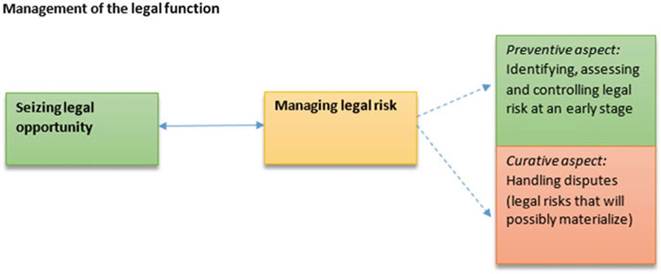
Fig. 1 Elements of managing the legal function
12