Final Remarks
The business relationship between customers and outside counsel has not changed much over many decades. Recent years, however, have seen the emergence of a “new normal”. This is primarily driven by the customers, who are supported in their intent to bring about modifications to the current situation by new legal service providers, which are also interested in creating a substantial change in the legal industry.
It remains to be seen what consequences these changes will ultimately generate.The good news for legal service providers is that customer demand for legal services will continue to exist since there are no substitutes for it. What has changed or will change, however, is the following: the role of general counsel has changed; customers and legal departments are improving efficiency and optimizing both staff deployment and the volume of work; less outsourcing to third parties is expected and is being replaced by more insourcing; the procurement of legal services is changing and being professionalized; and finally, price amendments, increased demands and changes in technology are likely to occur.
The role of in-house counsel will have to change and adjust accordingly. This does not only create duties and pressure, but also offers a vast variety of new opportunities and exciting tasks that must be exploited and executed.
Liquid Legal Context
By Dr. Dierk Schindler, Dr. Roger Strathausen, Kai Jacob
Mascello provides a great overview on the changed and further changing dynamics around the cost of providing legal services for legal departments— whether incurred by “building” the services inhouse, or by “buying” them on the market. He points out the structural changes in the legal market and consolidates those dynamics into a very insightful graphic that connects the impact on all main elements: lawyers, law-firms, customers and the broader legal market.
The author determines liberalization, globalization and the increasing application of technology as the fundamental forces that disrupt the market, very much in line with what we have just heard from Hartung and Gartner. The liberalization brings about not only new players (e.g. LPO's), but also opens up the market for new leaders in services: think of Ross' suggestion of
(continued) legal advice or a law firm at some point potentially becoming one branch of the services of an LPO. While globalization increases the pressure on local legal service providers, the polycentric approach that might be part of the answer to the challenge (see Markfort) makes it even more complex. Is this development building a case for the big accounting and audit firms that—as Sako points out—have by far the largest global presence?
Mascello also asks the question as to what all of this means for the positioning of the legal department. No more hiding behind a strong CFO, it is time to lead for legal departments, we have heard Fawcett state. Mucic expands that notion to the fundamental impact lawyers and legal inhouse work has on the culture of a company. As many traditional legal services are becoming candidates for automation or even a legal commodity, it is critical to position the legal department beyond a mere “problem solver”. It is vital that we are able to credibly explain its integration into the corporate strategy and its value creation for the company.
Mascello provides a clear overview on the various sources for legal services and what a professionalized procurement process looks like. This makes a strong case for professionalizing the operations of legal departments by introducing a legal operations function. Brenton is a true leader in shaping this function and driving towards a standard model of legal operations, also by means of founding the non-profit organization and collaboration platform CLOC.
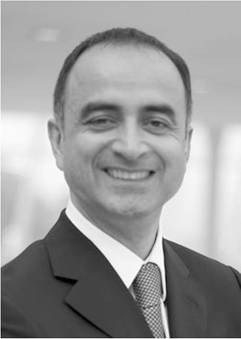
Bruno Mascello is Vice-Director at the Executive School of the University of St. Gallen. He conducts research, teaches and publishes with a special focus on law and management topics. Before, he worked as an attorney in an international law firm and for many years in-house in various senior management positions in an international financial services company. He is a qualified lawyer, admitted to the Swiss Bar, and runs a private practice. He studied law (including Dr. iur.) at the University of St. Gallen, completed an Executive MBA and received his LL.M. from New York University School of Law.