Conclusions
Coming back to our question: what if, in the construction industry, a contract administrator, contract manager or even a portfolio, program or project manager, rather than being a construction professional with an appreciation of legal issues happens to be a law practitioner trained in basic construction? Construction industry products and processes haven't really changed that much in the last thousand years, with Newton's law of universal gravitation being the main principle followed religiously throughout the sector, thus making it fairly easy to grasp.
In the majority of underdeveloped countries a person can build their house themselves, and they usually do, which is one of the main reasons behind a shortage of professionals in this sector. The occupational requirements for contract professionals in construction do not include any formal legal training, other than an appreciation of the legal issues. As market conditions have become more complex, this approach is being reconsidered by large built asset corporate businesses. So far, the challenge of attracting professionals with legal training has prevented any meaningful change from taking place, and, as discussed above, the reasons for this situation are complex.Unlike the legal services sector, the construction market is witnessing a significant rebound. Construction spending, especially in the public sector, continues to increase. It is widely known that, for example, the US transport infrastructure system, much of which was built in the 1950s, is in dire need of a significant overhaul, and alternative transportation systems such as light rail and busways have moved to the forefront as the North American highway system reaches full capacity (Arcadis 2015). Contrary to the common belief among lawyers, construction contracting is anything but boring. Globally, there is a radical rethink of strategy and delivery across the major contracts, following the significant reduction in oil price, high-profile corruption scandals in South America and China, the consequences of tenders priced in the immediate aftermath of the 2008/2009 financial crisis, a rising global cost base and strain upon the supply chain, a scarcity of labor and an increase in cross-border and multi-jurisdiction activity, as well as increasing exposure to more “force majeure” and “neutral event” circumstances.
With construction projects increasingly being aggregated into big complicated programs, attracting additional risk as well as political and public attention, high- visibility disputes are not an option for their owners. Owners of mega-programs have turned to alternative project delivery, increased project controls and early intervention to mitigate disputes to help manage that risk. The contracting community has to follow suit, and a greater involvement of satisfied and professionally fulfilled legally trained professionals offers an opportunity for the industry to deliver excellent customer service.Liquid Legal Context
by Dr. Dierk Schindler, Dr. Roger Strathausen, Kai Jacob
Chomicka looks at the pressure on the legal industry from a totally different angle. A lot is being said about lawyers needing to pick up business skills in many forms in order to carry them back into their own environment as it transforms (or to transform it). Chomicka points out one aspect which is often overlooked: in their evolution, lawyers are able to not only draw analogies from the work of others and carry the lessons learned into their own area, but they can—and should—also carry their new, extended skills to appropriate opportunities in other fields, re-defining the professional requirements in those fields to include legal education and training.
Enhancing the curriculum and practice of other professions with legal skills and thereby opening those fields as a new career opportunities for lawyers? A “hostile takeover” of a function triggered by pressure? Or a win-win-opportunity for both sides? Definitely the latter, says Chomicka
(continued) and illustrates her theses very thoughtfully and pointedly using the construction industry as an example.
We have heard about the need for lawyers to acquire new skills like project management and other business skills to have a future in their jobs, as we recall the articles of Meents and Markfort. We are now hearing that lawyers become contenders for jobs outside their traditional function.
But Chomicka adds further to the case by saying that this is not only about new types of jobs, but also often better paid jobs, as this might be the jump for lawyers from a supporting role into a business creation role, which typically has access to better remuneration packages.This line of thought reminds us of another way how lawyers can directly influence the top-line of the company—by turning Legal from a cost-center into a profit-center. How this can be achieved is vividly described by Roux- Chenu and de Rocca-Serra in her inspiring article on their journey at Cap Gemini, on how Legal can be and become a true business enabler.
References
Adams, K. (2013). From lawyer to contract-management professional: A one-way trip? Adams Drafting, May 9. Available at: http://www.adamsdrafting.com/from-lawyer-to-contract-man agement-professional-a-one-way-trip/. Accessed 31 March 2016.
Arcadis. (2015). Global construction disputes report. Available at: https://www.arcadis.com/en/united- kingdom/our-perspectives/construction-disputes-rise-in-value-over-60-percent-to51million/.Accessed 31 March 2016.
Baksi, C. (2012). Should doom merchants have gone to Specsavers? The Law Society Gazette, 6 January. Available at: http://www.lawgazette.co.uk/analysis/should-doom-merchants-have- gone-to-specsavers/63667.fullarticle. Accessed 31 March 2016.
Barnes, H. (undated). The ‘Dark Side' of Going In-house. BCG Search. Available at: http://www. bcgsearch.com/article/60637/The-dark-Side-Of-Going-In-House/. Accessed 31 March 2016.
Bedlow, D. (2006). From zero to hero. The Law Society Gazette, 17 November. Available at: http://www.lawgazette.co.uk/analysis/from-zero-to-hero/2064.fullarticle. Accessed 31 March 2016.
Benedictus, L. (2013). Why did 1,701 people apply for just eight barista jobs? Guardian, 20 February. Available at: http://www.theguardian.com/lifeandstyle/2013/feb/20/1701-peo ple-apply-for-eight-barista-jobs. Accessed 31 March 2016.
Blake, N.
(2013). 9 Most Horrific Deaths in the Jurassic Park movies. MTV. Available at: http:// www.mtv.com/news/2815374/jurassic-park-death-scenes/. Accessed 31 March 2016.Bouchez, C. (2008). 23 Ways to Reduce Wrinkles. WebMD. Available at: http://www.webmd. com/beauty/wrinkles/23-ways-to-reduce-wrinkles?page=2. Accessed 31 March 2016.
Burkeman, O. (2010). Because you’re worth it. Guardian, 20 November. Available at: http:// www.theguardian.com/money/2010/nov/20/what-people-earn. Accessed 31 March 2016.
Cummins, T. (2010). The role of lawyers in contract management - Part II. Commitment Matters. Available at: http://commitmentmatters.com/2010/01/08/the-role-of-lawyers-in-contract-man agement-part-ii/. Accessed 31 March 2016.
David, T. (2011). Can lawyers learn to be happy? Practical Lawyer, 57(4), 29.
Gallup. (2015). HonestyIEthics in Professions. Available at: http://www.gallup.com/poll/1654/ honesty-ethics-professions.aspx. Accessed 31 March 2016.
Hilton, A. (2013). Lawyers are facing a tough task making a case for the survival of their profession. Independent, 11 May. Available at: http://www.independent.co.uk/news/business/comment/ anthony-hilton-lawyers-are-facing-a-tough-task-making-a-case-for-the-survival-of-their-profession- 8611980.html. Accessed 31 March 2016.
IPSOS MORI. (2016). Politicians are still trusted less than estate agents, journalists and bankers. Ipsos MORI Veracity Index 2015: Trust in Professions. Available at: https://www.ipsos-mori. com/researchpublications/researcharchive/3685/Politicians-are-still-trusted-less-than-estate-agents- journalists-and-bankers.aspx. Accessed 31 March 2016.
Jurassic Park. (1993). Dir. Steven Spielberg. USA: Universal Pictures.
Keynes, J. M. (1935). The general theory of employment, interest and money. London: Macmillan.
Leichter, M. (2013). Most States Saw Lawyer Surplus Grow from 2009 to 2011. The American Law Daily, May 14. Available at: http://www.americanlawyer.com/id=1202600046114. Accessed 31 March 2016.
Manch, S. G., & Shannon, M. P. (2006). Maximizing law firm profitability: Hiring, training and developing. New York: Law Journal Press.
Marquess, J. J. (1994). Legal audits and dishonest legal bills. Hofstra Law Review, 22, 3, Article 3. Available at: http://scholarlycommons.law.hofstra.edu/hlr/vol22/iss3/3. Accessed 31 March 2016.
Mauney, C. S. (undated). The lawyers’ epidemic: Depression, suicide and substance abuse. Greenville, SC: Gallivan, White and Boyd. Available at: http://www.scbar.org/Portals/0/Out line%20for%20Lawyers'%20Epidemic.pdf. Accessed 31 March 2016.
Moore, G. E. (1965, April 19). Cramming more components onto integrated circuits. Electronics, 114-117. Available at: http://www.cs.utexas.edu/~fussell/courses/cs352h/papers/moore.pdf. Accessed 31 March 2016.
Roberts, T. (2015). Why are lawyers killing themselves? Tom Speaks Out, [blog], 31 July 2015. Available at: http://www.tomspeaksout.com/3/post/2015/07/why-are-lawyers-killing-them selves.html. Accessed 31 March 2016.
Shakespeare, W. (1591). Henry VI, Part 2.
Susskind, R., & Susskind, D. (2015). Thefuture of professions: How technology will transform the work of human experts. Oxford: Oxford University Press.
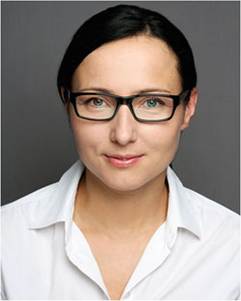
Barbara Chomicka is a trusted advisor and international authority on project management and contract administration. She is a Board Director of the International Association for Contract and Commercial Management (IACCM) and Chair of the IACCM Construction and Engineering Community providing global leadership and promoting development of the global construction and engineering sector.
She exemplifies an approach to life as a project manager that everything that we face is a project—a collaborative enterprise requiring the right methods to resolve it. In her thought-provoking presentations, she promotes a 360-degree duty of care inside and outside of work.