Conclusion, Liquid Legal Can Only Develop If Theodor Storm's Statement Is Taken Seriously: “Authority as well as trust can't be rocked more than by a feeling of being treated unjustly.”[104]
There is an increasing need for self-empowerment and continuing selftransformation, not just in terms of employee behavior, but also for organizations. This is a common theme in the theory of modernization and organization.
Legal is in the unique position to provide institutional observation criteria which allow for determining the extent and the quality of change. Equally, Legal can accelerate or block the dynamics of change by how well and creative it adapts, develops and applies functional best practices enabling adherence to rules and norms. In fluid organizations, this task becomes an innovation task, if the content of norms, rules or principles is not just evaluated by their flat content, but above all by a reflexive process in the context of the organization, the product “job” and the employees’ subjective expectations of teamwork.In the future, jobs will cease to be the focus of organizations in favor of the individual in his or her occupation; any organization getting to grips with that will become anti-fragile and will develop a new working and learning culture. A culture based on the exchange of knowledge and with the inherent power that comes from relationships on eye level. A culture in which the principles are made clear, in which transparency prevents hidden agendas and in which a participation of all, regardless of their abilities within a function. No potentials or contribution will be separated from the development of a company.
Liquid Legal Context
By Dr. Dierk Schindler, Kai Jacob and Dr. Roger Strathausen
Mauch reminds of a fundamental role for legal in the transformation of the future working environment, which will be defined by VUCA: volatility, uncertainty, complexity and ambiguity. Success of organizations will depend on their adaptability. There needs to be a constant recombination of product and processes.
Thus, the traditional security for individuals of a static correlation of their work to the product will fade.Instead, open innovation and the modification of the rules that govern a working relationship will be the norm—not the exception. What does this mean for the employment lawyer? Mauch calls upon the role of legal in the future of employment as one that changes from an interpreter of regulations around current conditions to becoming the creator of them. Horx’ theory around “flexurity”, the alternation between stability and flexibility comes to mind.
(continued)
Mauch's broad thinking around the future workplace and its DNA creates correlations to Tumasjan and Welpe describing the settings of a co-creative enterprise—indeed a joint task of HR and legal, or as Mauch puts it: “HR in the world of employment transforms into a designer aided by instruments of legislation.” And Legal must step up as the co-creator.
References
Abrams, J. J., & Dost, D. (2013). Ship of Theseus. Amsterdam: Mullhollands Books.
Bruhl, K., & Pollozek, S. (2015). Die neue Wir Kultur. Frankfurt: Zukunftsinstitut.
DGFB Lab 2014 Thesenpapier. Mitreden, Mitdenken, Mitgestalten im Unternehmen von morgen!
Farooq, U., & Carroll, J. M. (2007). Supporting creativity with awareness in distributed collaboration.
Faust, M., Funder, M., & Moldaschl, M. (2005). Die “Organisation” der Arbeit (pp. 355-382). Munchen.
Gergs, H.-J. (2016). Die Kunst der kontinuierichen Selbsterneuerung, 1. Auflage (pp. 52-144). Weinheim: Beltz Verlag.
Hartman, R. S. (1967). The structure of value: Foundations of scientific axiology.
Hedderich, I. (2011). Einfiihrung in die Montessori Padagogik. Reinhardt Ernst.
Horx, M. (2005). Wie wir leben werden (pp. 52-82). Frankfurt: Campus.
Horx, M. (2015). 5 Thesen zur Zukunft von Arbeit. Frankfurt: Zukunftsinstitut 9/2015
ISF Munich Nick Kratzer. (2003). Flexibilisierung und Subjektivierung von Arbeit. Munchen.
Knapp, N.
(2013). Kompass neues Denken. Hamburg: rororo.Kotter, R., Kursawe, M., Schoning, P., & Klingenberg, M. (2015). Designyour life. Campus. Luc, V. (1999). Never take no for an answer. Paris: IZdittions Albin Michel.
Luhmann, N. (1984). Soziale Systeme. Grundriβ einer allgemeinen Theorie. Frankfurt am Main: Suhrkamp.
Moldaschel, M. (2006). Institutionelle Reflexivitat. Chemnitz.
NEA. (2010). Preparing 21st Century Students for a Global Society
Pflagling, N. (2015). Komplexithoden (3rd ed., pp. 67-68 & 217-221). Munchen, Redline.
Robertson, B. J. (2014). Hologracy—The new management system for a rapidly changing world, 2014—Part one
Sporer, S., & Prieβ, A. (2013). Fiihren mit dem Omega Prinzip (pp. 89-94). Haufe.
Taleb, N. N. (2010). The black Swan (6th ed.). Miinchen: DTV Verlag.
Taleb, N. N. (2012). Antifragile—Things that gain from disorder (3rd ed., pp. 231-259). Munchen. UlfBrandes. (2015). Management Y (pp. 41-59). Campus.
List of Websites
www.augenhoehe-wege.de
www.imdb.com/title/tt3777462/
www.cluster-forstholzbayern.de
www.zukunftsinstitut.de/artikel/die-neue-wir-kultur/
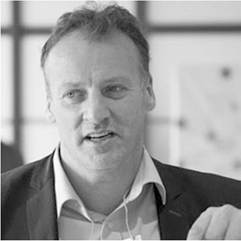
Gerrit Mauch The sociologist is Chief Academic Officer and consultant to the RETENCON AG in Munich. The company advises organizations on matters of employee engagement and loyalty. One of his special areas of interests is the transformation of enterprises with the help of a new learning and teaching culture. As an experienced human resources manager, he also accompanied senior ranks in organizations on matters of HR development. Mauch is a multiple award winner as a coach and training specialist. His awards include the “Initiativpreis Fort- und Weiterbildung” of the DIHK (2004), the “Chief Learning Officer-Award” of the trade magazine “Wirtschaft & Weiterbildung” and the “International German Training Award in Gold and Silver”.